By Staff Reporter
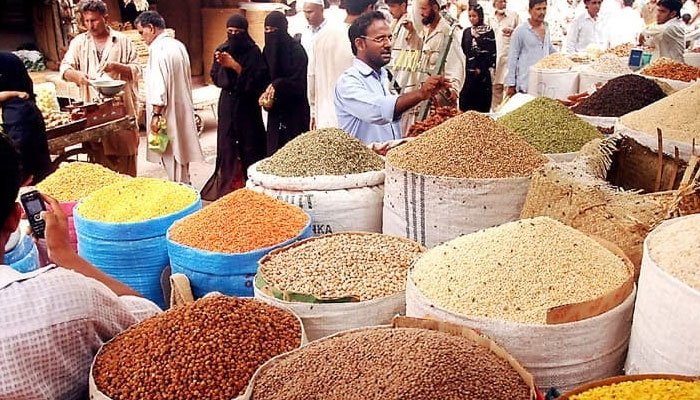
ISLAMABAD: Inflation in Pakistan is expected to hover between 3.5% and 4.5% in July, the finance ministry said in its latest monthly economic report on Monday, with stable prices and improved supply conditions keeping price pressures in check after a sharp drop last fiscal year.
The projection follows a June inflation reading of 3.2%. For the fiscal year ending June 30, average inflation fell to 4.49%, a nine-year low, down sharply from 23.4% the previous year, signaling a significant turnaround for an economy that has grappled with price volatility in recent years. Pakistan’s fiscal year runs from July 1 to June 30.
The ministry expects the economy to sustain its recovery in the early months of fiscal year 2026, bolstered by an improving macroeconomic environment and rising investor confidence. The Asian Development Bank (ADB) echoed this optimism last week, projecting Pakistan’s economy to grow at a steady 3% in FY26, even as it trimmed growth forecasts for the broader Asian region amid uncertainty in global trade.
Key industries are driving the momentum. Large-scale manufacturing likely maintained its pace in June, supported by increased private sector credit and expanding production activity, according to the report. The rebound is set to lift imports of raw materials and intermediate goods while boosting value-added exports, the ministry said.
The automobile sector posted robust gains in FY2025, with production surging across the board. Car output rose 40%, trucks and buses jumped 96.8%, and sports utility vehicles and pick-ups climbed 74.6%, reflecting strong demand and capacity expansion.
Cement dispatches offered a mixed picture. Total dispatches reached 46.2 million tonnes in FY2025, up 2.1% from the prior year. Domestic sales, however, slipped 3.1% to 37 million tonnes, while exports soared 29.5% to 9.2 million tonnes, highlighting a shift toward international markets.
The ministry pointed to additional tailwinds supporting the recovery. Strengthening domestic demand, a stable exchange rate, and steady global commodity prices are expected to lift exports, remittances, and imports in July, reinforcing stability in the external sector. This comes as Pakistan seeks to rebuild its trade position and shore up foreign exchange reserves after years of economic strain.
Despite the upbeat indicators, the ministry sounded a note of caution. Recent heavy rains could disrupt agricultural output and supply chains, potentially pushing inflation higher in the coming months. Since June 26, rain- and flood-related incidents have claimed at least 266 lives and injured more than 630 people nationwide, according to the National Disaster Management Authority. The agency reported that 1,557 houses have been destroyed, underscoring the scale of the disruption.
The warning highlights the fragility of Pakistan’s economic progress, particularly its reliance on agriculture, which remains vulnerable to weather shocks. Any hit to crop yields or logistics could ripple through the economy, challenging the ministry’s sanguine inflation forecast.
Copyright © 2021 Independent Pakistan | All rights reserved