By Staff Reporter
MUZAFFARABAD: Voting in the second phase of Azad Jammu and Kashmir’s legislative assembly elections ended in acrimony on Sunday, with the Pakistan Peoples Party accusing its coalition partner, the Pakistan Muslim League-Nawaz, of orchestrating an attack on one of its senior figures during a day marked by allegations of ballot stuffing, blocked polling agents and administrative failure.
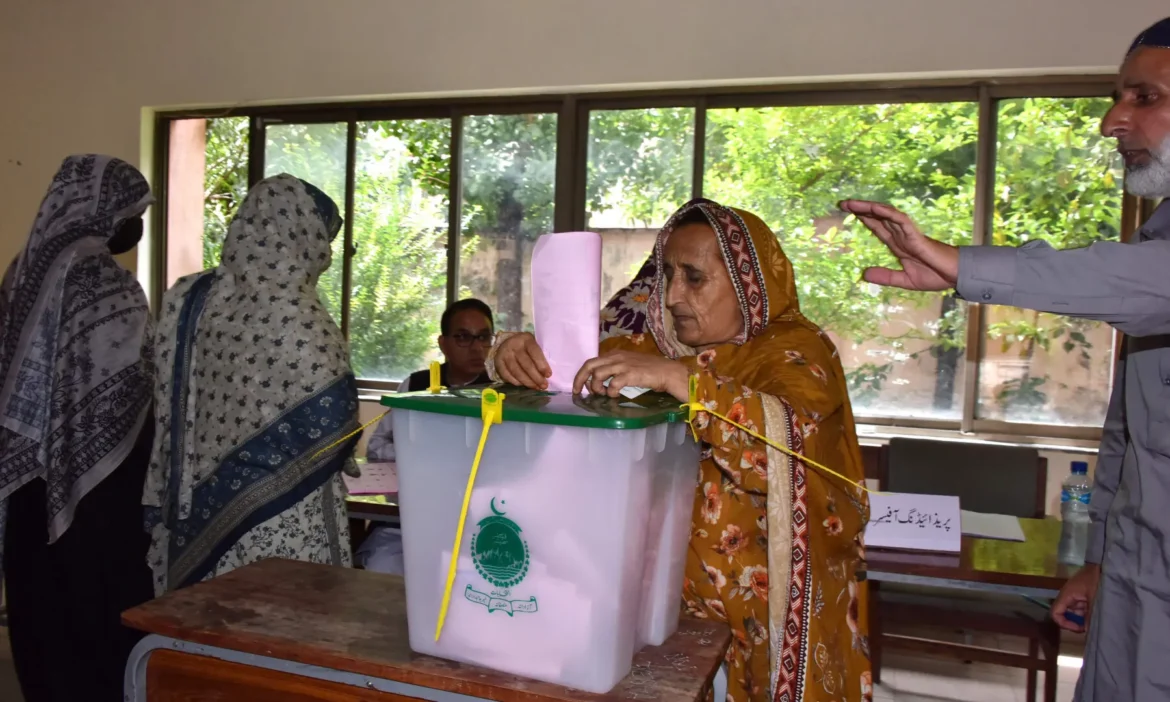
Polling opened at 8am and had been due to close at 5pm, but the Election Commission extended voting by an hour to accommodate what it described as a large turnout. By the time booths shut at 6pm, eight of the nine constituencies in Muzaffarabad division had voted, alongside all 12 seats reserved for Kashmiri refugees scattered across Pakistan. A ninth Muzaffarabad seat, LA-27, was postponed altogether after heavy rain and landslides made roads impassable, with the Election Commission promising a new date would follow.
The AJK’s elections are being staged in three separate phases because of security concerns, and the first round in Mirpur division on 27 July had already left the PPP crying foul, with the party accusing the PML-N of rigging and demanding a rerun in several constituencies. Sunday’s polling in Muzaffarabad only deepened that rift between two parties that govern together in Islamabad.
PPP alleges worker’s death; PML-N denies it happened
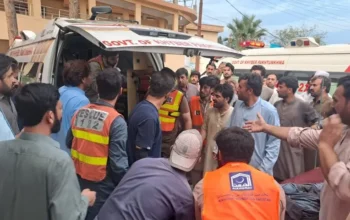
The sharpest allegations came from PPP chairman Bilawal Bhutto-Zardari, who used social media through the day to accuse the PML-N of violence against his party’s supporters. He said Chaudhry Latif Akbar, the PPP’s regional president in AJK and the party’s candidate for LA-31, had been attacked, and said a PPP worker, Mushtaq Shah, had died in the same constituency. The claim of Shah’s death rested solely on the PPP’s account; no hospital, police official or independent authority had confirmed it, and the PML-N disputed it outright, saying the man had suffered a heart attack unrelated to any assault.
“The PML-N is robbing the votes of the people of Azad Kashmir through bullets, batons and coercion,” Bhutto-Zardari wrote, blaming what he called “miscreant elements” within the rival party and demanding immediate arrests.
In a separate statement, he went further. “The PML-N has crossed all limits,” he said. “Attacks are taking place on our voters and the president of the state.” He cast the contest in Muzaffarabad as a battle between “the PPP’s politics of dignity and principles” and “the PML-N’s threat, rigging and coercion”.
The party lodged a formal complaint with the Election Commission alleging Akbar had been physically assaulted while overseeing polling, naming three individuals it held responsible, and said a police report was being filed. AJK’s prime minister, Faisal Mumtaz Rathore, who belongs to the PPP, ordered the province’s chief secretary and police chief to investigate, describing the attack on Akbar as “a slap on the politics of dignity and principle in Kashmir”.
Akbar wrote to the Election Commission twice himself. In the first letter he said an attempt had been made on his life at Polling Station 177, alleging PML-N workers were behind it, and said his polling agents had been barred from 14 separate stations. In the second, he said a fellow PPP figure, Syed Mumtaz Hussain Naqvi, had been wounded by gunfire during what he described as a targeted attack at a polling station.
PML-N: no bullet, only a heart attack
The PML-N rejected the account entirely. Marriyum Aurangzeb, Punjab’s senior minister, told reporters in Rawalpindi that the man had suffered heart failure, not a gunshot wound, while trying to intervene in a scuffle between PML-N and PPP supporters. She said he had been between 68 and 70 years old, and that his family had declined to allow a post-mortem examination — a detail that, like the rest of the incident, remained unverified by any independent source.
“Will you do politics on bullets? Will you sabotage a democratic process by spreading such fake claims?” she said. “My brothers, this politics of bullet, this politics of robbing votes, this does not suit parties like us.”
Rana Sanaullah, adviser to the prime minister on political affairs, offered a parallel account in Islamabad, describing the Akbar incident as a dispute involving an unrelated family that never escalated beyond a verbal argument. On the disputed death, he said a man named Mushtaq had been pushed during a scuffle with his own relatives, went home, and later suffered a fatal heart attack, given his history as a cardiac patient. “Not a single bullet was fired,” he said, adding that the PML-N condoled the death but disputed that the man was a PPP worker at all. He put overall polling participation at 96 percent of stations and called the process “the most transparent and non-violent electoral process”.
A day of complaints: ballot stuffing, missing agents, blocked roads
Beyond the disputed death, the PPP filed a stream of separate complaints throughout the day, writing to the Election Commission about alleged irregularities in at least 11 constituencies and formally demanding, in a letter sent at 2pm, that the commission respond to 25 complaints it said had gone unanswered. “Given the gravity, number and geographical spread of the violations documented, the Party respectfully submits that a formal response from the Commission is now overdue and urgently required,” the letter said.
Among the specific allegations: PPP representatives said PML-N supporters were caught “ballot stuffing” at a station in LA-32, and that a government employee had been improperly deployed as a PML-N polling agent elsewhere in the same constituency. In LA-30, the party claimed PML-N workers removed a ballot box from a polling station at Banaw Langah and took it outside to stamp papers away from oversight. In LA-31’s Charakhpora area, the PPP alleged “bogus voting” at a station it said had been designated sensitive but left without adequate security.
The party also said a PML-N provincial assembly member had obstructed voting at a station in Abbottabad tied to the refugee seat of LA-45, and that in LA-25, PML-N supporters had torn up ballot papers, halting the process at one station entirely, while agents at another reported “fraudulent votes” being cast and asked the commission to send police.
Access for PPP polling agents was a recurring complaint. The party said its representatives were shut out of stations in Lahore’s Cantonment and Sheranwala Gate areas for the refugee seat LA-34, and out of a station in Sargodha for the same seat. In Pakpattan, the PPP alleged, elected PML-N officials were inside a station stamping ballots while its own agent was refused entry. “The deliberate exclusion of the PPP’s oversight representative while PML-N’s own elected officials conduct fraud inside the station is not a coincidence — it is a coordinated strategy to commit electoral fraud without any independent witness,” the party said.
Further complaints followed from Muzaffargarh, where the PPP said a candidate’s agent was physically blocked from entering a station, and from three stations each in LA-30 and LA-32, where agents were reportedly denied seating altogether. At one of the LA-32 stations, the party said, a “violent confrontation” broke out between supporters of PML-N candidate and former AJK prime minister Raja Farooq Haider and PPP backers.
The party additionally claimed no staff had turned up at any of the 196 polling stations in the postponed LA-27 constituency, calling it a “deliberate” delaying tactic, and said staff arrived late at 71 stations in LA-28 and at several in LA-30. Separately, it said Akbar had written to the commission over the closure of the Rangla-Katkair road in Muzaffarabad, which it said had left more than 50 vehicles carrying voters stranded overnight.
The PML-N pushed back on individual complaints where it could. Responding to a PPP allegation over its candidate in LA-40, Muhammad Naeem Khan, the party told the Election Commission the claims were “baseless” and represented “an attempt to create unnecessary controversy around the polling process”, urging the commission not to let “misleading or politically motivated” complaints undermine confidence in the vote.
Lahore and Rawalpindi see separate flashpoints
Trouble was not confined to Muzaffarabad. In Lahore, PPP leader Faisal Mir alleged large-scale fraud during polling for the refugee seats, claiming votes had been cast using photocopied identity cards, expired documents and B-Forms, allegedly with the connivance of polling staff, and that non-Kashmiri voters had been allowed to cast ballots. “Anyone claiming to be a PML-N voter was somehow able to cast a ballot,” he said, describing it as “large-scale electoral fraud in the name of AJK elections in Lahore” and vowing the party would not accept the result.
Separately, supporters of independent candidate Saba Diwan alleged unrest at a polling station in Lahore’s Chauburji area after voting closed, claiming police had forced a presiding officer to sign results that had been altered.
In Rawalpindi, by contrast, the story for much of the day was less about fraud than apathy. At several polling stations for the three refugee seats based in the city, turnout was strikingly thin through the morning: no voters at all in the first five minutes at the main station on Murree Road, and none recorded there by 8.50am. Numbers stayed low into the afternoon — at one station tied to the Jammu-VI seat, just 14 of 125 registered voters had cast ballots by noon, while a nearby station with 117 registered voters had recorded none. Officials attributed the sluggish start to the Sunday holiday and said they expected turnout to pick up later in the day; by the final hour of voting, participation had improved only modestly, with three votes cast by members of a single family at one small station in Tariqabad.
Weather forces a rerun in Muzaffarabad
Beyond LA-27, the Election Commission also postponed voting at 50 individual polling stations within LA-28, in the Lachharrat area, after landslides and severe weather stopped election staff reaching stations in Noseri Nosada, Panggaran, Dewliyan and Panjkot. Those stations will now vote on 4 August, the commission said, after receiving a report from the constituency’s returning officer confirming sealed ballot materials had been safely returned unopened.
A coalition under strain
The dispute playing out over Sunday’s vote reflects a deeper fracture between two parties that share power in Islamabad. Since the PML-N’s strong showing in the first phase in Mirpur — where it won nine seats to the PPP’s four — senior figures from both sides have been meeting repeatedly in an attempt to head off a full-blown rupture, with talks held on Thursday, Friday and again over the weekend.
A PML-N source described those discussions centred on the PPP’s demand for re-polling in specific seats, and characterised the disputed incidents in Mirpur as opportunistic rather than orchestrated. “It was not planned or pre-planned rigging but isolated acts at places where supporters of one candidate enjoyed numerical dominance over their opponents,” the source said, adding that such episodes had featured in AJK elections before.
The numbers
Officially, the Election Commission recorded 207 candidates contesting the nine Muzaffarabad division seats — five in Muzaffarabad district and two each in Neelum and Jhelum Valley — against a registered electorate of 809,621. A further 137 candidates stood for the 12 refugee constituencies, which have a combined 438,834 registered voters, split between six seats representing Kashmir Valley refugees and six representing those from Jammu.
Some 1,483 polling stations were established across Muzaffarabad division, of which 533 were classified highly sensitive, 741 sensitive and 209 normal; a further 1,057 stations served the refugee constituencies nationwide. Those refugee seats stretch across provincial lines in complex ways — seven fall wholly in Punjab, one in Khyber Pakhtunkhwa, and others are split between multiple provinces, including one seat divided among Punjab, Islamabad and Khyber Pakhtunkhwa, another between Sindh and Balochistan, and a third shared by Balochistan, Punjab and Sindh.
In Rawalpindi and Islamabad, roughly 27,000 voters were registered across 175 polling stations, 18 of them designated sensitive, for three refugee seats contested by 34 candidates. In Gujrat, Wazirabad and Mandi Bahauddin, some 50,225 voters were served by 115 stations, guarded by roughly 2,000 police officers, with 11 candidates standing. Sindh hosted voting for two refugee seats, with 17 candidates contesting the Jammu-I seat across just under 1,200 registered voters in Karachi and other districts, and 11 candidates contesting the Kashmir Valley-I seat, which drew around 4,600 registered voters. Balochistan, sharing seats with Sindh and elsewhere, set up a further 13 polling booths across cities including Quetta, Pishin and Sibi. In Khyber Pakhtunkhwa, 41 stations, concentrated in Swat and Mansehra, served the Kashmir-VI seat, with 7,655 registered voters.
With counting under way and early, unofficial figures reportedly favouring the PML-N in several seats — prompting celebrations among party supporters even before the Election Commission issued any official tally — attention now turns to the third and final phase of voting, scheduled for 10 August in Poonch division, and to whether the commission moves on the scores of unresolved complaints from both the first and second rounds before then.
Copyright © 2021 Independent Pakistan | All rights reserved