By Staff Reporter
ISLAMABAD: Pakistan has lowered its annual gross domestic product growth forecast to 3.9 percent from 4.2 percent after devastating monsoon floods caused $1.3 billion (Rs371 billion) in damage, a preliminary government assessment shows.
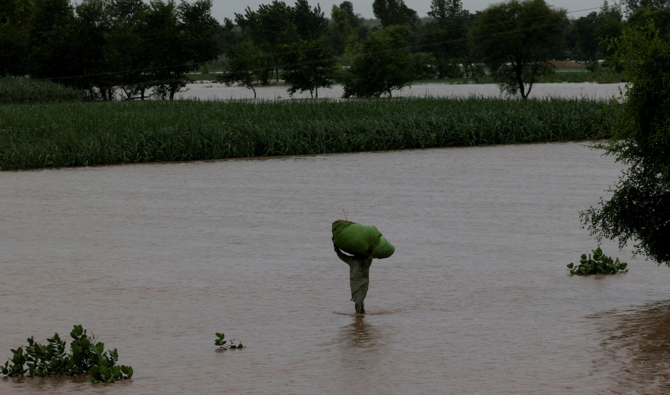
The adjustment lays bare the toll of repeated climate shocks on the country’s shaky economic upturn, as Islamabad pursues reforms under a $7 billion International Monetary Fund programme. The rains and floods have killed more than 1,000 people and affected over 4.5 million people since June 26, flooding millions of acres of farmland and crops, according to disaster management officials.
The damage figure covers only Punjab province so far, with work underway in Sindh and other areas that could lift the total much higher. Agriculture, vital for food supplies and exports, suffered the heaviest blow at $546 million (Rs155 billion), with sector growth now expected to ease to 4 percent from 4.5 percent, the government’s early report indicates. Crops such as wheat, rice and cotton took the worst of it, with output growth set to drop to 4.5 percent from 6.7 percent.
Industry faces slimmer losses of $105 million (Rs29.9 billion), nudging growth down to 4.2 percent from 4.3 percent, while services could lose $652 million (Rs186 billion). In services, transport and storage racked up $259 million (Rs74 billion) in damage, and information and communications stands to lose $51 million (Rs14.5 billion), with growth falling to 4.3 percent from 5.0 percent. Education and health together absorbed about $19 million (Rs5.6 billion) in losses.
Analysts are calling on the government to shun unplanned spending on relief, mindful of the 2022 floods that claimed over 1,700 lives, struck 33 million people and wrought $30 billion in destruction. In response to Pakistan’s appeal for international assistance after the devastating 2022 floods, funds to the tune of $10.98 billion were committed, but apart from the Saudi oil facility and deferred payment relief, only 25 percent of the remaining amount was actually received. Analysts said the country should locally arrange climate funds annually to deal with floods and other disasters.
Pakistan sealed a $20 billion Country Partnership Framework with the World Bank earlier this year for the next decade, targeting climate adaptation, social protection and private sector development. That support, layered atop the IMF deal, seeks to shore up defences against frequent climate hits like the latest floods.
Pakistan produces less than 1 percent of global greenhouse gas emissions but ranks high among nations most at risk from climate change, analysts say. Without quick action on adaptation and mitigation, the human and economic costs will mount, they warn.
Muhammad Waqas Ghani, head of research at JS Global brokerage, cautioned against hasty outlays on relief amid tight budgets and external pressures. Despite the scale of devastation in 2022, international assistance for Pakistan remained limited, Ghani said. Should the government now resort to unplanned expenditures on relief, restoration, and subsidies, it will create additional fiscal stress at a time when the country is already operating under strict IMF program targets. Damage to crops, livestock and textiles – which feed nearly 30 percent of Pakistan’s consumer price index – amounts to a key downside risk to inflation forecasts, while extra food imports and weaker textile and rice exports could strain the external accounts further, Ghani added.
Copyright © 2021 Independent Pakistan | All rights reserved