By Staff Reporter
PESHAWAR: Pakistan partially reopened a key border crossing with Afghanistan on Saturday, allowing thousands of stranded Afghan refugees to return home after nearly three weeks of closure prompted by deadly clashes between the two nations’ forces.
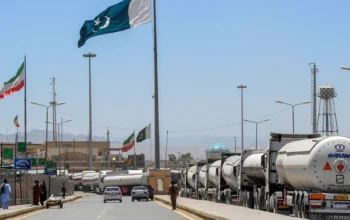
The Torkham crossing in Khyber Pakhtunkhwa province, a vital conduit along the rugged Durand Line that divides the countries, was reopened exclusively for Afghan refugees, officials from both sides said. The move came amid a fragile ceasefire, but restrictions remain on all other cross-border movement, including trade, which has been suspended since the fighting erupted.
Khyber Deputy Commissioner Bilal Rao confirmed to local media that the crossing had been reopened earlier in the day for the resumption of Afghan refugees’ repatriation. Local officials on the Afghan side told The Associated Press that the gate was reopened Saturday morning exclusively for Afghan refugees, with thousands expected to cross back into Afghanistan throughout the day. They urged all other travellers to refrain from using the crossing until further notice.
A video released by the Information and Culture Department of Afghanistan’s eastern Nangarhar province showed local officials and Afghan soldiers standing at the Torkham gate holding flowers to welcome returning refugees as they crossed back into their country. The repatriation of Afghan families, with or without travel or identity documents, had been abruptly suspended on Oct. 11 following border clashes between Pakistan and Afghanistan, which continued for days before a ceasefire was formalised in Doha on Oct. 19.
Pakistan had closed all its borders with Afghanistan for all types of movement, leaving a large number of returning families impatiently waiting for the reopening of the Torkham border. Thousands of Afghan refugees had been moved to a temporary camp near the border, while hundreds more waited along the roadside for the crossing to reopen.
Afghan Consul General Hafiz Mohibullah Shakir said thousands of Afghan refugees were stranded and living on the road due to the closure of the Torkham border crossing. “There are hundreds of vehicles, carrying thousands of refugees, stranded on roads from Nowshera till Torkham,” he said, adding that many did not have access to food, water or shelter.
He said refugees were continuing to be expelled, especially from Punjab, which was leading to an increase in the number of those stranded on roads. He appealed for the provision of water, tents and food for the stranded refugees.
The closure, which lasted nearly three weeks, also left hundreds of trucks carrying goods stranded, suspending key trade routes between the two countries. Although Islamabad and Kabul on Friday decided to extend the ceasefire, Foreign Office Spokesperson Tahir Andrabi stated that the “border remains closed for trade for now” and resumption of trade would depend on the security situation.
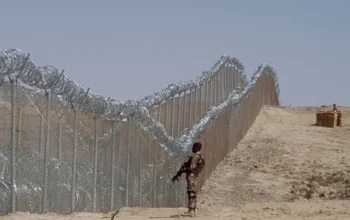
Authorities said no new exchange of fire has been reported since the ceasefire along the 1,622-mile border, known as the Durand Line. The reopening came after Pakistan and Afghanistan agreed to maintain a ceasefire following nearly weeklong negotiations facilitated by Turkey and Qatar aimed at preventing a wider conflict in the region
Earlier this month, Pakistan’s military said it carried out airstrikes on the hideouts of the Pakistani Taliban inside Afghanistan, killing dozens of people it described as insurgents. Afghan officials denied the claim, saying civilians were among the dead, and said Afghan forces had struck Pakistani military posts in retaliation, killing 58 soldiers. Pakistan’s military acknowledged losing 23 troops in the fighting.
The violence prompted Qatar to invite delegations from both sides to Doha, where they agreed to a ceasefire on Oct. 19. Pakistan and the Afghan Taliban regime agreed to uphold the ceasefire after multiple rounds of talks in Istanbul collapsed without a breakthrough. The talks had broken down when the Taliban refused to provide verifiable guarantees that groups such as the Tehrik-e-Taliban Pakistan would not use Afghan territory to launch attacks on Pakistan.
Pakistan had recommenced talks at the request of mediators Turkey and Qatar to give peace another chance, while repeatedly urging Kabul to act against militants using its territory as a safe haven. The two sides would meet again in the next round scheduled for Nov. 6.
Amid the fragile ceasefire, Pakistan on Saturday rejected the “deliberate twisting of facts” attributed to the Afghan Taliban’s spokesperson, Zabihullah Mujahid, regarding the recent Istanbul talks between the two countries.
In a statement posted on X, the Ministry of Information said Pakistan had demanded that terrorists based in Afghanistan and posing a threat to Pakistan either be controlled or arrested. “When the Afghan side claimed those individuals were Pakistani nationals, Islamabad immediately proposed that they be handed over through designated border crossings, in line with its long-standing position,” it said. “Any claim to the contrary is false and misleading.”
The statement came after Mujahid told a private news channel that during the Istanbul negotiations, the Afghan side had offered to deport individuals considered security threats by Islamabad, a proposal Pakistan allegedly declined. He alleged that Pakistan had instead asked Afghanistan to restrain those individuals within Afghanistan rather than deport them.
Mujahid further asserted that Afghanistan’s policy prohibits migrants from carrying weapons and said that Kabul would act if Pakistan provided credible evidence of any threat. He also alleged that Pakistan’s recent actions appeared to be aimed at creating conditions for a possible US return to the Bagram airbase.
Separately, Defence Minister Khawaja Asif, in a statement posted on X, strongly condemned “malicious and misleading” remarks made by the Afghan Taliban’s spokesperson, saying that Pakistan’s political and military leadership stands united on the country’s security and Afghan policies.
Asif said there exists complete unanimity of views among Pakistanis — including the political and military leadership — on the nation’s comprehensive approach toward Afghanistan and its commitment to regional peace and stability.
The defence minister said the non-representative Afghan Taliban regime suffers from deep internal divisions and continues to oppress Afghan ethnic groups, women, children, and minorities while suppressing fundamental rights such as education, representation, and freedom of expression. “Even after four years in power, the regime has failed to deliver on promises made to the international community,” Asif remarked, accusing the Taliban of masking their lack of governance and stability through rhetoric and serving as a proxy for external interests.
Pakistan has been grappling with rising terror incidents, particularly in Khyber Pakhtunkhwa and Balochistan, since the Afghan Taliban regime took power in 2021. The government in Islamabad has repeatedly urged the Taliban regime to rein in terrorist groups responsible for countless attacks in Pakistan. However, the Taliban regime largely remained indifferent to Pakistan’s demands and provided refuge to multiple terrorist groups targeting security forces and civilians.
Copyright © 2021 Independent Pakistan | All rights reserved