By Staff Reporter
ISLAMABAD: Pakistan warned the United Nations Security Council on Monday that terrorist groups in Afghanistan were acquiring sophisticated weapons abandoned during the American withdrawal, posing a grave threat to peace and security not only in Pakistan but across the region.
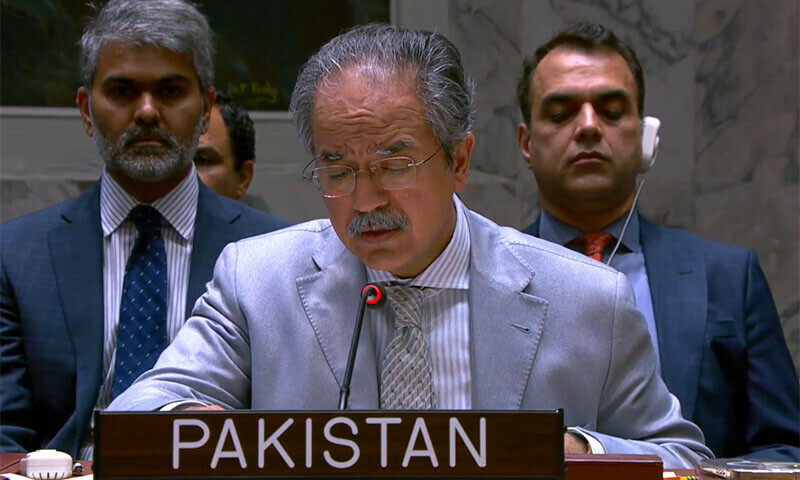
The alert came from Asim Iftikhar, Pakistan’s permanent representative to the United Nations, during an open debate on small arms and light weapons. His remarks highlighted growing anxieties over the flow of illicit arms from Afghanistan, where stockpiles left behind by foreign forces have fueled black markets and smuggling operations. “Pakistan is seriously concerned about the presence of stockpiles of sophisticated arms and ammunition in Afghanistan, as noted in the findings of the secretary general’s reports,” Iftikhar said, according to a statement from Pakistan’s UN mission.
The secretary general’s reports have documented transnational criminal dynamics in Afghanistan, including possible transfers of arms and ammunition to neighbouring states in violation of an arms embargo. They also point to the emergence of unofficial weapons markets, which have intensified risks to regional stability.
Pakistan has “credible information of attempts to smuggle these arms to neighbouring countries for terrorist activities,” Iftikhar said. The weapons seized at the Pakistan-Afghanistan border could be traced “back to stockpiles of weapons left behind by foreign forces in Afghanistan and illegal weapons being sold across black markets in Afghanistan.” “The movement of unmarked or unregistered weapons across the international border sustain and aid non-state armed groups, terrorist networks, and criminal gangs, undermining regional security and stability,” Iftikhar added.
Pakistan is “deeply concerned” about the acquisition and use of these “mostly abandoned, modern and potent weapons by terrorist groups based in Afghanistan, which continue to pose serious challenge to peace and security in Pakistan and the broader region,” the ambassador said. He identified specific groups, including the Islamic State in Iraq and the Levant-Khorasan (ISIL-K), the banned Tehreek-i-Taliban Pakistan (TTP), the Baloch Liberation Army (BLA) and the Majeed Brigade, as having used such weapons in attacks on Pakistani civilians and law enforcement agencies. Those assaults have resulted in the loss of thousands of lives. “We urge stronger international efforts to prevent access of illicit arms to armed terrorist groups in Afghanistan and to ensure that the Afghan interim authorities adhere to their international obligations and commitments in that regard,” Iftikhar said. “The international community needs to step up its efforts and plug gaps in its response to effectively address these threats to international and regional peace and security.”
In broader comments, the envoy noted that small arms and light weapons had become “instruments of choice for non-state actors to perpetrate violence.” He said illicit arms directly threatened national security, impeded counter-terrorism operations and civilian protection, and contributed to human rights abuses while imperiling peace, security and stability. They also hindered development prospects. “We firmly believe that the issue of illicit small arms and light weapons should be addressed comprehensively and in a balanced manner,” Iftikhar said.
The concerns stem from the chaotic American withdrawal from Afghanistan in August 2021, when U.S. troops destroyed more than 70 aircraft, dozens of armored vehicles and disabled air defences before departing from Kabul’s Hamid Karzai International Airport. Despite those measures, a substantial cache of weapons and equipment remained, much of which was taken by the Afghan Taliban. Some of those arms have also ended up with militant groups like the TTP and other terrorist outfits, as Pakistan and others have repeatedly pointed out. Islamabad has voiced alarm over the use of Afghan territory for cross-border terrorism and has urged the United Nations to mount a “concerted campaign” to recover weapons from groups such as the TTP.
In January, Pakistan’s Foreign Office described the presence of advanced US weapons in Afghanistan as a “profound concern” for the country’s safety and security. A report in The Washington Post in April provided evidence of the problem, detailing how terrorists who attacked the Jaffar Express train in Balochistan in March had used weapons abandoned during the US pullout. An M4A1 carbine rifle manufactured by the American company Colt was recovered from the site, with its serial number linking it to billions of dollars in weaponry supplied to US forces in Afghanistan.
Copyright © 2021 Independent Pakistan | All rights reserved