By Staff Reporter
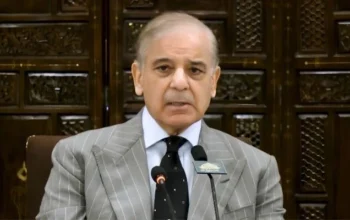
ISLAMABAD: The government will sit down with the Islamist party Jamaat-e-Islami on Friday in an attempt to end a two-month campaign against fuel taxes, even though the party says its nationwide protests will go ahead the same day.
Negotiating committees from both sides will meet at Punjab House in Islamabad to discuss the party’s demand that the petroleum levy be scrapped. They will also try to agree a date for a meeting between Prime Minister Shehbaz Sharif and the Jamaat-e-Islami (JI) leader, Hafiz Naeemur Rehman, the party said in a statement on Thursday.
The talks were arranged after a telephone call between JI vice emir Liaqat Baloch and the planning minister, Ahsan Iqbal, who leads the government’s negotiating team. According to the party, Iqbal told Baloch the meeting had first been pencilled in for Tuesday or Wednesday but was delayed by the government’s “urgent engagements”.
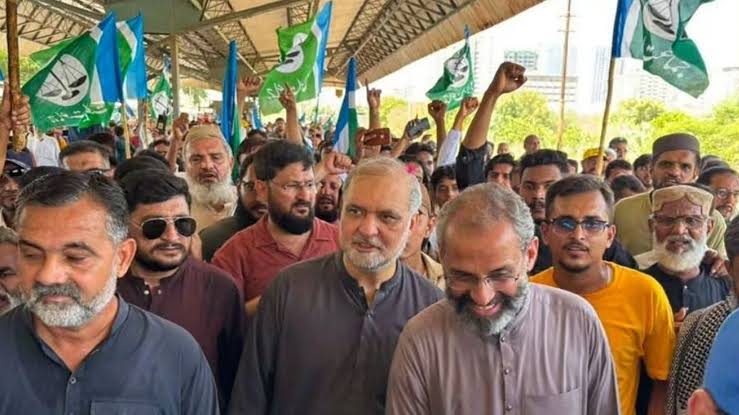
Baloch said the talks would not stop the party taking to the streets. JI would hold peaceful demonstrations at district headquarters across the country on Friday, he said, to demand the abolition of what he called an “unjust” levy. The party would continue to protest alongside negotiations, he added.
The government’s approach came shortly after JI announced the third phase of its campaign, with sit-ins planned in every district on 23 October. Local media reported that the government renewed contact after the party announced those plans.
Baloch insisted the campaign was “not about the party’s interests” but about securing relief for the public, cutting what he described as unbearable production costs and reviving economic activity.
The party has been pressing the government for more than two months to remove levies on petrol and diesel, which it says have pushed fuel prices out of reach for many households since conflict in the Middle East began in March. The party puts the levies at Rs114 a litre on petrol and Rs100 on diesel. Other reporting says those figures are the total taxes on each fuel, including a levy of Rs80 a litre on petrol and Rs77.28 on diesel, and that the levy forms part of revenue measures under Pakistan’s commitments to the International Monetary Fund.
In the press release, Baloch argued that reducing the levy and payments to independent power producers was essential to easing pressure on households, farmers, industry, traders and small businesses. Such steps, he said, could revive economic activity and create jobs.
He also claimed that governments were reluctant to give up taxes and rarely acknowledged the part protest movements played in winning relief. Earlier relief measures, he said, had been announced under pressure from public sit-ins and carried out in ways that failed to help the national economy.
Baloch called on the government and other institutions to acknowledge their mistakes and avoid constitutional measures that could deepen the political crisis. He urged all sides to hold a national dialogue and agree on priorities. JI’s negotiating committee had already identified options and fiscal room within the limits of the IMF programme and the national budget, he said.
“The government and the prime minister’s team must now demonstrate the political will to provide relief to the public,” he said.
He warned that if the government failed to meet the party’s demand, JI would go ahead with its planned long march from Multan. The party had launched that march towards Islamabad but postponed it at Sharif’s request.
The dispute has escalated in stages. On 16 August JI announced sit-ins in all provincial capitals and called a nationwide strike for 3 September. On that day, the two sides instead agreed to form committees to recommend ways of reducing the levies.
On 20 September the party began its march towards Islamabad, warning that the protest could become a campaign to remove the government if the levy was not abolished. Two days later, with its convoy in Multan, Mr Rehman said the march was being postponed at the prime minister’s request. Local media reported that Mr Sharif had promised to meet him after returning from the UN General Assembly.
In a statement on Wednesday, JI alleged the government had made no further contact about the proposed meeting between Rehman and the prime minister.
Copyright © 2021 Independent Pakistan | All rights reserved