By Staff Reporter
ISLAMABAD: The National Assembly on Tuesday took up a constitutional amendment bill that would elevate the army chief to the top military command and create a new constitutional court, a day after the measure cleared the Senate amid chaotic protests.
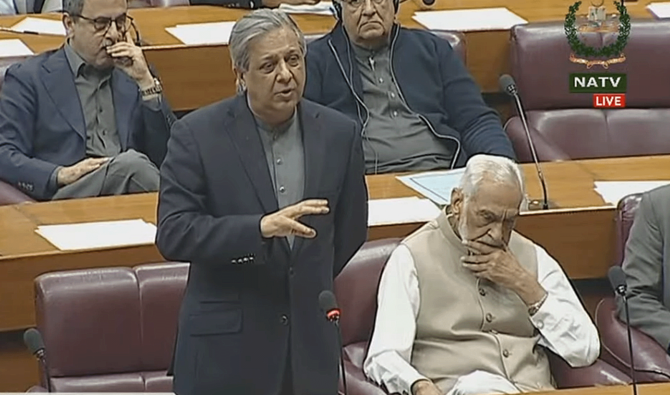
Law Minister Azam Nazeer Tarar tabled the Constitution (Twenty-seventh Amendment) Bill, 2025, in the lower house after it passed the upper chamber on Monday with 64 votes in the 96-member Senate.
The bill rewrites Article 243 to establish the post of Chief of Defence Forces, replacing the Chairman of the Joint Chiefs of Staff Committee, and formally places the army chief at the apex of the armed forces. It also sets up a Federal Constitutional Court to handle major constitutional cases, shifting some powers from the Supreme Court. The government says the new court will ease judicial backlogs and speed up justice delivery.
“Finally we reached the consensus that a Federal Constitutional Court (FCC) should be formed,” Tarar told the assembly. He said the amendment does not abolish Article 184(3), which allows suo motu action on fundamental rights issues, but transfers the power to the FCC and requires a formal application rather than automatic initiation. “It should be a matter of public importance and should not be used to grill a specific person,” Tarar said.
The bill grants the Judicial Commission of Pakistan authority to transfer high court judges. A judge refusing transfer can appeal to the Supreme Judicial Council, but rejection on invalid grounds would lead to retirement. On the military side, Tarar said the changes recognise General Syed Asim Munir’s promotion to field marshal after Pakistan’s victories over India in the May conflict. “These titles are lifetime and if there are valid grounds due to which you think they should be withdrawn, then the parliament has that right to take that decision through voting in a joint sitting after consultations,” he said.
Opposition lawmaker Gohar Ali Khan of the Pakistan Tehreek-e-Insaf (PTI) said the amendments would undermine democracy. “The prime minister will appoint its first chief justice and the prime minister will appoint its judges,” Gohar said. “You are picking and choosing. This process is outright wrong.”
The government coalition holds 233 seats in the 336-member National Assembly, well above the two-thirds majority needed for passage. Monday’s Senate vote saw two opposition senators defect to support the bill. PTI and Jamiat Ulema-i-Islam-Fazl lawmakers rushed the chairman’s podium, tore up copies of the bill and threw them at Tarar. Security formed a barrier to prevent clashes before protesters walked out.
Senator Farooq Naek of the Pakistan Peoples Party said the new court would have representation from each province and the Islamabad High Court, with eligibility cut from seven to five years of high court service. Incumbent Supreme Court judges joining the FCC retain seniority; for others, it starts at appointment, with age deciding ties among simultaneous appointees. The Judicial Commission will now include a technocrat instead of a woman or non-Muslim nominee. Suo motu powers remain but require petition validation by the FCC. Interim stays on revenue matters under Article 199 expire after one year without a ruling. Article 248 immunity for former presidents extends for life, pausing only if they take another public office. Similar protections apply to the field marshal, air force marshal and fleet admiral.
Copyright © 2021 Independent Pakistan | All rights reserved