By Staff Reporter
ISLAMABAD: The government has raised diesel prices for a third straight day and held petrol steady, with Brent crude at its highest close since April and lawmakers asking whether fuel will last beyond November.
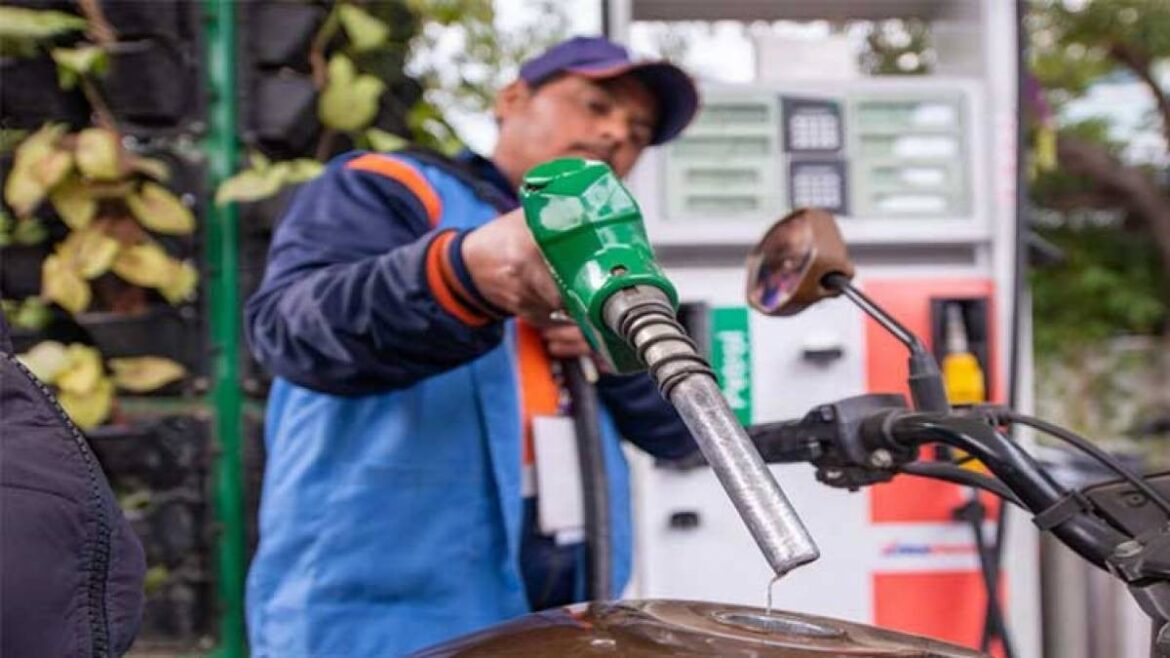
The government set high-speed diesel at 393.66 rupees a liter, up 1.91 rupees, and kept petrol at 377.71 rupees, according to a Petroleum Division notification. The rates apply from Saturday through Monday. The revision for Friday cut petrol by 1.60 rupees and raised diesel by 1.64 rupees.
Fuel prices have retreated from their peaks but remain far above where they stood before the war involving the US and Iran began on Feb. 28. Diesel reached 520.35 rupees on April 3, up from about 281 rupees before the fighting, and is now roughly 24% below that level. Petrol peaked at 458.41 rupees the same day, up from about 266 rupees in early March. Taxes and duties still account for 114 rupees of each liter of petrol and 100 rupees of diesel.
Petrol, used mainly in motorcycles, rickshaws and small cars, bears most heavily on middle- and lower-middle income households. Diesel runs heavy trucks, power plants and large generators, so its price feeds through the wider economy.
Islamabad has set prices daily since July 17, when Petroleum Minister Ali Pervaiz Malik said the cabinet and the prime minister had given the Oil and Gas Regulatory Authority that job, citing swings in global markets after hostilities between Iran and the US resumed. Weekly revisions had been the practice since early March.
Brent futures settled at $116.72 a barrel on Friday, up 3.1% and about 6% higher on the week, after Houthi attacks on Saudi Arabia raised fears of wider disruption to Middle East supply. The contract touched $117.45 during the session. Reuters reported that Saudi Aramco ordered its Dhahran headquarters evacuated on Thursday. UAE authorities reported an oil spill from an unidentified tanker off Umm Al Quwain. West Texas Intermediate traded around $103.
Andrew Lipow, president of Lipow Oil Associates, said the market was worried about Iranian attacks on tankers, which have increased over the past week. Flows out of the Strait of Hormuz have picked up, he said, but that “could change at any minute.”
Pakistan imports most of its petroleum, so moves in crude and freight reach pump prices quickly. Local refineries supply about 70% of diesel, but most of the crude they process is imported, industry officials said. Domestic output covers roughly 30% of petrol consumption. Industry estimates put November diesel demand at about 750,000 metric tons, driven by seasonal farm needs, and petrol demand at about 630,000 tons. High prices and the off-peak travel season are expected to keep consumption subdued.
In the Senate on Friday, Sherry Rehman of the Pakistan Peoples Party asked whether petrol would be available in December and whether rationing was planned. She demanded that the government brief Parliament on contingency plans. Rehman said reports of renewed attacks on Iran and escalation in West Asia had added to uncertainty over supply and had direct implications for energy security. “These are not minor concerns,” she said.
She said Pakistan relies on imports for nearly 70% of its liquefied petroleum gas. It received five LPG cargoes last year and expects two this year, she said, and any disruption would be felt nationwide.
Minister of State for Finance Bilal Azhar Kayani told the chamber there were no supply problems. Finance Minister Muhammad Aurangzeb said last week that Pakistan had enough supplies to last through November. Kayani said more than 10 million people were benefiting from the government’s targeted fuel subsidy and that 1.676 trillion rupees had been budgeted from the petroleum levy for the current fiscal year.
Pakistan Petroleum Dealers Association Chairman Malik Khuda Baksh told reporters that refineries were operating and that both crude and refined products were arriving from Gulf suppliers, including Saudi Arabia and Oman. He urged motorists not to panic buy, saying queues at pumps create artificial shortages in some areas. He recalled reports that the country could run dry during the US invasion of Afghanistan in October 2001, when fuel stayed available. The recent closure of the Iran border has strained the LPG market, he said. “Price remains an issue,” he said.
The pricing is also a political problem for Prime Minister Shehbaz Sharif. Jamaat-e-Islami, which has campaigned against the petroleum levy since August, described talks with a government team led by Planning Minister Ahsan Iqbal as inconclusive. Deputy Emir Liaqat Baloch said the party would keep negotiating but would not abandon protest. He asked Sharif to announce further relief when he meets party chief Hafiz Naeem, and said the party wants the meeting held this week. A technical committee of Kayani, JI Islamabad Emir Nasrullah Randhawa and Deputy Secretary Syed Farasat Shah is to meet within two to three days. The party announced on Wednesday a third phase of its march toward Islamabad starting Oct. 23, according to ARY News.
The government has leaned on subsidies and austerity. A scheme announced Sept. 13 takes 100 rupees a liter off petrol for motorcycles, three-wheeler rickshaws and cars of up to 800cc, covering an estimated 11.8 million people. About 10 million two-wheeler owners and 800,000 rickshaw users can claim the discount on 20 liters a month, worth up to 2,000 rupees. One million small-car owners can claim it on 30 liters, worth up to 3,000 rupees.
Austerity measures reintroduced on Sept. 17 require shops, markets and malls to close by 9 p.m. Wedding halls must shut by 10 p.m., and restaurants by 11 p.m., with takeaway and delivery exempt. Fuel allocations for official vehicles were cut by 50% for three months.
Copyright © 2021 Independent Pakistan | All rights reserved