By staff Reporter
KARACHI: Sindh’s chief minister, Murad Ali Shah, approved Rs25 billion on Monday for the reconstruction of 315 internal streets and 60 major roads in Karachi, while directing officials to install streetlights across the city and ensure proper drainage systems to address the perils posed by potholes and flooding.
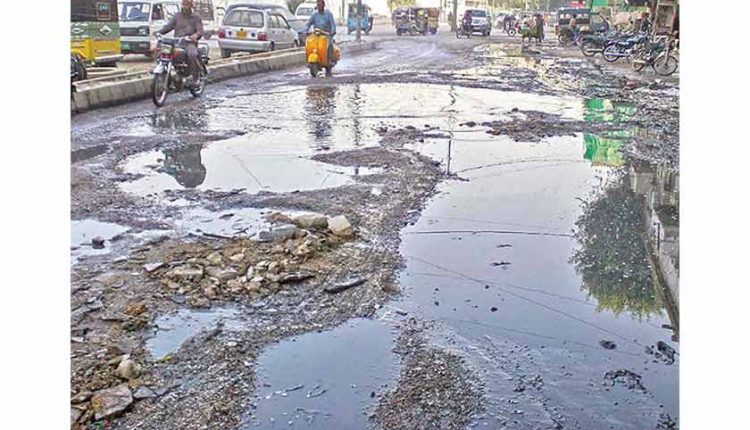
The decision came amid widespread complaints about the metropolis’s crumbling infrastructure, which has been ravaged by recent monsoon rains, turning daily commutes into hazardous ordeals for Karachi’s more than 20 million residents. Potholes, craters and uncovered manholes dot thoroughfares every few meters, contributing to a spate of accidents and drawing sharp criticism from locals who blame years of neglect, low-quality construction materials and inadequate accountability.
In a meeting chaired by Shah, officials including the local government minister, Nasir Shah; the mayor of Karachi, Murtaza Wahab; the chief secretary, Asif Haider Shah; the principal secretary, Agha Wasif; and the senior member of the Board of Revenue, Khalid Haider Shah, discussed the urgent need for repairs.
A statement from the chief minister’s office said after heavy rains, Karachi’s roads are in a state of disrepair. “Mega projects are underway, causing traffic problems. I want development work to be accelerated in the city so that people do not suffer further,” Shah was quoted as saying in the statement.
Wahab, the mayor, informed the group that 315 internal streets were severely damaged and required immediate attention, along with 60 major highways under the proposed rehabilitation plan.
Shah ordered that all schemes for the internal streets be approved without delay and that work proceed swiftly. He also instructed authorities to incorporate regular drainage systems in the streets and highways being rebuilt. “The sewerage system for the streets being built must be properly constructed,” Shah directed. “Funds are not the issue; I want immediate and quality work for the citizens.”
The meeting also touched on other civic improvements. Shah congratulated Wahab on the recent inauguration of reverse-osmosis plants in the Keamari district, aimed at providing clean drinking water. “We have to ensure clean water, good roads and excellent law and order for the people,” Shah said. He noted that traffic accidents in the city had decreased since the launch of the Sindh Safe City Project.
The approval follows a demand in March by Major Wahab for Rs 25 billion from the federal government to bolster the Karachi Metropolitan Corporation and secure the megacity’s development. Karachi, sprawling across 3,780 square kilometers, has long struggled with infrastructure woes exacerbated by seasonal downpours that erode roads and overwhelm nonexistent or faulty drainage.
In recent years, the dilapidated conditions have led to numerous crashes during rains, with videos circulating on social media showing motorbikes and pedestrians tumbling into uncovered potholes and ditches. Critics attribute the rapid deterioration to substandard materials and accumulated rainwater, which accelerates erosion in the absence of proper systems.
Copyright © 2021 Independent Pakistan | All rights reserved