By Staff Reporter
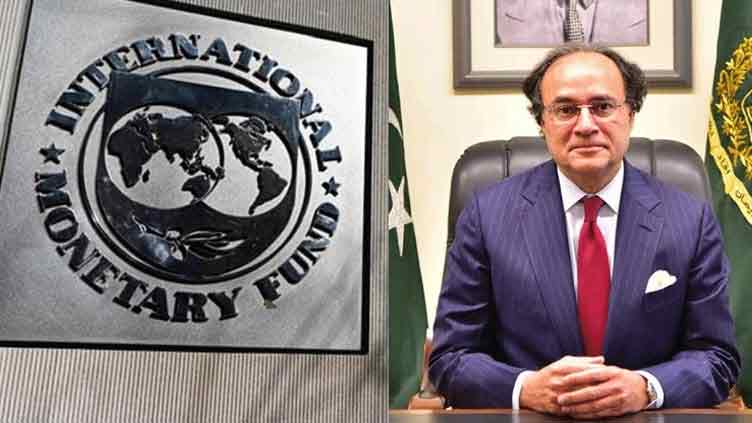
KARACHI: Pakistan agreed to 11 new structural benchmarks with the International Monetary Fund, including fresh tax measures and spending cuts, after missing a raft of targets under its $7 billion bailout program, paving the way for a $1.2 billion disbursement.
The commitments, outlined in IMF documents released on Thursday, include contingency steps to hike federal excise duties on fertilisers and pesticides by five percentage points, impose them on high-value sugary items and shift goods from the eighth goods and services tax schedule to the standard 18% regime if revenue shortfalls persist into the second quarter of fiscal 2026, which ends this month.
“Should FBR’s revenues continue to fall short of expectations in the second quarter of FY26 (end of current month), and if other tax revenues are insufficient to bridge the gap, we will — in consultation with IMF staff — increase federal excise duty (FED) on fertilisers and pesticides by five percentage points, introduce FED on high-value sugary items, and move items from the 8th GST schedule to the general GST regime,” Finance Minister Muhammad Aurangzeb said in a letter to the fund. “If by the end of the second quarter of FY26 there is a revenue shortfall due to the implementation of the National Tariff Policy, we will postpone an equivalent amount of expenditure until the last quarter of FY26.”
The staff-level agreement on the EFF’s second review, coupled with two prior actions, publishing a governance and corruption assessment report and issuing resolution orders for any undercapitalized bank as of March 2025, cleared the path for executive board approval and the tranche release to the State Bank of Pakistan.
Authorities missed one of six quantitative performance criteria at end-June: the floor on Benazir Income Support Programme spending, by Rs463 million, or 0.0004% of gross domestic product, due to administrative savings despite higher core program outlays. They requested a waiver, calling the lapse minor and temporary.
Five structural benchmarks were unmet, including amending laws for statutory state-owned enterprises, publishing an action plan based on the governance diagnostic, phasing out special economic zone incentives, introducing excise duties on fertilisers and pesticides, and avoiding tax exemptions, the last breached by waivers on emergency sugar imports. The continuous benchmark on parliamentary approval for non-budgeted spending and the cap on the premium between interbank and open-market exchange rates were met.
Four indicative targets slipped: floors on general government health and education spending, Federal Board of Revenue net tax revenues, and ceilings on provincial primary deficits and power sector payment arrears accumulation.
The FBR has already undershot its collection goal by about Rs430 billion in the first five months of fiscal 2026, while a Rs104 billion rupee gap from the captive power levy will be offset by trimming power subsidies amid lower-than-expected circular debt buildup.
Eight of 13 prior benchmarks were achieved, such as passing the fiscal 2026 budget aligned with targets, rolling out new agricultural income taxes and updating the Civil Servants Act for asset declarations. The new benchmarks span fiscal, governance, monetary, energy, SOE and trade reforms. On taxes, authorities must finalise a roadmap by end-December 2025, prioritizing key areas, staffing, timelines, revenue estimates and KPIs, then fully implement at least three priorities by end-March 2026, including subordinate laws, hiring and initial reporting.
A Tax Policy Office will develop and publish a three-to-five-year tax reform strategy by end-December 2026, emphasising sequenced policy, administration and legal changes, governance and resources to cut reliance on ad hoc measures and ensure revenue-neutral growth in collections.
Provinces committed to maximizing agricultural income tax via full FBR data-sharing and subjecting all services, barring limited exemptions, to GST. On governance, high-level federal civil servants’ asset declarations, aligned with June 2025 amendments, must go online by end-December 2026. The National Accountability Bureau will publish action plans by end-October 2026 to address corruption risks in 10 high-vulnerability agencies, based on institutional assessments.
For monetary policy, the SBP will assess remittance costs and cross-border payment hurdles by end-May 2026, with an action plan to favour formal channels over hawala without fiscal perks. A study on local-currency bond market bottlenecks, plus a strategic fix plan, is due by end-September 2026 to broaden investors and deepen markets.
Energy reforms include finalising preconditions for privatising Hyderabad Electric Supply Co. and Sukkur Electric Power Co. by end-December 2026, completing first-round bidding for three distribution companies early next year, advancing generation firm sales, restructuring transmission and launching a wholesale electricity market.
SOE updates require signing public service obligation pacts with the seven largest before the fiscal 2027 budget submission, per updated guidelines under the SOE Act, to clarify costing and transparency. Amendments to nine statutory SOE laws head to the National Assembly by end-August 2026.The Sovereign Wealth Fund law will be revised by end-March 2026 to define its mandate, enforce transparent divestment and procurement, add fiscal guards and apply SOE rules to its holdings; operations stay paused until then.
In trade and investment, federal and provincial governments must adopt a national sugar liberalisation policy by end-June 2026, covering licensing, price controls, trade permissions and zoning with implementation timelines. Amendments to the Companies Act, 2017, for unlisted firms’ compliance, governance modernisation and global alignment are due to parliament by then. A concept note on Special Economic Zone Act reforms, shifting to cost-based incentives with scope, objectives, KPIs and rationale, must be published by end-June 2026. An initial study assessing fiscal costs and the effectiveness of SEZ and Export Processing Zone incentives is set for end-June 2026, with full phase-out by 2035.
Pakistani officials, in the IMF report, explained delays. “We continue making progress on amending SOE-dedicated laws and expect to complete the process by August 2026, for which we request resetting the SB.”
On the skipped fertilizer and pesticide duties: “We missed the SB on the introduction of Federal Excise Duty (FED) on fertilizer and pesticides to prevent an excessive burden on the agricultural sector at a time of several ongoing reforms in the sector, as well as the recent floods. That said, the authorities stated that they are committed to implementing it as a contingency measure in case of a revenue shortfall.”
For sugar exemptions: “To forestall a shortage of sugar, partly related to low yields in the previous season, we expedited emergency imports via an SOE and exempted these imports from taxes and duties, thereby missing the continuous SB on the avoidance of tax exemptions, but have committed to deregulate the sugar sector.”
The governance diagnostic publication lagged due to agency consultations but was completed as a prior action; its action plan resets to end-December 2025. As another prior action, for any bank undercapitalised at March 2025 not meeting SBP standards: “We will exercise our authority under the Banking Companies Ordinance to issue a written order placing the bank under resolution and begin implementing a resolution plan to restructure, wind up, or merge the bank with a healthy institution.”
Both Resilience and Sustainability Facility first-review measures were met: a carbon levy and revenue-neutral electric vehicle subsidy with internal combustion engine tax, via the fiscal 2026 Finance Act. Authorities aim to deepen forex markets through interbank trading and rate flexibility for external stability. The IMF report, covering the EFF second review, RSF first review, a performance criterion waiver and criteria modifications, adjusted end-December QPCs for the primary deficit ceiling, new tax returns floor (seasonality-adjusted) and BISP cash transfers floor, aligning with the fiscal 2026 primary surplus goal.
Copyright © 2021 Independent Pakistan | All rights reserved