By Staff Reporter
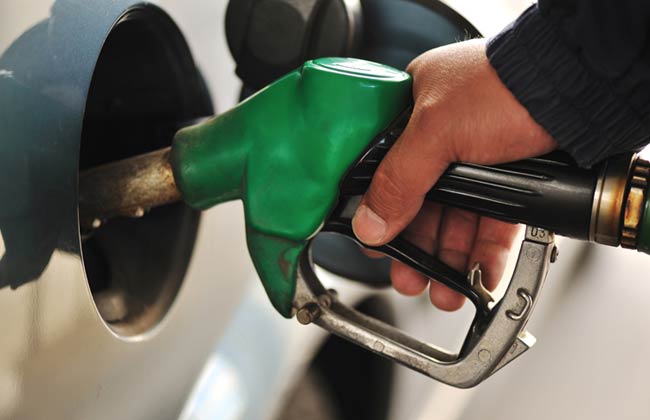
ISLAMABAD: Pakistan raised retail fuel prices for a fourth consecutive day, extending the steepest run of increases since the country moved to daily pricing in July, as attacks on Saudi Arabia’s oil infrastructure add a new front to the Middle East conflict driving global crude higher.
The Petroleum Division said petrol will rise 3.05 rupees to 370.80 rupees a liter for Friday, while high-speed diesel will climb 5.37 rupees to 398.04 rupees. The government’s tax take on both products is unchanged, at 114 rupees a liter on petrol and 100 rupees on diesel.
The increase is the fourth in as many days. Over that stretch, petrol has risen a cumulative 24.93 rupees and diesel 19.99 rupees, lifting both fuels toward levels last seen during the price spike that followed the outbreak of the US-Iran war in February.
Islamabad shifted to daily price-setting in July, abandoning the weekly review system it had used since early March. The government had handed the Oil and Gas Regulatory Authority responsibility for adjusting prices each day in line with international crude markets, a response to volatility unleashed by the conflict between Iran and the US.
Diesel remains below the 520.35-rupee peak it hit on April 3, having climbed from 281 rupees after fighting between Iran and the US broke out on Feb. 28. Petrol peaked the same day at 458.41 rupees, up from 266 rupees at the start of March.
The latest run-up in crude coincides with a sharp escalation in Yemen. Houthi forces aligned with Iran struck four cities in southern Saudi Arabia on Tuesday — Abha, Jazan, Najran and Khamis Mushait — hitting Aramco energy facilities and King Khalid Air Base with drones and ballistic missiles, and wounding at least 73 people, including women and children, Saudi military officials said. The Saudi energy ministry said operations were halted at several sites as crews fought fires; a spokesman for the Saudi-led coalition, Maj. Gen. Turki al-Malki, called the strikes a “dangerous escalation.” It was one of the largest Houthi assaults on the kingdom since the current fighting resumed.
The attacks struck facilities tied to the Bab el-Mandeb Strait, the Red Sea chokepoint Saudi Arabia has relied on to reroute crude exports since the separate Strait of Hormuz was effectively closed by the wider US-Iran war. Brent crude rose above $100 a barrel for the first time since July in the hours after the attack, before settling the session up 92 cents at $97.92; West Texas Intermediate settled at $93.03. Brent is up more than 8% this month and has risen roughly 30% from its early-August low. Goldman Sachs raised its Brent and WTI price forecasts by $5 on Monday, to $85 and $80 a barrel respectively for December, and warned crude could climb above $120 a barrel next year if Gulf output stays well below pre-war levels.
Pakistan imports the bulk of its petroleum needs, leaving it exposed to swings in global crude prices that domestic refining capacity cannot offset. Petroleum products are one of the country’s largest import categories, with every rise in international prices widening the import bill, straining foreign-currency reserves and adding to inflation.
That exposure has shaped fiscal policy for years. Successive governments have used subsidies and price controls to shield consumers during periods of high global prices, but the approach has proven costly: delayed pass-through built up financial strain on refiners and oil marketing companies, while broader subsidies widened budget deficits and added to public debt.
Petrol and diesel are Pakistan’s two largest sources of fuel-related revenue, with combined monthly sales of roughly 700,000 to 800,000 tons, dwarfing the roughly 10,000 tons of kerosene sold each month. Petrol is consumed mainly by private cars, motorcycles and rickshaws, making it more directly tied to the finances of middle- and lower-income households. Diesel’s reach is broader still, powering trucks, buses, power plants and large generators, meaning price swings are felt across freight costs, electricity generation and consumer prices.
The risk to global supply now spans two fronts. Hormuz has handled roughly a fifth of global oil flows in normal times but has been largely shut since the US-Iran war escalated; the Houthi campaign against Saudi Arabia threatens to compromise the Red Sea route Riyadh has used as an alternative. For an import-dependent economy like Pakistan’s, that combined pressure on global supply shows up at the pump within days.
Copyright © 2021 Independent Pakistan | All rights reserved