By Staff Reporter
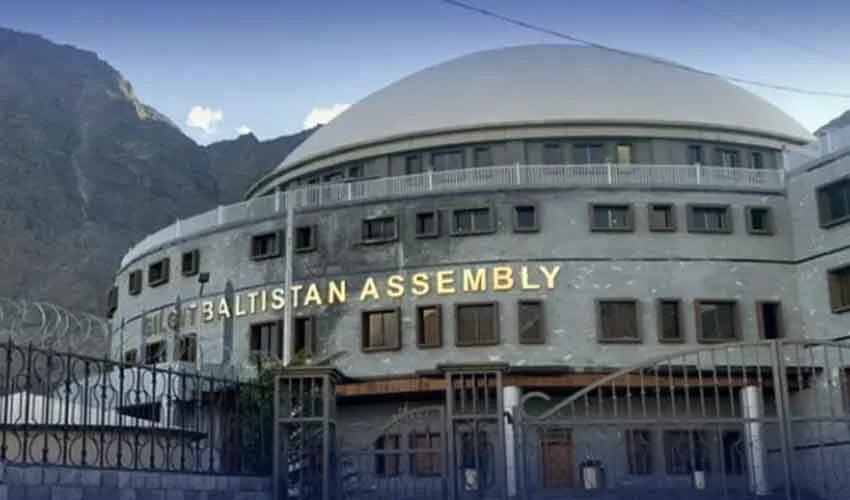
ISLAMABAD: The president has set Jan. 24, 2026, as the date for elections in Gilgit-Baltistan, the strategically vital northern region bordering China and India, marking the first vote there since a turbulent five-year term that saw a chief minister disqualified and a coalition government take power.
The announcement, issued Thursday by the Gilgit-Baltistan Council, comes after the regional assembly completed its tenure last month, triggering a constitutional requirement for polls within 60 days under the Government of Gilgit-Baltistan Order of 2018. “The President of Islamic Republic of Pakistan has announced Saturday 24th January as the poll day for the Gilgit-Baltistan Legislative Assembly in terms of article 48-A (1) of the Government of the Gilgit Baltistan Order 2018, read with Section 57 (1) of the Election Act 2017,” the notification said.
Retired Judge Yar Muhammad has been appointed caretaker chief minister to oversee the interim period. The election commission outlined a tight schedule. Nomination papers can be submitted from Dec. 15 to 22, with a preliminary list of candidates released on Dec. 23. Scrutiny by returning officers is set for Dec. 30, followed by appeals on Jan. 3, tribunal decisions on Jan. 10, a final candidate list on Jan. 11 and symbol allotments on Jan. 13.
In a separate directive, the commission named returning officers across 10 districts: District and Sessions Judge Ameer Hamza for Gilgit; Khursheed Ahmed for Skardu; Suhail Ahmed for Diamer; Luqman Hakeem for Ghizer; Raja Mehnaj for Astore; Deputy Commissioner Nizamuddin for Hunza; Minhas Hussain for Nagar; Muhammad Ishaq for Ganche; Muhammad Sharif for Kharmang; and Deputy Director Education Manzoor Hussain for Shigar.
The 33-seat assembly includes 24 directly elected general seats, three reserved for women and three for technocrats. The last elections, held on Nov. 15, 2020, delivered a majority to former prime minister Imran Khan’s Pakistan Tehreek-e-Insaf party, which installed Khalid Khurshid as chief minister. But in July 2023, the Gilgit-Baltistan Chief Court disqualified Khurshid, paving the way for a coalition of disgruntled Tehreek-e-Insaf members, the Pakistan Peoples Party and the Pakistan Muslim League-Nawaz.
That alliance elected Haji Gulbar Khan to lead the region. Over its term, the assembly passed 63 acts, including measures on land reforms and adaptations of six federal laws, according to Abbas Ali, the deputy director of information for the body. It also adopted 114 resolutions, among them a call for the federal government to declare Gilgit-Baltistan a provisional province of Pakistan.
The election news arrives amid broader discussions on funding for Pakistan’s federally administered territories. On Friday, Nawaz Sharif, the former prime minister and president of the Pakistan Muslim League-Nawaz, urged his brother, Prime Minister Shehbaz Sharif, to allocate resources to Azad Jammu and Kashmir and Gilgit-Baltistan through the National Finance Commission award, a proposal smaller provinces have repeatedly rebuffed.
“Funds should be given to Azad Kashmir and Gilgit-Baltistan under the NFC award. I will speak to PM Shehbaz Sharif in this regard,” Sharif said while meeting party leaders in Lahore. “A certain amount every year must be given to both provinces — Azad Kashmir and GB. This is very important,” he added, noting past failures in utilizing federal aid. “They need to know how to spend that money. The way I want such funds utilised did not happen.”
The idea, first floated during finance talks under Khan and echoed by current Foreign Minister Ishaq Dar, aims to ease the central government’s burden. At last week’s National Finance Commission meeting, its first in years, officials proposed generating over 5 percent of gross domestic product in additional revenues annually, about Rs6.5 trillion at current rates. No cuts to the provinces’ 57.5 percent share of the divisible pool were discussed, participants said, and the fiscal needs of Azad Kashmir and Gilgit-Baltistan will be addressed at the working-group level.
Sharif also called for election ticket applications in both territories by Dec. 31, vowing merit-based decisions. “We decide who will be awarded the tickets on merit in both provinces, as we do in other provinces,” he said. “We will not tolerate infighting on tickets. Anyone involved in this will be excluded from the process.”
The push for equitable funding follows recent unrest in Azad Kashmir, where the Jammu Kashmir Joint Awami Action Committee staged strikes from September to November over unmet demands, including scrapping 12 refugee-allocated assembly seats. Protests escalated into violence amid a communications blackout, with clashes leaving at least 10 dead. Two federal negotiations yielded agreements for more funding, a smaller cabinet and investigations into the fatalities. In November, then-Prime Minister Chaudhry Anwarul Haq lost a no-confidence vote, replaced by Faisal Rathore of the Pakistan Peoples Party, who was sworn in on Nov. 18.
Copyright © 2021 Independent Pakistan | All rights reserved