By Staff Reporter
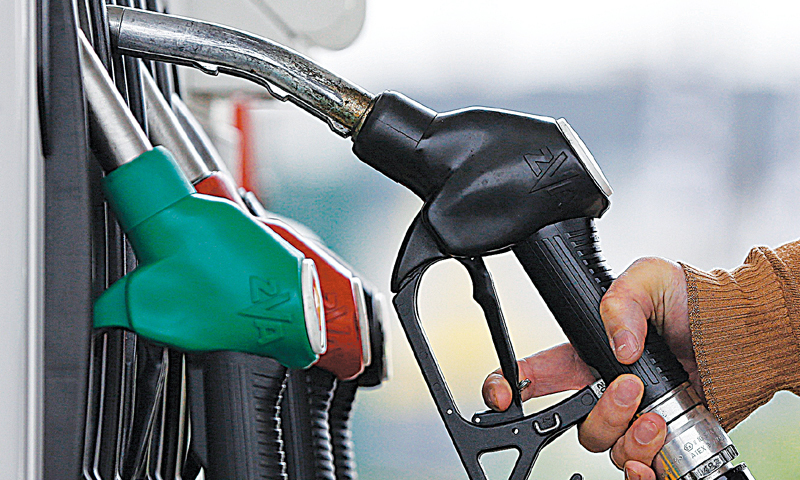
ISLAMABAD: Pakistan cut the price of petrol by 3.19 rupees a litre and raised diesel by 2.25 rupees for Wednesday, on the same day the government agreed to set up a committee with the Islamist party Jamaat-e-Islami to weigh broader fuel relief.
Petrol will sell for 376.06 rupees a litre and high-speed diesel for 398.07 rupees, according to a Petroleum Division notification. Taxes and duties make up 114 rupees of each litre of petrol and 100 rupees of diesel, or roughly 30% and 25% of the pump price.
The adjustment follows an increase a day earlier of 1.54 rupees for petrol and 2.16 rupees for diesel. Petrol is about 23 rupees below the 398.96 rupees it reached on Oct. 9. Pakistan has reset fuel prices daily since July 17, when Petroleum Minister Ali Pervaiz Malik announced the change, citing swings in international prices after renewed hostilities between Iran and the US. The cabinet and the prime minister gave the Oil and Gas Regulatory Authority responsibility for setting prices each day based on global market trends. Before that, the government had announced weekly revisions since early March.
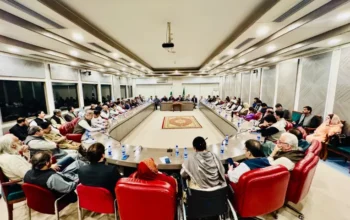
The levy is now the main political fight. Jamaat-e-Islami chief Hafiz Naeemur Rehman met Prime Minister Shehbaz Sharif in Islamabad on Tuesday to press his party’s demand for relief through abolition of the petroleum levy. The two sides agreed to form a joint committee to consider expanding the relief scheme that has been offered to owners of motorcycles, rickshaws and vehicles of up to 800cc. Rehman said his party would march on Islamabad in mid-November if the government fails to announce major relief by then.
It would not be the party’s first attempt. Rehman’s train march toward the capital reached Multan in September, just as Sharif, who was in New York for the UN General Assembly, telephoned to ask the party to hold off and offered talks. The party postponed the march on Sept. 22. Rehman rejected the government’s relief package for motorcyclists, rickshaw drivers and small-car owners as inadequate and renewed his call for the levy to be removed entirely.
That package, announced by Sharif on Sept. 13, takes 100 rupees a litre off petrol for motorcycles, three-wheeler rickshaws and cars with engines up to 800cc. The government estimates it covers 11.8 million people. About 10 million two-wheeler users and 800,000 three-wheeler users are entitled to relief on 20 litres a month, a maximum benefit of 2,000 rupees each. Another 1 million owners of cars up to 800cc receive relief on 30 litres, worth up to 3,000 rupees.
The government also brought back austerity measures on Sept. 17. A Cabinet Division notification ordered shops, markets, shopping malls, bazaars and grocery stores to close by 9 p.m. throughout the week. Marriage halls and other venues hosting festive events must close by 10 p.m., while restaurants, cafes and standalone fruit and vegetable shops can stay open until 11 p.m. Takeaway and home delivery services are exempt. Fuel allocations for official vehicles have been cut by 50% for three months.
Pump prices are well below their spring highs but remain elevated. Petrol peaked at 458.41 rupees on April 3, and diesel at 520.35 rupees the same day, so they are down about 18% and 24% from those levels. Petrol began the climb from 266 rupees in the first week of March, and diesel from 281 rupees after the US-Iran war broke out on Feb. 28. Both fuels now sell for about 41% more than at those starting points. Petrol was 253.17 rupees at the start of 2026.
Global crude is the main driver. Brent futures fell $2.09, or 1.8%, to $113.72 a barrel by 1:44 p.m. in New York on Tuesday, as traders focused on Middle East peace talks. US West Texas Intermediate fell $1.93, or 1.9%, to $99.83. Prices stayed near their highest in about six months. Last week, Brent settled at $108.79 after touching a five-month high of $111.99, as traders weighed a meeting between Iranian President Masoud Pezeshkian and Pakistan’s army chief Field Marshal Asim Munir, a key US-Iran mediator, against continued Houthi attacks on Saudi infrastructure.
Analysts at Gelber & Associates said continuing Houthi attacks on Saudi Arabia and a growing military presence in the Gulf are keeping supply risks in place, even as diplomatic headlines help unwind part of the recent price premium.
Pakistan imports most of its petroleum, so disruption in OPEC+ output, Middle East conflicts, sanctions on producers or shipping routes such as the Strait of Hormuz and the Red Sea can quickly raise crude and freight costs and feed through to domestic prices.
Petrol is used mainly in private transport, small vehicles, rickshaws and two-wheelers, so price changes fall hardest on middle and lower-middle income households. Diesel affects the wider public because it powers heavy transport, power plants and large generators. The two fuels are the main revenue earners in the sector, with monthly sales of about 700,000 to 800,000 tonnes, compared with about 10,000 tonnes for kerosene.
Copyright © 2021 Independent Pakistan | All rights reserved