By Staff Reporter
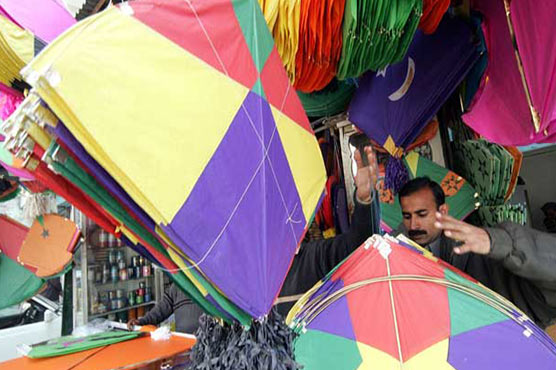
LAHORE: In a move to rein in the lethal hazards of the beloved but perilous Basant festival, a key committee in Punjab Province approved legislation on Monday that would impose a near-total ban on kite flying, allowing the activity only on designated days and in approved locations, with severe penalties for violations.
The Punjab Regulation of Kite Flying Bill 2025, cleared by the Punjab Assembly’s Standing Committee on Home Affairs, seeks to prevent the fatal accidents and property damage that have long plagued the tradition, particularly during the spring festival in February. The measure comes just months after the provincial government lifted an 18-year prohibition on Basant, raising concerns about a resurgence of injuries from razor-sharp kite strings.
The bill prohibits the use of metallic wires, nylon cords or strings coated with glass or other sharp materials in kite flying, as well as the manufacturing, transport, storage and sale of such kites and strings. Violators caught flying kites could face three to five years in prison or fines of up to Rs2 million. Those involved in making or selling banned materials could be sentenced to five to seven years behind bars and fined up to Rs5 million.
All offenses under the proposed law would be cognizable and non-bailable, meaning arrests could be made without warrants and bail would not be automatic. Police officers of sub-inspector rank or higher would be authorized to conduct searches and seize illegal items. Deputy commissioners would have the power to permit “permissible kite-flying” on specific days and at designated spots, but only with government approval and under strict conditions. Even then, sharp or metallic strings would remain forbidden.
The legislation includes special provisions for minors caught kite flying, who would be tried under the Juvenile Justice System Act. First-time offenders would face a Rs50,000 fine, doubling to Rs100,000 for repeat violations, with parents or guardians held liable if the fines go unpaid. To bolster oversight, the bill mandates registration for manufacturers, traders and sellers of allowable kite materials, as well as for kite-flying associations. It also offers rewards of up to Rs5,000 to whistle-blowers who provide credible tips on violations. If enacted by the full provincial assembly, the law would repeal earlier ordinances on kite flying and create a uniform regulatory framework across Punjab, aimed at safeguarding public safety.
Kite flying, a cultural staple in Punjab, was outlawed in 2007 after a spate of deaths and severe injuries, many involving motorcyclists whose throats were slashed by stray strings coated in glass or metal to cut competitors’ lines during aerial battles. The dangers persist despite the ban. In July, a 13-year-old boy in the Basti Lal Shah area of Kasur was electrocuted while trying to catch a stray kite attached to a metal string that fell onto a transmission line.
In March of last year, a motorcyclist in Faisalabad died when a metal string, thought to be from a stray kite, severed his throat. That incident prompted Punjab’s chief minister, Maryam Nawaz, to order a crackdown on kite flying. The provincial government escalated its enforcement in August 2024, declaring kite making, flying and transportation as non-bailable offenses.
Advocates for the bill argue that regulated exceptions, like those for Basant, could preserve the tradition while minimizing risks. But critics worry that enforcement challenges in densely populated areas could undermine the measures, given the activity’s deep roots in local festivals and rooftop gatherings.
Copyright © 2021 Independent Pakistan | All rights reserved