By Staff Reporter
ISLAMABAD: A high court judge in Islamabad found himself in the unfamiliar position of defendant on Monday, standing before his own colleagues to defend the validity of his law degree and his right to sit on the bench, even as he challenged the panel’s authority to hear the case against him.
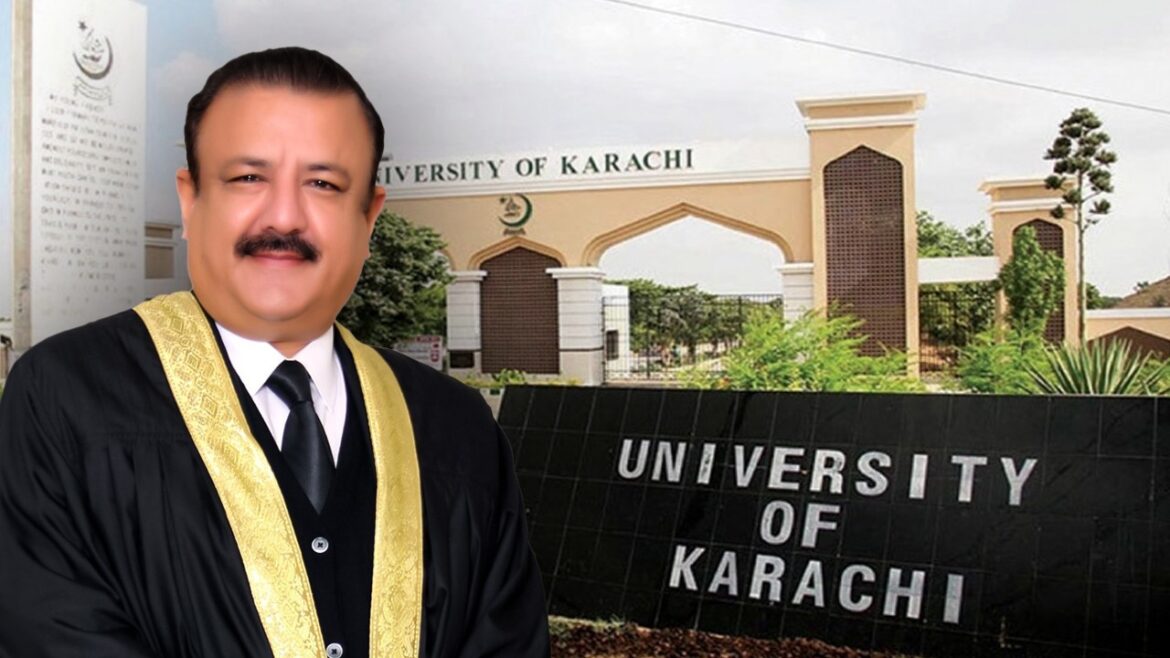
Justice Tariq Mehmood Jahangiri, of the Islamabad High Court, appeared in a courtroom crammed with lawyers, laying out his arguments in a dispute that has stirred deep questions about judicial integrity in Pakistan. The allegations started from a letter that surfaced on social media last year, said to be from the controller of examinations at the University of Karachi, casting doubt on the authenticity of his credentials.
That letter prompted a complaint to the Supreme Judicial Council in July of last year, the body responsible for investigating judicial misconduct. Earlier this year, Mian Dawood, a lawyer, escalated the matter by filing a petition in the Islamabad High Court to contest Justice Jahangiri’s appointment. The case came before a two-judge panel headed by Chief Justice Sardar Muhammad Sarfraz Dogar, with Justice Muhammad Azam Khan alongside him. At their previous session on Dec. 9, the bench had ruled Dawood’s petition admissible, a decision they had held in reserve since July of last year. In September, they had gone further, suspending Justice Jahangiri from his judicial duties, an order the Supreme Court overturned.
From the outset on Monday, Justice Jahangiri lodged a sharp objection to the bench itself, calling it “inappropriate” because a separate petition involving its members remained unresolved. He seemed to allude to challenges against Chief Justice Dogar’s appointment as chief. “We have filed a petition against you. You cannot hear this case,” Justice Jahangiri said. He then turned to the heart of the accusations, insisting that the entire matter hinged on records from 34 years ago. “I am ready to take an oath on the Holy Quran that my degree is genuine,” he said, stressing that the University of Karachi had never labeled it fraudulent.
Justice Jahangiri voiced exasperation at the pace of the proceedings, particularly the three-day notice issued last time for him to address the evidence compiled so far. The notice had been delivered to his chamber by the registrar’s office amid tight deadlines, with court staff accepting it and placing it there. He also assailed the earlier suspension order. “Never in the judicial history of Pakistan and India has such a thing happened,” he said. “Not even a patwari (revenue official) was stopped from work the way I was.”
Asking for a delay, Justice Jahangiri explained that he needed time to retain a lawyer and review the full case file. “So little time has been given. I have to get a lawyer and prepare,” he told the court. Dawood, the petitioner, pushed back, asking for daily hearings to move things along. The bench postponed the matter to Thursday, Dec. 18, ordering the University of Karachi’s registrar to appear in person and bring Justice Jahangiri’s degree records. They allowed the judge until then to secure representation.
Chief Justice Dogar sought to reassure him. “You would receive justice,” he said. As the session proceeded, with lawyers crowding the room, Chief Justice Dogar kept order, telling them several times to sit down. “Honourable Justice Jahangiri has come to me … I want to hear him,” he said.
The saga has dragged on through a series of legal twists. It began intensifying on Sept. 16, when this same bench issued an interim order barring Justice Jahangiri from judicial work while weighing whether the petition could proceed, a move made without notifying him in advance, which ignited debate among legal experts about a high court’s power to sideline one of its own judges temporarily.
The Supreme Court stepped in on Sept. 29, vacating the suspension. In a ruling by a five-judge constitutional bench led by Justice Aminuddin Khan, the court held that no high court could prevent a judge from performing duties amid a quo warranto petition, which questions an official’s right to hold office. That decision focused solely on the interim order’s validity, leaving the underlying claims untouched. The Supreme Court instructed the Islamabad High Court to handle all initial objections and advance the case lawfully.
Copyright © 2021 Independent Pakistan | All rights reserved