By Staff Reporter
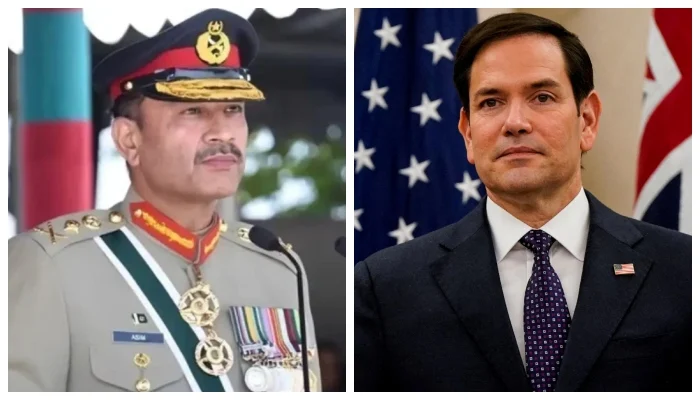
ISLAMABAD: Secretary of State Marco Rubio said on Friday that Pakistan had agreed to participate in discussions about a proposed international stabilisation force for Gaza, though he stopped short of confirming any firm commitment from Islamabad to deploy troops.
The announcement came amid ongoing efforts by the United States to assemble a multinational contingent aimed at maintaining security in the war-torn Palestinian territory, following a US-brokered peace agreement signed in October between Israel and Hamas.
Pakistan’s involvement was highlighted after its representatives attended a conference in Qatar last Tuesday, hosted by the US Central Command, where nearly 45 countries gathered to address the force’s command structure and other operational details.
Responding to questions about whether Washington had secured Pakistan’s consent for troop deployment in Gaza’s peace-building efforts, Rubio expressed appreciation but emphasised the preliminary nature of the talks.
“We are very grateful to Pakistan for their offer to be a part of it, or at least their offer to consider being a part of it,” he said, adding that more clarity was needed before formal commitments could be sought from any nation.
“I feel very confident that we have a number of nation-states acceptable to all sides of this who are willing to step forward and be a part of that stabilisation force and certainly, Pakistan is key, if they agree to do so,” Rubio added.
He noted that critical elements of the International Stabilization Force, or ISF, including its mandate, command structure and funding, were still being negotiated. “I think the next step here is announcing the Board of Peace [and] the Palestinian technocratic group that will help provide daily governance,” the secretary said. “Once that’s in place, I think that will allow us to firm up the stabilisation force, including how it’s going to be paid for, what their rules of engagement are, what their role will be in demilitarisation and so forth.”
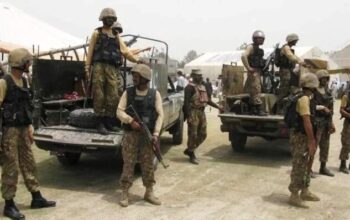
The State Department has reached out to more than 70 countries for contributions of troops or funding to the force. So far, about 19 nations have signalled their willingness to provide support through personnel, logistics or equipment, with potential deployments in Gaza beginning as early as next month. The local Dawn newspaper reported that Pakistan was weighing the option of sending 3,500 troops as part of the ISF.
Rubio’s comments followed a statement from the Foreign Office on Thursday, where spokesman Tahir Andrabi clarified that no decision had been made on troop contributions. He described the discussions as still in an exploratory phase, far from a final pledge.
The Foreign Office on Thursday also flatly denied reports that the country’s top military leader, Field Marshal Asim Munir, planned to travel soon to Washington for talks with President Donald Trump, potentially on a proposed multinational force to stabilise Gaza.
The denial contradicted a Reuters account from the previous day that cited two sources, including one described as a key figure in the military’s economic diplomacy. That report suggested Field Marshal Munir, who serves as both chief of army staff and chief of defence forces, would fly to the United States in the coming weeks to discuss the Gaza mission.
“The Reuters story was showing as if the visit had been planned, and there was a finality about it,” spokesman Andrabi said. “So, I am contradicting that and I’m contradicting the fact that a visit has been agreed or planned.” “The fact is that this is information that I do not have, about the timing or any future visit that might take place,” Andrabi added. “We obviously will wait for an official announcement that the Government of Pakistan makes about such a visit.”
The exchange comes amid broader speculation about Pakistan’s potential role in Trump’s 20-point framework for Gaza, which calls for troops from Muslim-majority nations to provide security during a transitional phase aimed at reconstruction and a political settlement in the territory devastated by war. International reports have highlighted Pakistan as a candidate, citing its experienced military, which waged a short but fierce conflict with India earlier this year and battles ongoing insurgencies in border areas.
That blueprint paved the way for the October accord between Israel and Hamas, with the ISF — drawn primarily from Muslim-majority countries — serving as a key pillar to enforce stability.
In November, the United Nations Security Council passed a US-drafted resolution endorsing Trump’s initiative and authorising the force’s deployment to the enclave. Thirteen members, including Pakistan, voted in favor, while Russia and China abstained. Hamas, however, swiftly rejected the resolution, condemning the creation of an international force tasked with, among other duties, the disarmament of Palestinian resistance groups in Gaza.
Two US officials told Reuters that international troops could arrive in the Gaza Strip as soon as next month to establish the UN-authorised stabilisation force. But they acknowledged uncertainty over how Hamas fighters would be disarmed, a process central to the force’s mission but fraught with potential complications.
Copyright © 2021 Independent Pakistan | All rights reserved