By Staff Reporter
ISLAMABAD: The Foreign Office on Saturday sharply dismissed remarks by India’s external affairs minister, S. Jaishankar, as “irresponsible assertions,” accusing New Delhi of trying to shift blame for its own support of terrorism and its destabilising actions in the region.
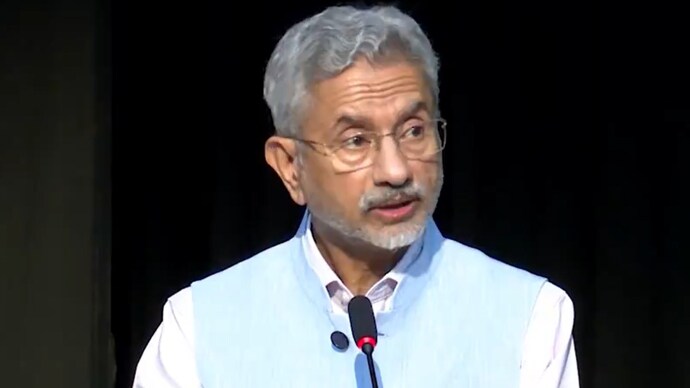
The rebuke followed Jaishankar’s comments on Friday, reported by Indian media, in which he alluded to Pakistan as a “bad neighbour” that persistently sponsors terrorism. Speaking about the need to defend against such threats, he said: “You can also have bad neighbours … unfortunately, we do. When you have bad neighbours … if you look to the one to the West — if a country decides that they will deliberately, persistently, unrepentantly continue with terrorism, we have a right to defend our people against terrorism.”
Jaishankar also addressed the Indus Waters Treaty, a longstanding agreement governing the sharing of river waters between the two nuclear-armed rivals, which has come under strain after an attack on tourists in Indian occupied Kashmir’s Pahalgam area on April 22 that India attributed to Pakistan without providing evidence. “Many years ago we agreed to a water-sharing arrangement — the belief was it was gesture of goodwill — because of good neighbourliness we were doing it … but if you have decades of terrorism there is no good neighbourliness, and you don’t get the benefit of good neighbourliness,” he said, according to The Hindu newspaper. “You can’t say … Please share water with me but I will continue terrorism – that’s not reconcilable.”
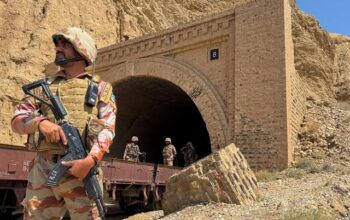
In its statement, the Foreign Office countered that India’s “documented involvement in promoting terrorist activities in the region, particularly in Pakistan, is well known.” It pointed to the case of Kulbhushan Jadhav, an Indian naval officer captured in Balochistan in March 2016, who confessed to working for India’s Research and Analysis Wing spy agency and engaging in espionage and terrorism against Pakistan. Jadhav remains imprisoned there.
“Equally concerning are recurring instances of extraterritorial killings, sabotage through proxies, and covert support to terrorist networks,” the statement said. “This pattern is consistent with the extremist ideology of Hindutva and its violent proponents.”
The Foreign Office also reiterated Pakistan’s position on Kashmir, where India maintains a heavy military presence amid a decades-long insurgency. “India continues its illegal and violent military occupation of Jammu and Kashmir,” the statement said. “Pakistan remains steadfast in its commitment to extend full political, moral, and diplomatic support to the Kashmiri people in their just struggle to realise their right to self-determination, as enshrined in relevant UN Security Council resolutions.”
Regarding the Indus Waters Treaty, signed in 1960 with World Bank mediation, the Foreign Office described it as an international agreement “concluded in good faith and at considerable cost.” It warned that “any unilateral violation of the treaty by India would undermine regional stability and call into question its credibility as a state that claims to respect international legal obligations. Pakistan will take all necessary measures to safeguard its legitimate rights under the treaty.”
The exchange highlighted the persistent tensions between Islamabad and New Delhi, which have escalated since a military conflict in May 2025. It came just days after a rare moment of civility. On Wednesday, Jaishankar shook hands with Pakistan’s National Assembly speaker, Ayaz Sadiq, in Dhaka during the funeral of Bangladesh’s former prime minister, Khaleda Zia. The encounter marked the first high-level contact between officials from the two countries since the clash last year.
According to a statement from Pakistan’s lower house of Parliament on Dec. 31, Jaishankar approached Sadiq in the Bangladeshi Parliament to sign a condolence book for Zia. “Jaishankar introduced himself to the speaker and told the speaker that he had recognised him,” the statement said. The brief interaction, amid a gathering of international dignitaries, offered a fleeting glimpse of protocol amid deep-seated animosity, but Saturday’s pointed rebuttal from Islamabad suggests no thaw in relations is imminent.
Copyright © 2021 Independent Pakistan | All rights reserved