By Staff Reporter
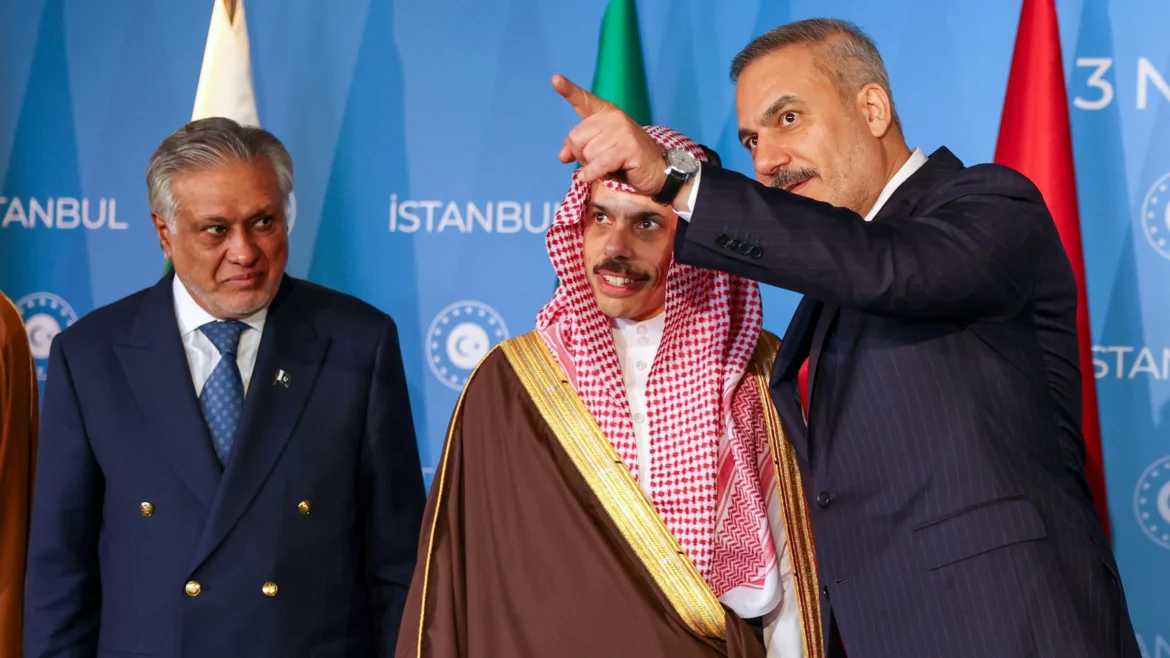
ISLAMABAD: Pakistan, Saudi Arabia and Turkey have drawn up a draft defence agreement after nearly a year of negotiations, a senior Pakistani official said, confirming reports of talks among the three Muslim-majority nations amid lingering regional tensions.
The disclosure by Raza Hayat Harraj, Pakistan’s minister for defence production, came hours after Turkey’s foreign minister, Hakan Fidan, acknowledged discussions but stressed that no deal had been finalised. The proposed trilateral pact, Harraj said, stands apart from a bilateral defence accord signed last year between Pakistan and Saudi Arabia.
“The Pakistan-Saudi Arabia-Turkey trilateral agreement is something that is already in pipeline,” Harraj said in an interview with Reuters. “The draft agreement is already available with us. The draft agreement is already with Saudi Arabia. The draft agreement is already available with Turkey. And all three countries are deliberating. And this agreement has been there for the last 10 months.” A final consensus among the three governments is required to complete the deal.
Fidan, speaking at a news conference in Istanbul, emphasised the need for broader regional cooperation to address distrust that has fueled instability, terrorism and external influences in the Middle East and beyond. “At the end of all of these, we have a proposal like this: all regional nations must come together to create a cooperation platform on the issue of security,” Fidan said. Regional issues could be resolved if relevant countries would “be sure of each other,” he added. “At the moment, there are meetings, talks, but we have not signed any agreement… Our President’s vision is for an inclusive platform that creates wider, bigger cooperation and stability.” Fidan did not name Pakistan or Saudi Arabia directly.
The talks follow a Bloomberg report last week, citing people familiar with the matter, that Turkey was in advanced discussions to join the Strategic Mutual Defense Agreement signed in September between Pakistan and Saudi Arabia. That bilateral pact, inked by Prime Minister Shehbaz Sharif of Pakistan and Crown Prince Mohammed bin Salman of Saudi Arabia, pledges that an attack on one would be treated as aggression against both. Bloomberg suggested Turkey saw the alliance as a means to bolster security amid doubts about the United States’ reliability as an ally, particularly under President Donald J. Trump and questions over his commitment to NATO. The US maintains strong military ties with all three countries.
Saudi Arabia contributes financial power, Pakistan offers nuclear capabilities, ballistic missiles and manpower, while Turkey brings military experience and a growing defence industry, Nihat Ali Ozcan, a strategist with the Ankara-based think tank TEPAV, told Bloomberg.
Harraj, asked about the reports by BBC Urdu, described Turkey, along with China, Saudi Arabia and Azerbaijan, as close strategic partners of Pakistan. Pakistan and Turkey share longstanding defence links, with Ankara constructing corvette warships for the Pakistani Navy, upgrading F-16 fighter jets for its air force and supplying drone technology. The push for new alliances comes after Pakistan’s military successes in a brief but intense conflict with India in May 2025, which Pakistani officials attribute in part to enhanced defence pacts.
That 87-hour war, the worst between the nuclear-armed rivals since 1999, erupted after India accused Pakistan of backing militants who killed 26 tourists in the Indian-administered region of Jammu and Kashmir, a charge Islamabad denied while calling for a neutral investigation. India launched what Pakistan called an unprovoked attack, leading to missile, drone and artillery exchanges that claimed more than 70 lives on both sides. Pakistan downed six Indian fighter jets, including three Rafales, and dozens of drones before a U.S.-brokered ceasefire on May 10. Saudi Arabia is thought to have helped de-escalate the crisis.
On Wednesday, Sharif told a cabinet meeting that interest in Pakistani fighter jets had surged since the conflict. “After Pakistan won the war last year, the demand for Pakistani fighter jets has increased,” he said. “Many countries are actively engaged with us to acquire the jets.” Harraj earlier told the BBC that Islamabad was negotiating potential sales of its JF-17 Thunder jets with several nations. The proposed trilateral deal, if sealed, could reshape security dynamics in the Middle East and South Asia, analysts say, potentially countering perceived US unpredictability while fostering ties among Sunni-majority powers.
Copyright © 2021 Independent Pakistan | All rights reserved