By Staff Reporter
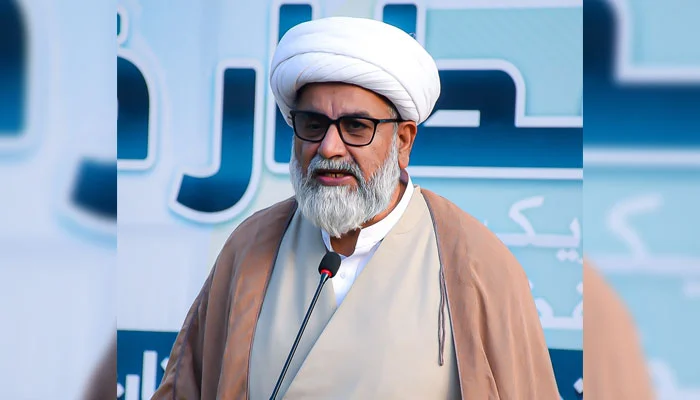
ISLAMABAD: The lawmakers from the governing coalition and opposition have reached a consensus on naming Senator Allama Raja Nasir Abbas, the chief of the Majlis Wahdat-e-Muslimeen and an ally of the Pakistan Tehreek-e-Insaf, as the new leader of the opposition in the Senate, according to statements from key figures on Monday.
The agreement, confirmed by PTI Senator Barrister Ali Zafar and Federal Law Minister Azam Nazeer Tarar, marks a step toward filling a long-vacant position in the upper house of Parliament, which has been empty since August of last year. It follows the recent appointment of Tehreek Tahafuz Ayeen-e-Pakistan chief Mehmood Khan Achakzai as opposition leader in the National Assembly, a move that ended months of institutional gridlock in the lower chamber.
Zafar, speaking to reporters outside Parliament, said that Senate Chairman Syed Yousaf Raza Gilani had consulted with senators from both the treasury and opposition benches on the matter. “The treasury and opposition benches have agreed on the name of Majlis Wahdat-e-Muslimeen chief Senator Allama Raja Nasir Abbas as leader of the opposition in the Senate,” Zafar said. He emphasised the urgency of the role, noting that the office is “crucial in a parliamentary democracy” for ensuring “effective governance, constitutional oversight and transparency in the parliamentary system.” Tarar, the law minister, also confirmed stating that Abbas would assume the position. “A notification in this regard was being issued,” Tarar said, adding that formal paperwork was underway at the Senate secretariat.
Officials said the Senate secretariat was actively reviewing legal and procedural requirements for the appointment, with an official notification anticipated in the coming days. The process has gained momentum in the wake of Achakzai’s elevation in the National Assembly, where he was nominated by Imran Khan, the jailed founder of the PTI, back in August 2025.
Achakzai, who also heads the Pashtunkhwa Milli Awami Party, took over after the disqualification of the previous opposition leader, Omar Ayub Khan, in connection with cases tied to the unrest on May 9, 2023. Opposition lawmakers had accused the government of dragging its feet on filling the vacancy, leaving the lower house without a formal opposition voice for months. The Senate post became vacant under similar circumstances last August, when then-opposition leader Shibli Faraz was disqualified by the Election Commission of Pakistan following his conviction in riots related to the same May 9 events.
Faraz, like Ayub, had been sentenced to 10 years in prison in July of that year, along with other PTI figures such as Zartaj Gul, as part of a broader crackdown after violent protests erupted across the country following Khan’s arrest at the Islamabad High Court in a graft case. The PTI, which has faced escalating legal and political pressures since Khan’s ouster via a no-confidence motion in April 2022, has been pushing for Abbas’s appointment for months. In a letter to the Senate chairman earlier this year, the party’s parliamentary leader urged that Abbas be installed without delay, arguing that the absence of an opposition leader left the upper house “institutionally incomplete” and raised broader questions about the health of Pakistan’s parliamentary system.
Zafar reiterated those concerns on Monday, warning that the prolonged vacancy undermined the chamber’s ability to function effectively. “Without a leader of the opposition, the House remained institutionally incomplete,” he said. The nominations of both Achakzai and Abbas were initially floated by the PTI’s parliamentary committee in October 2025, during a joint meeting of opposition parties in the Senate and National Assembly.
At the time, PTI Chairman Barrister Gohar Ali Khan confirmed the decisions, stating that the party was committed to coordinated leadership in both houses. Nomination papers for Abbas were set to be submitted to the Senate secretariat alongside Achakzai’s, but the process stalled amid ongoing legal battles and political maneuvering. Political observers see the recent breakthroughs as part of a tentative thaw between the government and opposition, aimed at restoring normal parliamentary operations amid broader national challenges, including economic strains and security threats.
Insiders within the ruling Pakistan Muslim League-Nawaz suggest that Achakzai’s role, in particular, could help steer the PTI away from street protests and back into legislative channels. This comes just weeks before a planned PTI demonstration on Feb. 8, which party leaders have framed as a push for electoral transparency and the release of detained members. Senator Pervaiz Rasheed, a senior PML-N figure, described Abbas’s impending appointment as fulfilling “ethical and constitutional necessities” and called on opposition leaders to prioritize dialogue over agitation. “Politics and democracy function through political parties, which must recognize one another,” Rasheed said, adding that the country faces pressing issues like terrorism that demand unified parliamentary engagement.
However, spokespeople for the Tehreek Tahafuz Ayeen-e-Pakistan cautioned that the appointments alone may not dissuade the PTI from protests, insisting that the government must address grievances over alleged rights violations and election irregularities from February 2024. Abbas himself, in recent public remarks, has voiced strong support for Khan, stating that “90 percent of people in Pakistan are in favor of Imran Khan” and urging public participation in upcoming demonstrations. Khan, who has remained in custody since August 2023 on multiple charges, continues to wield significant influence over PTI decisions from behind bars. Party leaders have repeatedly affirmed that figures like Ayub and Faraz will resume their roles once their court cases are resolved, viewing the current appointments as interim measures to maintain opposition momentum.
Copyright © 2021 Independent Pakistan | All rights reserved