By Staff Reporter
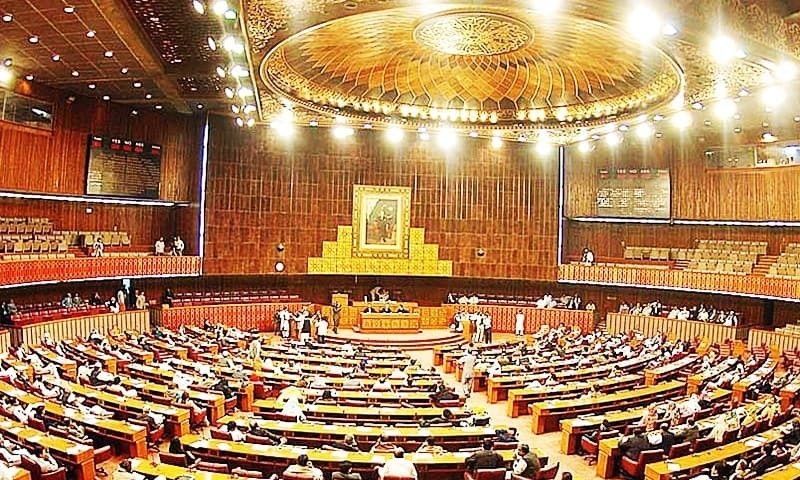
ISLAMABAD: The National Assembly on Wednesday approved a contentious amendment to the country’s election laws that would allow lawmakers to shield their financial disclosures from public view in cases where such revelations could endanger their lives or those of their families, a move that drew sharp criticism from the opposition Pakistan Tehreek-e-Insaf party but sailed through with support from the ruling coalition.
The Elections Amendment Bill, 2026, introduced by Pakistan Peoples Party lawmaker Shazia Atta Marri, seeks to insert a new proviso into Section 138 of the Elections Act. Under the change, the speaker of the National Assembly or the chairman of the Senate could, upon a written application from a member, issue a ruling to withhold public publication of asset and liability statements by the Election Commission of Pakistan.
The restriction would apply only if disclosure “would pose a serious threat to the life or safety of the members or, as the case may be, his family,” and it could last no longer than one year at a time. Lawmakers would still be required to submit complete and accurate financial details confidentially to the commission.
The legislation, which also updates references in the act from “Supreme” to “Federal Constitutional” to reflect the creation of a new Federal Constitutional Court under the 27th Amendment, aims to strike what its backers describe as a delicate balance. According to the bill’s statement of objectives and reasons, while public disclosure of assets promotes accountability and trust in government, “unrestricted or excessive disclosure could potentially compromise the personal security and privacy of parliamentarians and their families.”
The measure’s passage comes at a fraught moment for Pakistan’s political class, just a week after the Election Commission suspended the memberships of 159 lawmakers across various legislatures for failing to file their annual financial statements by the Dec. 31 deadline. Those affected included high-profile figures such as Federal Minister for Climate Change Musadik Malik, a senator from the ruling Pakistan Muslim League-Nawaz; former lawmaker Abid Sher Ali, also of the PML-N; and Murad Saeed of the PTI. The suspensions extended to nine senators in total, 32 members of the National Assembly, 50 from the Punjab Assembly — including Rana Sikandar Hayat, Adnan Dogar and Aamir Hayat Hiraj — 33 from the Sindh Assembly, among them Speaker Syed Awais Qadir Shah, former chief minister Syed Qaim Ali Shah and provincial minister Saeed Ghani; 28 from the Khyber Pakhtunkhwa Assembly; and seven from the Balochistan Assembly.
Under current law, all members of the National Assembly, Senate and provincial assemblies must submit detailed accounts of their assets and liabilities — encompassing those of spouses and dependent children — to the Election Commission each year. Section 138 mandates that these declarations be published in the official gazette, a requirement intended to foster transparency in a nation long plagued by allegations of corruption among its elite.
Wednesday’s vote followed a presentation by Rana Iradat Sharif Khan, chairperson of the Standing Committee on Parliamentary Affairs, who laid out the panel’s report on the bill. The House then debated and approved the measure, with only the PTI voicing opposition. This marked a shift from last August, when the same committee had deadlocked on the proposal after lawmakers from both the PML-N and PTI banded together against it. The bill, originally tabled by PPP members Shazia Marri and Syed Naveed Qamar, now heads to the Senate for consideration. If cleared there, it would require President Asif Ali Zardari’s assent to become law.
Critics, particularly from the PTI, argued that the amendment could erode public oversight at a time when trust in institutions is already strained. Supporters countered that it provides necessary safeguards in a volatile security environment, where politicians and their kin have faced threats from militants, political rivals and criminal elements. Pakistan has seen a surge in targeted attacks on public figures in recent years, including assassinations and bombings that have claimed the lives of lawmakers and their relatives.
The timing of the bill’s approval, amid the mass suspensions, shows the tensions surrounding financial accountability in Pakistani politics. The Election Commission’s action last week served as a stark reminder of the existing rules’ bite, temporarily barring the affected lawmakers from participating in legislative proceedings until they comply. While some have since moved to rectify their filings, the episode has fueled debates over whether such disclosures truly deter graft or merely expose vulnerable individuals to greater risks.
Copyright © 2021 Independent Pakistan | All rights reserved