By Staff Reporter
ISLAMABAD: The government lowered petrol and diesel prices on Monday, the latest adjustment under a daily pricing system introduced in July. Pump rates remain far above their levels before the US-Iran war, and crude is climbing again after President Donald Trump rejected a Tehran proposal to reopen the Strait of Hormuz.
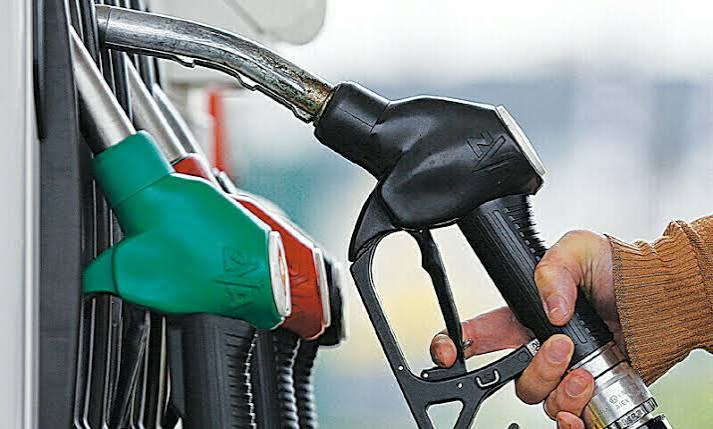
Petrol will cost Rs389.03 a liter from Sept. 29, down from Rs391.30, while high-speed diesel falls Rs3.56 to Rs404.97 from Rs408.53, according to a notification from the Petroleum Division. The division said the Oil and Gas Regulatory Authority revised the prices to reflect changes in international Platts rates, premiums and other incidental costs. The reductions amount to about 0.6% for petrol and 0.9% for diesel.
The government continues to collect Rs114 a liter in taxes and duties on petrol, or roughly 29% of the pump price, and Rs100 a liter on diesel, about a quarter.
The cut follows a three-day pricing window. On Friday the government raised petrol by Rs2.02 a liter and lowered diesel by Rs3.59 for Sept. 26 to Sept. 28. In the review before that, on Thursday, diesel fell Rs2.63 to Rs412.12 and petrol dropped 84 paise to Rs389.28.
Prices have retreated from their highs but are well above where they began. Diesel peaked at Rs520.35 a liter on April 3, after starting to climb from Rs281 when the war broke out on Feb. 28. Petrol peaked the same day at Rs458.41, having begun rising from Rs266 in the first week of March. At Monday’s prices, diesel is about 22% below its peak and petrol about 15% below, but both remain more than 40% above their starting points.
Petrol is used mainly for private transport, small vehicles, rickshaws and two-wheelers, so its price hits middle- and lower-middle-income households hardest. Diesel feeds through to the wider economy because it powers heavy transport, power plants and large generators. The two fuels are the biggest revenue earners in the sector, with monthly sales of about 700,000 to 800,000 tonnes, against roughly 10,000 tonnes of monthly kerosene demand.
Oil Markets Turn Higher
Global markets offer little comfort. Oil rose about 2% on Monday after Trump rejected Iran’s proposal to reopen Hormuz and end the conflict. Brent futures were up $2.28, or 2.2%, at $106.60 a barrel by 10:27 a.m. in New York, while West Texas Intermediate gained $1.70 to $94.11. Prices had jumped more than $4 earlier in the session, then pared gains on expectations of Qatari-mediated talks, leaving Brent near $105 and WTI near $92.70.
Qatari mediators were expected to hold separate talks on Monday or Tuesday with Iranian Foreign Minister Abbas Araqchi in New York and with the US side, an official briefed on the negotiations told Reuters. The discussions are expected to center on an amended version of the seven-day plan Iran put forward last week on the sidelines of the UN General Assembly. That plan calls for an end to hostilities in Iran and Lebanon, the unfreezing of Iranian assets, an end to sanctions on Iranian oil and the lifting of the US blockade on Iranian ports. Tehran would then reopen Hormuz and resume nuclear talks.
Trump confirmed to reporters that he had turned the offer down. Even so, he told Axios on Sunday that he expected US negotiators to take part in further talks this week. Araqchi said mediators had not formally conveyed a US rejection to Tehran, and that Iran was awaiting Washington’s definitive position.
Some flows have recovered. Preliminary Kpler data show Middle East crude exports rose to 12.8 million barrels a day in September, the highest since the war began. That is still well short of normal. About a fifth of the world’s oil, roughly 20 million barrels a day, moved through Hormuz before the US and Israel attacked Iran in February.
Austerity Measures
For Pakistan, which imports most of its petroleum, the risks are direct. Prices respond to OPEC+ decisions, Middle East fighting, sanctions on producers and disruptions on shipping routes including Hormuz and the Red Sea. Any interruption can quickly raise crude and freight costs, and those increases flow into domestic fuel prices.
The government has responded with a mix of conservation rules and targeted relief. On Sept. 17, the Cabinet Division notified austerity measures with immediate effect. Shops, markets, malls, bazaars, department stores, grocery stores and kiryana shops must close by 9 p.m. every day. Marriage halls, marquees and other venues hosting festive events must close by 10 p.m. Restaurants, cafes, food outlets and standalone fruit and vegetable shops may stay open until 11 p.m. Takeaway and home delivery are exempt. Fuel allocations for official vehicles have been cut by 50% for three months.
On Sept. 13, Prime Minister Shehbaz Sharif announced a relief scheme offering Rs100 a liter off petrol for motorcycles, three-wheeler rickshaws and cars of up to 800cc. The government estimates it will reach 11.8 million people. About 10 million two-wheeler users and 800,000 three-wheeler users are eligible for relief on 20 liters a month, a maximum benefit of Rs2,000 each. Another 1 million owners of cars up to 800cc can claim relief on 30 liters a month, worth up to Rs3,000.
Copyright © 2021 Independent Pakistan | All rights reserved