By Staff Reporter
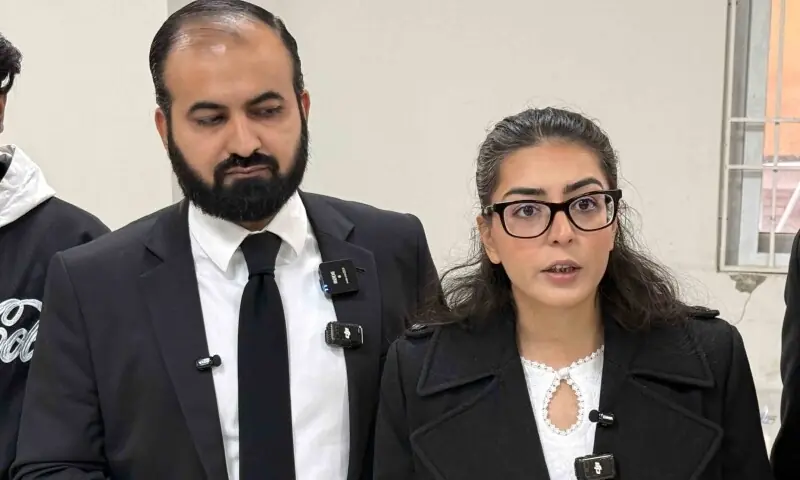
ISLAMABAD: Lawyers and activists turned out in force across Pakistan on Monday to condemn the conviction of human rights lawyer Imaan Zainab Mazari-Hazir and her husband, Hadi Ali Chattha, who face 17 years in prison over social media posts that authorities labeled as supportive of banned groups.
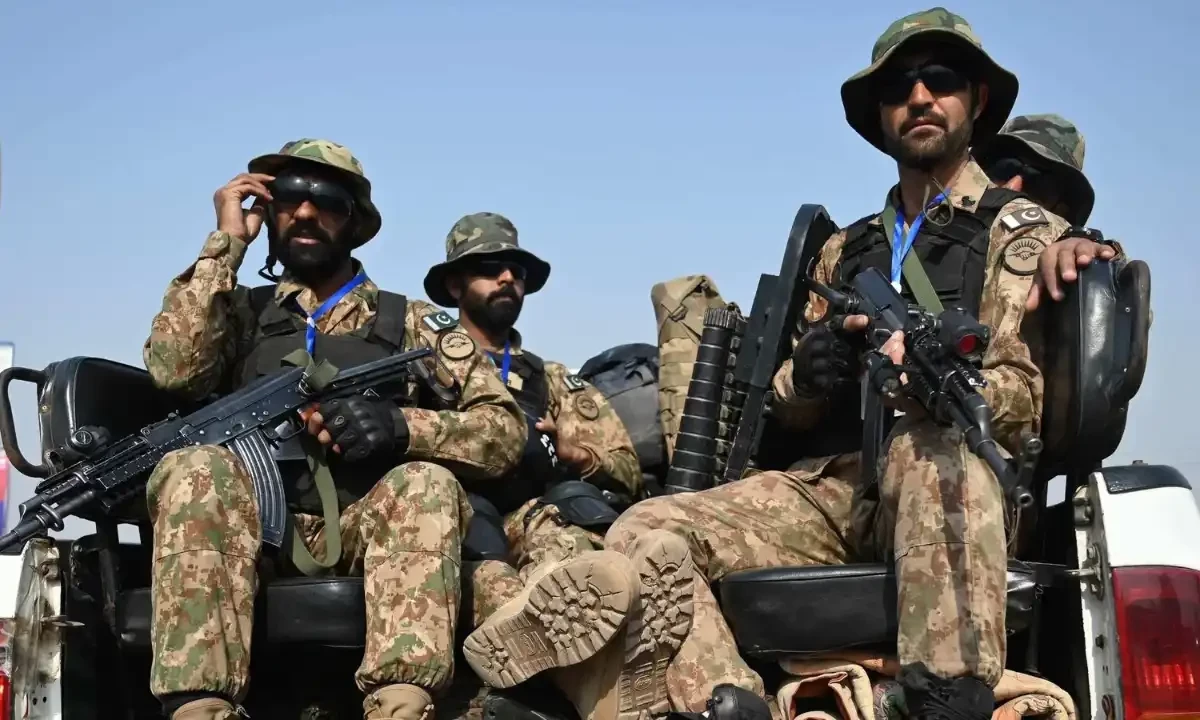
The outcry shut down courtrooms in the capital and choked off streets in Karachi, where police set up barricades to keep demonstrators away from a key rally point. Mazari-Hazir, a vocal defender of the oppressed, and Chattha, her fellow attorney, got hit with the stiff sentence over the weekend, stirring up old resentments for some and fueling demands for fairer treatment under the country’s cyber laws.
At the Islamabad High Court, a crowd of lawyers massed at the front entrance, holding signs that said “Justice for Lawyers” and shouting down the police. Syed Wajid Ali Gilani, head of the court’s bar association, ran the show, with political names like Babar Awan showing up alongside members from the local bar councils. Awan told the group that lawyers were facing “state and police terrorism,” and he warned that it hurt everyone in the end.
The bar groups in Islamabad — from the high court, the district, and the broader council — all backed a full-day boycott. Attorneys only showed for emergencies, leaving most cases hanging. Police beefed up their presence around the building, rolling out armored trucks and posting extra officers to keep things in check. The boycott even spilled into one hearing before Chief Justice Sarfaraz Dogar. Lawyer Qaiser Abbas Gondal explained the walkout was over the jailed pair. Dogar asked who exactly had been locked up, and Gondal named Mazari-Hazir and Chattha. The judge followed up by asking if they counted as lawyers. Gondal didn’t answer. Dogar said bar leaders could come talk to him in private if they saw it that way.
Manzoor Jajja, secretary for the high court bar, put out a notice asking everyone to stay out of court. He said they’d head over to the district courts together to make their stand official, then meet back up.
Judge Muhammad Afzal Majoka handed down the ruling Saturday in a lower court. It all started with a tip to the National Cyber Crime Investigation Agency back on Aug. 12, 2025. The filing claimed Mazari-Hazir was pushing ideas tied to outlawed outfits, and Chattha got dragged in for sharing her stuff. They each drew five years and a Rs5 million penalty under one part of the 2016 Prevention of Electronic Crimes Act; 10 years and Rs30 million under another; and two years with a million-rupee fine on a third count.
Police first grabbed them on Jan. 23 in a dust-up near the high court. They ended up in an anti-terrorism court, sealed off tight — no press or other lawyers got in. Prosecutors wanted a week to hold them, but Judge Abul Hasanat Zulqarnain put Mazari-Hazir on judicial lockup for 14 days and Chattha for seven.
Opposition leaders from a key political alliance also piled on the criticism of the prison terms handed to human rights lawyers, calling the sentences a sign of outright dictatorship in Pakistan and urging the top judge to step in. A delegation from the Tehreek Tahafuz Ayeen-i-Pakistan, or TTAP, paid a visit to Mazari-Hazir’s mother, Shireen Mazari, to show support for the couple, who remain behind bars after their conviction. The group posted about the meeting on X, along with a video clip that captured TTAP chief Mahmood Khan Achakzai, vice chairman Mustafa Nawaz Khokhar and Pakistan Tehreek-e-Insaf leader Barrister Gohar Ali Khan among those present.
After the sit-down, Gohar spoke to reporters and ripped into the handling of the case from start to finish. He said the arrest, the trial and the shortcuts around proper procedures all deserved condemnation. “We have always been and will always remain opponents of the Prevention of Electronic Crimes Act (Peca),” he said. “Voices cannot be suppressed. Nations cannot be suppressed by suppressing voices.” Gohar argued that rulings like this one breed chaos, pushing people toward their own rough justice outside the system. “We hope that the chief justice of Pakistan will take action on this case and other related cases in which speech is prohibited and people’s rights are violated.” “We demand that their cases be fixed, their convictions be reversed and their sentences be suspended. We are hopeful that the chief justice will act on this.”
Khokhar said the alliance stood firmly against the couple’s detention and the stripping away of their basic rights, like a level playing field in court and the freedom to speak out. “Without mincing words, today, dictatorship has been imposed in Pakistan,” he said. “If anyone believes that Pakistan is a democracy or under a hybrid system, then they must correct themselves.” He took aim at the courts, saying their recent calls were steering the country toward the likes of North Korea or Egypt. “But those who want to make this country like North Korea or Egypt should know that resistance and the struggle for democratic rights define Pakistan’s history.”
He tied the mess to the fallout from the February 2024 elections, saying the setup forced on voters had now shown its true colors: no room for tough questions, and quick shutdowns for anyone pushing back. “Such a situation is unacceptable for us,” he said. Khokhar announced that TTAP would hold its own demonstration on Feb. 8, vowing to pull out all stops for ordinary Pakistanis. He called on folks inside the establishment and the bench with a sense of right and wrong to push back, warning that the damage would hit the whole nation, not just a few.
Down in Karachi, the backlash clogged the roads hard. Containers and buses blocked paths to the Karachi Press Club, grinding traffic to a halt on routes like I.I. Chundrigar Road, Shaheen Complex, M.R. Kiyani, Aiwan-i-Sadr, Fawwara Chowk, and around Zainab Market.
Commuters sat stuck for hours as lawyers, rights workers, and everyday folks tried to rally against the verdict. Cops stopped people from getting close, including Zulfikar Ali Bhutto Junior, whose grandfather founded the Pakistan Peoples Party and whose dad, Murtaza Bhutto, met a grim end. Bhutto Junior hunkered down at a roundabout near the club with activist Sheema Kermani and others when they couldn’t push through. He told reporters right there that even sidewalks were off-limits for protesting. “We are being deprived of fundamental human rights,” he said. “I want to participate in the protest, but participation in the protest has become a crime.” On the couple’s case, he added: “They were convicted over just a tweet. My father faced similar treatment by the police.”
Fazil Jamili, who runs the press club, called out the blockade on X. “The siege of the Karachi Press Club today is a blatant assault on democratic freedoms. By cordoning off the KPC and barring citizens, including Zulfiqar Bhutto Jr., from protesting the sentencing of Imaan Mazari, authorities are violating the fundamental right to peaceful assembly.” Jibran Nasir, a lawyer and activist, posted. “All roads leading to the KPC have been blocked by placing containers and parking buses. The state wants to deny journalists, advocates and civil society the right to protest and expose the sham trial and conviction of Advocates Imaan Mazaari and Hadi Ali Chattha.”
The standoff dragged on until about 6:45 p.m., when cops finally let Bhutto Junior and the group through. At the club, he spoke up again. “There were no restrictions on protest in a democracy. Only thieves are happy in this country, and I am talking about those thieves who hold posts and are sitting in Islamabad.” Karachi traffic cops confirmed the shutdowns on X, saying Deen Muhammad Wafai and Sarwar Shaheed roads closed around 5 p.m. for security.
Copyright © 2021 Independent Pakistan | All rights reserved