By Staff Reporter
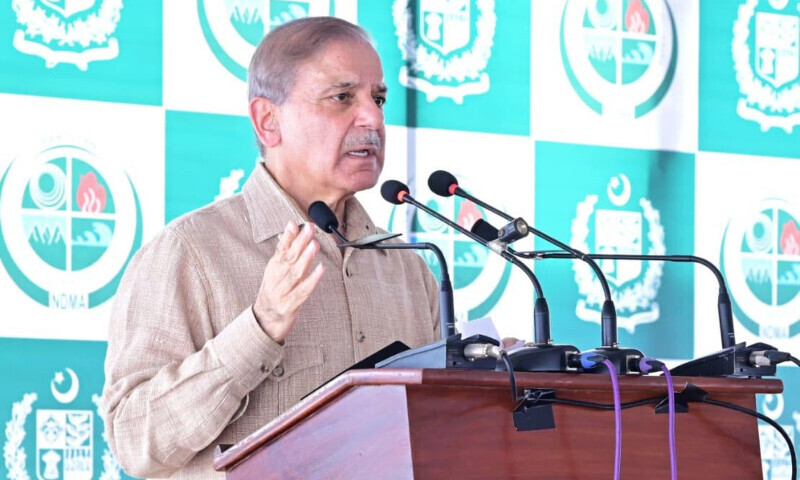
ISLAMABAD: Prime Minister Shehbaz Sharif unveiled a Rs38 billion relief package on Saturday to support deserving families during the Muslim holy month of Ramadan, with funds to be disbursed digitally across the country’s provinces, Gilgit-Baltistan and Azad Jammu and Kashmir.
The initiative, described by Sharif as the largest federal effort of its kind in terms of scale and complexity, will provide Rs13,000 to each qualifying family through bank transfers or digital wallets, without regard to political affiliation or viewpoint. “Rs38bn will be disbursed through digital bank accounts among 1.21 million families, without discrimination,” Sharif told a ceremony in the federal capital. “Every deserving family will receive Rs13,000 through digital wallet or bank transfer, without discrimination based on party affiliation or point of view.”
Of the total allocation, Rs10 billion has been set aside for families already enrolled in the government’s Kafalat programme, Sharif said, adding that the remaining Rs28 billion would go to families not benefiting from other sponsorship schemes. The relief amount for those families has been raised from Rs5,000 last year to Rs13,000 this year, he said. “This is the biggest effort at the federal level in terms of volume and challenges for the month of Ramazan,” Sharif said, noting that the government had coordinated extensively to ensure the funds reached those in need.
He pledged periodic reviews to monitor the programme’s progress and thanked international partners for their contributions and support. “Together we will achieve this landmark,” Sharif said. The prime minister highlighted shortcomings in past Ramadan relief efforts, including the distribution of substandard food items and long queues at utility stores that he said had undermined recipients’ dignity. “It was a painful sight.”
Sharif said the government had scrapped that system last year in favour of direct cash transfers via a digital platform, describing it as a step to eliminate corruption and improve efficiency. “We ended it last year, and a major commitment was made to transfer cash through a digital system. It was a new initiative to replace the corrupt system and introduce a better one.”
He outlined hurdles faced in implementing the digital approach, such as banks’ initial reluctance to participate, Pakistan’s underdeveloped cashless economy and challenges for the State Bank of Pakistan. “This year, the same experiment is being repeated with better performance and KPIs (key performance indicators).” Sharif noted that a third-party audit of the previous year’s Rs20 billion allocation had found the process transparent and corruption-free. The State Bank of Pakistan has developed a framework to ensure disbursements are transparent, swift and secure.
Copyright © 2021 Independent Pakistan | All rights reserved