By Staff Reporter
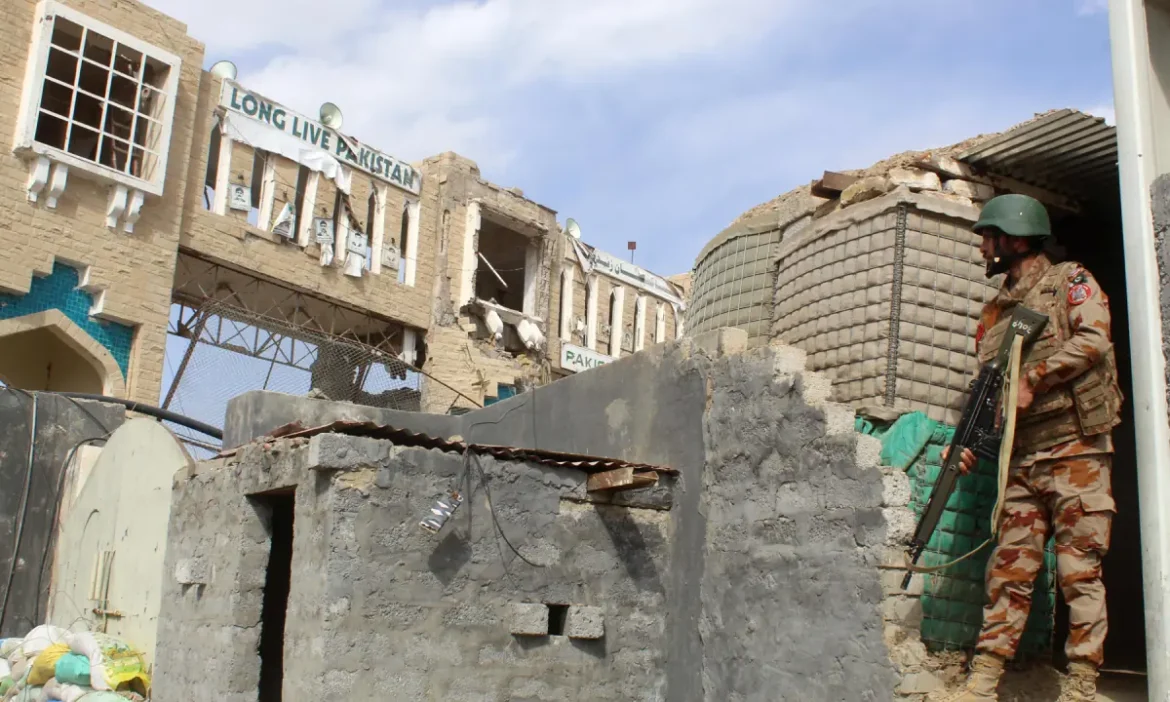
ISLAMABAD: Pakistan’s armed forces continued ground and air operations against Afghan Taliban positions overnight and into Saturday, security sources said, in a sustained response to Taliban-linked terrorism emanating from Afghan soil.
The strikes, which a spokesman for the prime minister said had killed 297 Afghan Taliban fighters and wounded more than 450, marked the most serious clashes between the former allies in years. Pakistan confirmed that 12 of its own soldiers were killed.
Pakistan struck the Afghan capital Kabul, the city of Kandahar, where Taliban leaders are based, and other towns, a Taliban spokesman said. The attacks were its first directly targeting Afghanistan’s government over allegations it harbours militants seeking to overthrow the Islamabad government.
The latest violence erupted after Pakistan’s airstrikes on Afghan territory last weekend triggered Afghan retaliatory attacks along the border on Thursday, escalating long‑simmering tensions over Pakistan’s claim that Afghanistan shelters Pakistani Taliban militants.
For years, Islamabad has blamed Afghanistan for attacks inside Pakistan aimed at overthrowing the government, claiming the Taliban shelter Tehreek‑e‑Taliban Pakistan militants.
Islamabad says TTP operate from Afghan territory and use it as a safe haven to plan cross‑border assaults. While the United Nations has said the TTP and the Taliban in Afghanistan are linked, the Kabul government denies this and argues Pakistan is deflecting blame for its own security failures.
The Taliban, who earlier claimed retaliatory attacks after Pakistani strikes on terrorist hideouts last weekend, said Friday they were “ready for dialogue.” “Afghanistan … has always preferred to resolve issues based on mutual understanding and respect,” Afghanistan’s foreign ministry quoted Foreign Minister Amir Khan Muttaqi as telling Qatar’s junior foreign minister, Mohammed bin Abdulaziz Al-Khalifi, by telephone.
Taliban spokesman Zabihullah Mujahid echoed the overture, saying “now also we want to resolve this matter through dialogue.” Pakistan’s military action, dubbed Operation Ghazab lil-Haq, targeted safe havens used by militant groups inside Afghanistan, in violation of commitments made under the 2020 Doha Agreement.
Mosharraf Zaidi, the prime minister’s spokesman for foreign media, provided the latest toll in a post on X. “A total of 297 Afghan Taliban are confirmed killed, and more than 450 are reported injured,” he wrote. 89 Afghan Taliban posts had been destroyed and 18 captured, while 135 tanks and armed personnel carriers belonging to the Taliban regime were destroyed. “Twenty-nine locations across Afghanistan have been subjected to aerial targeting,” Zaidi said.
In separate comments to foreign media, Zaidi said the Taliban authorities had allowed militant groups to operate from their soil by providing safe havens, a breach of the Doha Agreement. He argued that the Taliban leadership had failed to exercise effective control over armed factions inside Afghanistan and must demonstrate in concrete terms that it stands against such organizations rather than enabling them. Pakistan’s actions, he said, were focused solely on protecting its citizens and safeguarding national security.
Information Minister Attaullah Tarar, speaking to a private television news channel, said the operation remained necessary to neutralise threats against Pakistan. “Pakistan has shown great patience and resolve,” Tarar said. “Pakistan has been attacked. Terrorism incidents occurred in which the role of Afghanistan was clear. The evidence was present.” He cited attacks in Islamabad and Bannu as examples in which Afghanistan’s involvement was evident. “The operation will continue until its objectives are achieved.”
Key regional powers moved quickly to contain the fighting. The Iranian Foreign Ministry expressed “profound concern and regret” over the escalation between the two neighboring Muslim countries and the resulting security and humanitarian consequences. In a post on X, it called for “the immediate commencement of dialogue and engagement between the two countries to halt the fighting and de-escalate tensions.”
The statement warned that the confrontation “will also exacerbate insecurity in the surrounding region and entail broader humanitarian and security repercussions for the entire region.” Iran renewed its call on both sides to respect each other’s territorial integrity and national sovereignty and offered to provide any assistance to reduce tensions and facilitate dialogue.
In Washington, U.S. Under Secretary of State for Political Affairs Allison Hooker said on X that she had spoken with Pakistan’s foreign secretary to “express condolences for lives lost in the recent conflict between Pakistan and the Taliban.” She added that the United States continued to monitor the situation closely and “expressed support for Pakistan’s right to defend itself against Taliban attacks.”
Her comments followed remarks by President Donald Trump, who was asked about Pakistan’s retaliation to an unprovoked aggression by the Afghan Taliban. “Well, I would but I get along with Pakistan, as you know, very well. Very, very well,” Trump told reporters before heading to Texas. “They have a great prime minister, a great general there … two of the people I really respect a lot. And I think that Pakistan is doing terrifically well.”
Copyright © 2021 Independent Pakistan | All rights reserved