By Staff Reporter
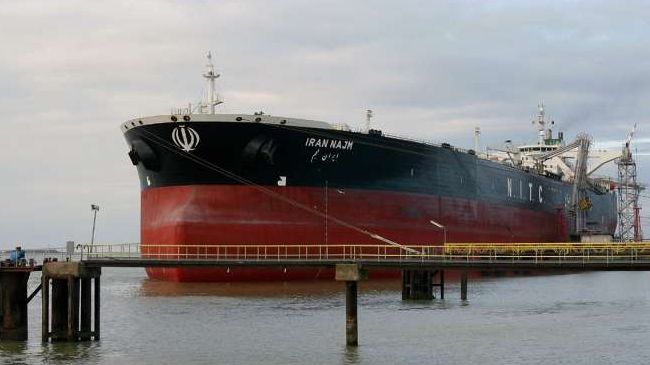
KARACHI: Pakistan is racing to secure three petroleum cargoes due by Monday while scrambling for alternative supplies from Gulf allies and preparing to ask the International Monetary Fund for relief on the petroleum levy, as the escalating Israel-Iran conflict drives crude prices higher and threatens the country’s energy imports through the Strait of Hormuz.
Petroleum Minister Ali Pervaiz Malik told a high-level meeting on Sunday that the three shipments would arrive within 24 hours, offering a short-term buffer amid mounting concerns over supply disruptions. The briefing, convened at Sindh Chief Minister House in Karachi, came a day after Prime Minister Shehbaz Sharif ordered the finance and petroleum ministries to coordinate with provinces on emergency conservation measures and uninterrupted fuel supplies.
Finance Minister Muhammad Aurangzeb, who joined Malik in briefing Sindh Chief Minister Murad Ali Shah, warned that Pakistan’s monthly oil import bill could swell to $600 million if tensions persist. He said officials are monitoring global markets around the clock and drawing up contingency plans. Should the conflict widen further, crude could spike to $120 a barrel, Aurangzeb added.
The government is intensifying diplomatic outreach to Saudi Arabia, Oman and the United Arab Emirates for fresh fuel supplies via routes that bypass the Strait of Hormuz, officials told the meeting. Qatar’s declaration of force majeure on LNG deliveries has compounded the pressure, Malik said. Fuel conservation has become urgent. Malik stressed that measures to curb non-essential consumption are essential to stretch existing reserves for priority sectors.
The government will also seek IMF leniency on the petroleum levy to ease the burden on consumers, he said. The meeting produced agreement on tighter federal-provincial coordination to stamp out hoarding at petrol pumps.
Aurangzeb briefed participants on a new joint dashboard being developed to track nationwide fuel stocks in real time. Emergency conservation steps were discussed in detail, with Shah saying all proposals would go before the provincial cabinet for approval. “Responsible use of energy and public cooperation are necessary, with smooth functioning of the economy the government’s top priority,” Shah said, according to a statement from his office. He pledged close ongoing coordination with Islamabad to manage the crisis.
In Lahore, Punjab Chief Minister Maryam Nawaz held a parallel review with the same federal ministers. She ordered a provincial conservation policy to balance supply and demand, with special emphasis on keeping diesel flowing to agriculture. Nawaz vowed zero tolerance for price gouging and directed district administrations, the Punjab Enforcement and Regulatory Authority and the Transport Department to prevent queues and crack down on hoarding. She called on the “entire nation to demonstrate resilience” to weather the challenge.
The price shock hit Pakistani consumers on Friday, when regulators imposed the largest one-time increase in history: Rs55 a litre on both petrol and high-speed diesel. Petrol’s ex-depot price jumped 17% to Rs321.17 a litre from Rs266.17; high-speed diesel rose nearly 20% to Rs335.86 from Rs280.86. The adjustment reflected the immediate pass-through of surging international crude costs, given Pakistan’s heavy reliance on oil transiting the Strait of Hormuz.
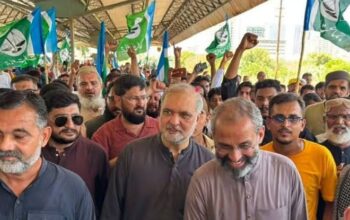
Opposition alliance Tehreek Tahafuz Ayeen-i-Pakistan labeled the hike an “economic burden on the public.” At a press conference in Islamabad, TTAP leader Muhammad Zubair questioned why crude bought near $65 a barrel was being sold domestically at levels equivalent to $90, claiming the government stood to collect an extra Rs110 billion. He noted the Federal Board of Revenue is already short Rs600 billion and warned that higher transport costs would ripple through every sector, hitting motorcyclists and low-income families hardest. “Life has already become extremely difficult for motorcyclists and low-income people,” Zubair said. “An increase in petrol prices will raise the cost of all goods and services, affecting every sector of the economy. Poor people cannot afford such an increase.”
The government has repeatedly said the adjustment was unavoidable given global market realities and that it remains focused on protecting the broader economy.
Copyright © 2021 Independent Pakistan | All rights reserved