By Staff Reporter
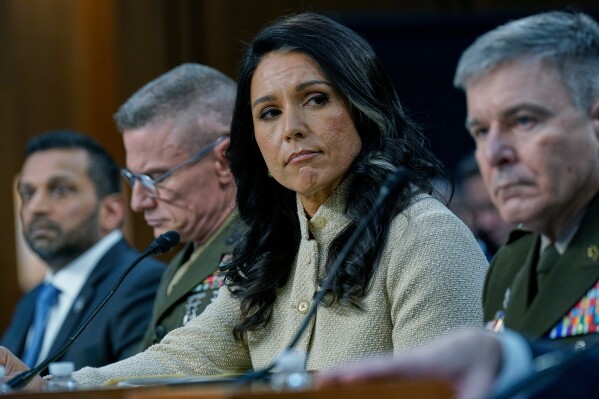
WASHINGTON: Director of US National Intelligence Tulsi Gabbard told Congress on Wednesday that Pakistan is among a handful of nations whose advancing missile capabilities could one day place the US homeland in range, a stark assessment that groups Islamabad with Russia, China, North Korea and Iran in the 2026 Annual Threat Assessment.
Presenting the unclassified report to the Senate Intelligence Committee, Gabbard said the five countries “have been researching and developing an array of novel, advanced, or traditional missile delivery systems with nuclear and conventional payloads, that put our homeland within range.” She added that Pakistan’s long-range ballistic missile development “potentially could include ICBMs with the range capable of striking the Homeland.”
The assessment projects a sharp escalation in the missile threat to the United States over the next decade, forecasting that the number of missiles capable of reaching American territory will surge from roughly 3,000 today to more than 16,000 by 2035. Gabbard noted that these governments “will likely seek to understand U.S. plans for advanced missile defence… for the purpose of shaping their own missile development programmes and assessing US intentions regarding deterrence.”
The explicit inclusion of Pakistan drew immediate attention from analysts who track South Asia policy. Washington-based scholar Shuja Nawaz described it as a continuation of trends from the Biden administration, which imposed sanctions on Pakistani entities and sought to limit its access to new technologies. “There is no reason for Pakistan to target the United States or any other country outside South Asia,” Nawaz said. “Such assessments undermine the budding US-Pakistan relationship.”
He noted that public estimates place the range of Pakistan’s Shaheen-III missile at less than 2,800 kilometers and that Islamabad has long maintained its nuclear program is solely for deterring India.
Michael Kugelman, another U.S.-based South Asia analyst, called the language significant but cautioned against overstating its novelty. “This continues the analysis of the Biden administration,” he said, yet “Pakistan wasn’t singled out exclusively; it was called out with other countries.”
Kugelman added that the current administration had been relatively quiet on Pakistan’s nuclear program and had projected a more positive tone toward Islamabad. “While Islamabad would surely prefer not to be clubbed with those that the US views as rogue and pariah states, it’s notable here that the administration was not giving Pakistan special attention.”
Beyond state actors, the assessment flagged persistent dangers from militant groups in South Asia that “will continue to exploit political instability and ungoverned territory as they seek to rebuild their capabilities and leadership.” It described India-Pakistan relations as an enduring risk for nuclear conflict, citing past clashes—including the Pahalgam attack that triggered a war between the nuclear-armed neighbors—and noted that “conditions exist for terrorist actors to continue to create catalysts for crises.”
The report credited President Trump’s intervention with de-escalating the most recent tensions and assessed that neither country seeks a return to open conflict.
Tensions along the Pakistan-Afghanistan border also featured prominently. The intelligence community reported “intermittent cross-border clashes” and growing frustration in Islamabad over anti-Pakistan terrorist groups operating from Afghan soil, even as Pakistan itself faces rising terrorist violence. Pakistan’s army chief warned this month that lasting peace requires the Taliban to sever ties with militants targeting Pakistan. The Taliban has publicly called for dialogue while denying it harbours such groups.
The assessment painted a broader picture of regional instability, observing that many smaller and mid-sized powers—including Egypt, Israel, Pakistan, Turkey and the United Arab Emirates—are increasingly willing to employ lethal aid, proxy forces or their own military assets to advance their interests and tilt conflicts in their favor.
IRAN WAR
A significant portion of Wednesday’s hearing focused on Iran, whose government Gabbard described as “intact but largely degraded” following U.S.-Israeli strikes that began Feb. 28 and included the June 2025 bombing campaign known in some references as Operation Epic Fury and in others as Operation Midnight Hammer. In written testimony, Gabbard stated that “Iran’s nuclear enrichment program was obliterated” in the June strikes and that Tehran has made no effort to rebuild its enrichment capability. She did not repeat the finding aloud during the hearing but confirmed it when pressed by Sen. Jon Ossoff (D-Ga.).
Gabbard told the committee that Iran’s conventional military projection capabilities have been “largely destroyed” and its strategic position “significantly degraded.” If the regime survives, she said, it would probably embark on a years-long effort to rebuild its missile and drone forces. She reminded lawmakers that the assessment reflects the intelligence community’s collective judgment, “not my personal views or opinions”—a nod to her own past opposition to military action against Iran, including selling “No War With Iran” T-shirts in 2019.
The hearing exposed tensions over the justification for the Iran campaign. Trump has repeatedly described the strikes as necessary to eliminate an “imminent threat,” yet Gabbard deflected when asked whether the intelligence community had reached that conclusion. “It is not the intelligence community’s responsibility to determine what is and is not an imminent threat,” she said. “That is up to the president.”
The controversy intensified with Tuesday’s resignation of Joseph Kent, a top aide to Gabbard and former director of the National Counterterrorism Center, who cited the absence of an imminent threat and suggested Trump had been misled by Israel and the media. CIA Director John Ratcliffe, appearing alongside Gabbard, disagreed sharply with Kent. “I think Iran has been a constant threat to the United States for an extended period of time and posed an immediate threat at this time,” he said.
Iran’s retaliatory strikes have killed 13 American service members, wounded about 200 others and inflicted billions of dollars in costs while disrupting global supply chains for oil, fertiliser, and aluminum. This week Trump’s appeal to allies to help reopen the Strait of Hormuz went unanswered.
Copyright © 2021 Independent Pakistan | All rights reserved