By Staff Reporter
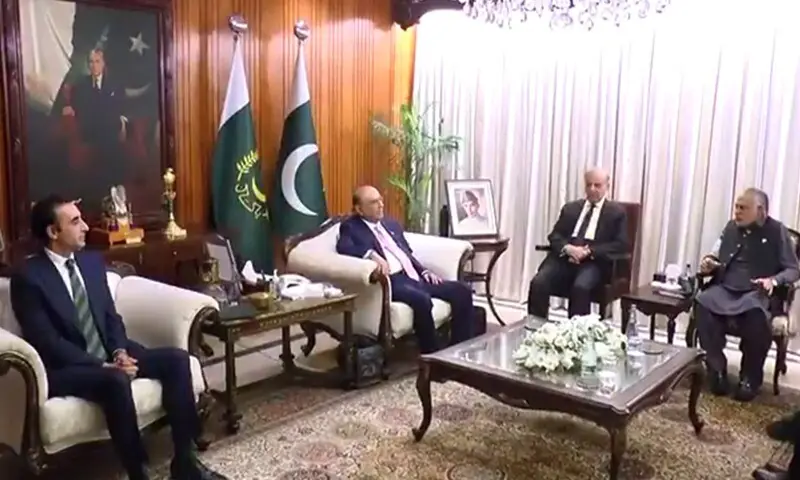
ISLAMABAD: Prime Minister Shehbaz Sharif met President Asif Ali Zardari on Monday to review the country’s national security situation and the array of economic and energy challenges confronting Pakistan, the President’s Secretariat said.
The session came one day after foreign ministers from Pakistan, Saudi Arabia, Turkey and Egypt gathered in Islamabad for a quadrilateral meeting aimed at finding ways to bring an “early and permanent end” to the war in the region. After that gathering, the ministers from Saudi Arabia, Egypt and Turkey paid a separate call on Sharif.
The presidential meeting was attended by Deputy Prime Minister and Foreign Minister Ishaq Dar, Bilawal Bhutto-Zardari, the chairman of the Pakistan Peoples Party, Interior Minister Mohsin Naqvi, National Security Adviser Asim Malik and Lt. Gen. Asim Malik, the director general of the Inter-Services Intelligence Directorate. Participants examined the evolving regional landscape and its direct implications for Pakistan, as well as the interlocking economic, energy and security pressures facing the government.
They stressed the importance of a coordinated national strategy and closer harmony among state institutions, the secretariat said. The Monday discussions built on a high-level meeting President Zardari had convened the previous week with Sharif, the chief of defense forces, Field Marshal Asim Munir — who also serves as chief of army staff — and other senior ministers. That session focused on the economic and energy fallout from regional instability, particularly concerns over oil and gas supplies, and examined steps to improve coordination, enforce austerity and provide relief to the public.
Later on Monday, Zardari presided over a broader consultative meeting at the presidential house, that brought together Sharif, the chief ministers or their representatives from all four provinces, and the leaders of Gilgit-Baltistan and Azad Jammu and Kashmir. Also present were General Malik, Dar, Bhutto-Zardari, Naqvi and several other federal ministers.
In that session, the president instructed the federal and provincial governments to take every feasible step to shield ordinary citizens — especially the poor — from the burden of rising prices for essential goods and services. The directive came against the backdrop of oil and gas supply pressures, climbing energy costs and the shifting regional environment, according to the presidential statement.
Officials briefed the gathering on measures already under way in the provinces and the two autonomous regions to stabilize prices, maintain supplies of basic commodities and cushion the impact on the public. The meeting also assessed how further turmoil in the region could affect Pakistan’s security, economic outlook and food security.
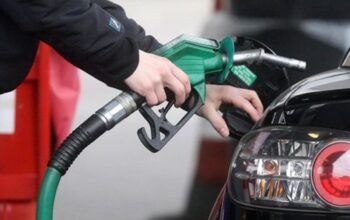
Participants were assured that, despite the global energy strains, the government had taken timely decisions to prevent any disruption in fuel supplies. Adequate stocks are currently on hand, and arrangements for future needs are in place, the statement said. Dar updated the group on Pakistan’s diplomatic efforts, including his recent meetings with leaders in Turkey, Saudi Arabia and Egypt, as well as with officials from countries directly involved in the regional conflict. He also informed them of his planned trip to Beijing in the coming days.
The prime minister has repeatedly rejected proposals to raise oil prices, the meeting was told, and savings achieved through austerity measures are being redirected toward public relief programs. The government has led by example, slashing its own spending, including cuts to the development budget and the immediate grounding of 60 percent of official vehicles.
Zardari reiterated that “the economically vulnerable people would not be left alone in this difficult time.” He called for tightly coordinated decision-making that aligned economic policy, energy planning, food security and security preparedness. He also urged a public awareness campaign to reduce fuel consumption, promote greater use of public transportation and encourage shared mobility as part of a broader effort to manage demand.
Copyright © 2021 Independent Pakistan | All rights reserved