By Staff Reporter
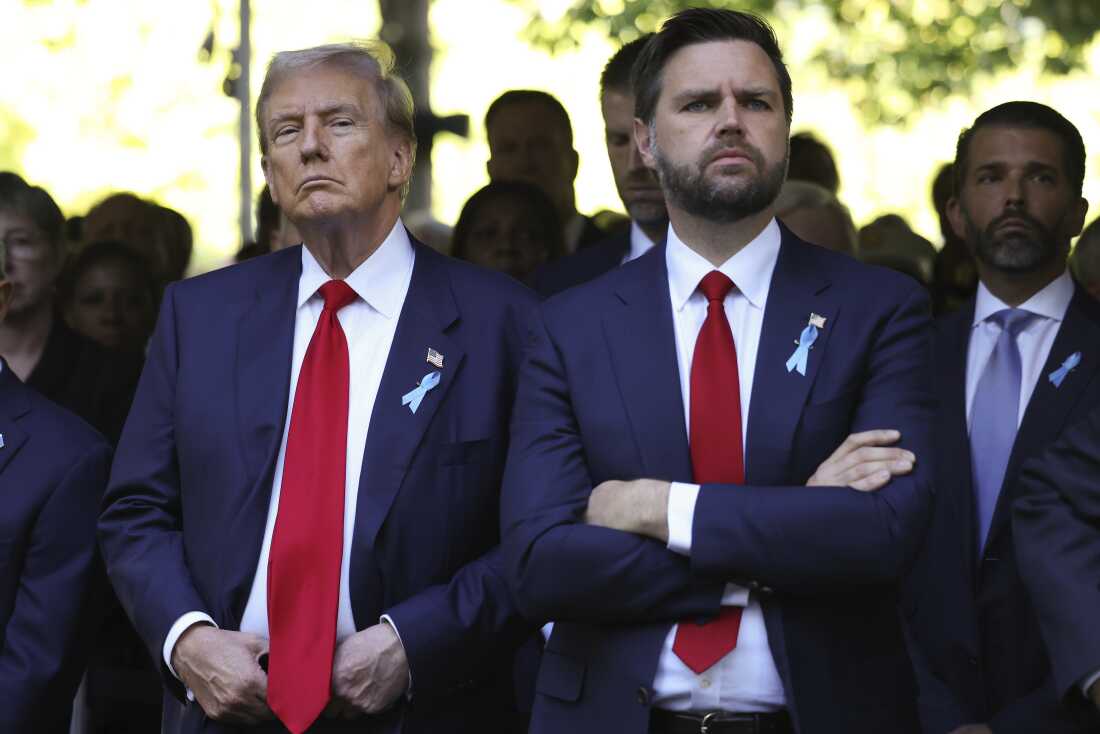
ISLAMABAD: US Vice President J.D. Vance held discussions with Pakistani intermediaries about the Iran conflict as recently as Tuesday, officials said, a sign of the administration’s parallel pursuit of diplomacy even as military operations intensify.
At President Trump’s direction, Vance privately conveyed that the United States remained open to a cease-fire provided certain American demands were met, the person said Wednesday. At the same time, Vance delivered what the source described as a “stern message” that Trump was growing impatient and that Iranian infrastructure would face mounting pressure unless Tehran reached a deal.
Pakistan has served as an intermediary between Washington and Tehran throughout the more-than-month-long war.
Vance has assumed a more prominent role in the negotiations, now in their fifth week, while maintaining the cautious stance that has long defined his views on overseas military engagements. Widely seen as a potential 2028 presidential contender, he has reflected scepticism about prolonged US involvement abroad. The core negotiating team identified by Trump — Vance, Secretary of State Marco Rubio, and envoys Steve Witkoff and Jared Kushner — remains actively involved.
Trump has warned that the United States would strike Iranian infrastructure but delayed any assault on the country’s power grid until April 6 to allow time for a potential agreement.
The diplomatic overture comes as Trump, in a 19-minute prime-time address from the White House on Wednesday night, portrayed the conflict as a “decisive, overwhelming victory” while making clear that intensified military action lay ahead. “We are going to hit them extremely hard over the next two to three weeks,” Trump said. “We are going to bring them back to the stone ages, where they belong. In the meantime, discussions are ongoing.”
Trump asserted that Iran’s missile and drone capabilities had been “dramatically curtailed,” its weapons factories and rocket launch sites “blown to pieces,” and its nuclear facilities struck again in recent days. He claimed that “never in the history of warfare has an enemy suffered such clear and devastating large-scale losses in a matter of weeks.” Trump repeated his long-standing position that Iran would never be permitted to acquire nuclear weapons, alleging that Tehran had “raced for a nuclear weapon like no one has ever seen before” — a contention disputed by neutral observers.
Linking the current fighting to earlier US policy, Trump argued that Israel’s survival would have been endangered had the 2015 nuclear agreement remained in force. “Israel wouldn’t exist if the Obama nuclear agreement had continued,” he said. In one of the speech’s most striking passages, he denied that regime change had been the goal but suggested it had occurred de facto. “Regime change was not our goal. We never said regime change, but regime change has occurred because of all of their original leaders’ death. They’re all dead.”
Trump addressed the closure of the Strait of Hormuz, through which roughly one-fifth of the world’s oil passes, predicting it would “open up naturally” and urging nations dependent on Gulf energy to take the lead in protecting shipping lanes. “We will be helpful, but they should take the lead in protecting the oil that they so desperately depend on,” he said.
Yet the address offered no new details on the terms of any potential deal or a clear diplomatic roadmap, leaving analysts to question whether the conflict was truly nearing resolution or entering a more dangerous phase.
Iran responded Wednesday by flatly denying that any negotiations were underway. “Messages have been received through intermediaries, including Pakistan, but there is no direct negotiation with the US,” Iranian Foreign Ministry spokesman Esmaeil Baqaei told the ISNA news agency. He described Washington’s demands as “maximalist and irrational” and said Iran was prepared for any escalation, including a ground invasion.
Tehran has kept the Strait of Hormuz closed to its adversaries, using the chokepoint as leverage. The Revolutionary Guard Corps vowed to maintain the blockade. On Wednesday evening, Iran launched another barrage of missiles and drones targeting Israel and US bases in the Gulf, striking sites in Tel Aviv, Eilat, Bahrain and Kuwait. An Iranian missile wounded 14 people in Israel.
The Guard also claimed to have hit an oil tanker it described as Israeli-owned off Qatar; a British maritime agency confirmed damage but no casualties. Inside Iran, AFP journalists reported huge explosions in Tehran and strikes near the former U.S. embassy compound. A passenger airport in Isfahan province and steel complexes elsewhere sustained damage, Iranian media said. Former Foreign Minister Kamal Kharazi was seriously wounded in an airstrike that killed his wife, according to state outlets.
President Masoud Pezeshkian said Iran possessed the “necessary will” for a cease-fire only if adversaries guaranteed no resumption of hostilities. In a direct appeal to the American public hours before Trump’s speech, Pezeshkian questioned whether the conflict truly put “America First,” accusing Washington of war crimes and excessive Israeli influence.
Across the Gulf, strikes damaged Kuwait’s international airport, a Bahraini business facility and prompted drone interceptions in Saudi Arabia. A Bangladeshi national died from shrapnel in the United Arab Emirates.
Pakistan has intensified its own diplomatic efforts, hosting foreign ministers from Saudi Arabia, Turkey and Egypt and relaying messages between Washington and Tehran. On Tuesday, Pakistan and China issued a joint call for an immediate end to hostilities, the urgent start of peace talks, protection of non-military targets and shipping lanes, and adherence to the U.N. Charter. The statement followed a meeting in Beijing between Pakistani Deputy Prime Minister and Foreign Minister Ishaq Dar and Chinese Foreign Minister Wang Yi.
Oil prices, already elevated by the Hormuz closure, surged after Trump’s address. Brent crude jumped more than 4 percent to $105.55 a barrel, while West Texas Intermediate climbed 3 percent to $103.16.
The war erupted on Feb. 28 with U.S.-Israeli strikes. Iran responded by blocking the Strait of Hormuz and launching retaliatory attacks on Israel and U.S. bases. Trump’s tone has alternated between combative threats and suggestions of an imminent end — on Tuesday he said the conflict could wrap up in “two weeks, maybe three” — even as his approval ratings have slipped amid economic unease.
Copyright © 2021 Independent Pakistan | All rights reserved