By Staff Reporter
ISLAMABAD: The International Monetary Fund urged Pakistan to trim tax concessions and bring under-taxed sectors into the net, saying a fairer system is needed to turn stabilisation into durable growth.
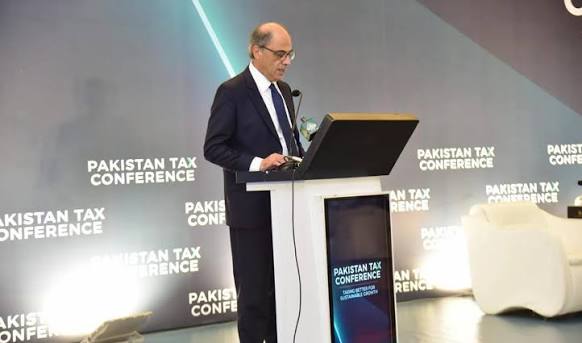
Finance Minister Muhammad Aurangzeb, speaking at the same Islamabad workshop on Tuesday, said businesses could no longer be hit with unexpected tax changes in successive annual budgets as the government tries to shift from stabilisation to export-led expansion.
“Addressing under-taxed sectors, rationalising concessions, and reducing disproportionate burden are elements of a fair tax system,” Jihad Azour, director of the IMF’s Middle East and Central Asia Department, said in opening remarks at the Finance Ministry’s workshop on tax reform. He said policy changes must come with stronger revenue administration to be implemented effectively.
Azour also warned that Pakistan remains exposed to external shocks. “For Pakistan, exposure to higher energy and food prices, disruption to trade and supply chains, weaker external demand and an abrupt tightening in global financing conditions heightens the premium on preserving stability while supporting the recovery,” he said in a televised address.
The warning follows hostilities between the U.S. and Iran and wider instability in the Middle East, which have raised concerns about energy costs, trade and growth in fuel-importing economies such as Pakistan.
Azour credited Pakistan with “important progress” in restoring macroeconomic stability, rebuilding confidence and strengthening external buffers despite repeated shocks. “The next milestone is to turn this stabilisation into stronger and more durable growth,” he said.
The remarks come two weeks after IMF staff and Pakistani authorities reached a staff-level agreement on the fourth review of the $7 billion Extended Fund Facility and the third review of the Resilience and Sustainability Facility, and completed the 2026 Article IV consultation. The deal could release about $1.2 billion once the IMF’s Executive Board signs off, bringing total disbursements under the two arrangements to about $5.7 billion. In announcing it, the Fund said program implementation had stayed broadly on track despite a difficult external backdrop. It put gross reserves at about $21.5 billion at the end of September.
Azour said fiscal policy has to do more than hit primary-balance targets and protect debt sustainability. “It must reinforce policy credibility, foster the recovery, and create space for the public investment and social spending needed to support stronger long-term growth and the well-being of the Pakistani people,” he said. He framed the reform agenda around credibility, growth, fairness and implementation, and called for coordination between federal and provincial governments and for institutional ownership.
Tax policy and tax administration have to advance together, he said, because a simpler policy framework makes administration easier and a strong administration makes reform credible. “Many countries have strong reform ideas, but few translate them into durable results. Implementation requires ownership, coordination, engagement, and communication,” he said.
Aurangzeb said the government had started recalibrating taxation for export-oriented industries in the last budget and would aim for continuity in future ones. “We owe it to the private sector, we owe it to the nation, we owe it to the country,” he said. “We cannot continue to give surprises to private sector investment at every single budget.”
He said tax design should be driven by economic considerations, while acknowledging the government still has revenue needs. “We have to continue to have a tax design which is led by economic value considerations, not by making the math work,” he said. “But that cannot be the leading point here.”
Aurangzeb cited a narrowing in Pakistan’s combined fiscal and external deficits, to 2.6% of gross domestic product in the last fiscal year from 12.5% a few years ago. “Last fiscal year, we had a fiscal deficit which is now at a 22-year low,” he said. He added that Pakistan had posted three consecutive years of primary budget surpluses and that the tax-to-GDP ratio had risen to 10.3% from 8.8%.
Growth, he said, had recovered from a contraction of about 0.3% to roughly 3.65%–3.7%. The IMF estimates growth of 3.6% for the fiscal year that ended in June. “Whether it is 3.7% or 3.65% is not material, but we have come a long way from -0.3% to this delta,” Aurangzeb said. He said the quality of growth matters as much as its pace, and that the same holds for reserves, which have recovered from about two weeks of import cover to more than three months. “The important thing is not only the quantum of these reserves but the quality of these reserves,” he said.
The minister warned against a return to consumption-led growth financed by excess liquidity. “How do we move from stabilisation to growth? Because that’s the whole point,” he said. “We have seen those experiments in the past. Those have actually led us to the boom and bust cycles. And one thing is for sure, we will not let that repeat.” He described taxation as a “very critical component” of the structural reform agenda.
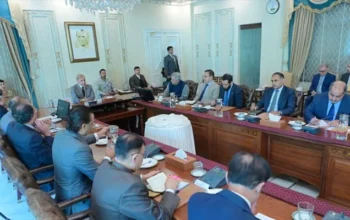
The two-day workshop, which runs Oct. 20–21, brings together government officials, IMF and World Bank representatives, international tax experts, academics and private-sector leaders. Its six sessions cover taxation and growth, modernizing the tax system, a unified sales tax regime across federal and provincial governments, a simpler and more neutral income tax, tax administration and digitalization, and fiscal federalism.
Pakistan has struggled for decades with weak revenue collection and recurring balance-of-payments crises, forcing successive governments to seek IMF help. Businesses have often complained about unpredictable taxation, high energy costs and policy uncertainty.
Copyright © 2021 Independent Pakistan | All rights reserved