By Staff Reporter
ISLAMABAD: Prime Minister Shehbaz Sharif called on federal and four provinces governments on Thursday to set aside political differences, curtail development spending and redirect resources toward agriculture, public goods and transport as the country confronts the economic fallout from the global oil crisis triggered by the US-Israeli war on Iran.
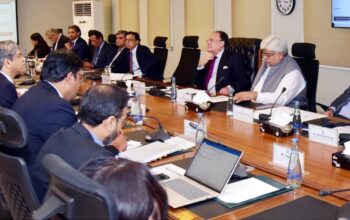
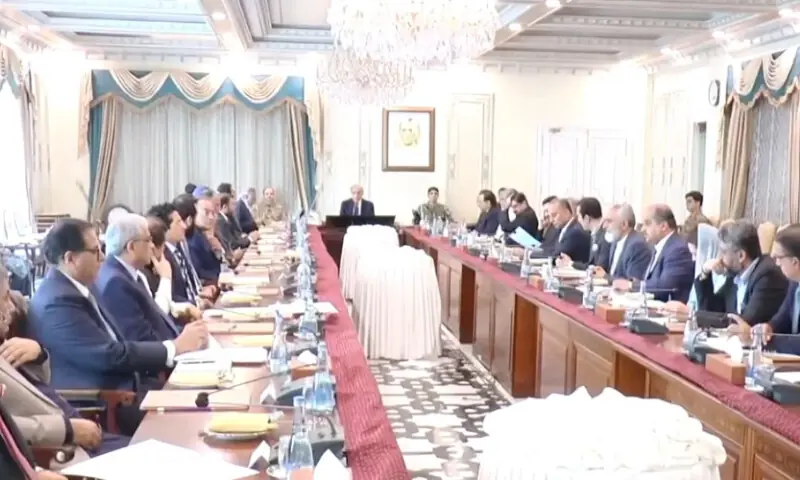
Speaking at a high-level meeting attended by Chief of Defence Forces Field Marshal Asim Munir, the chief ministers of all four provinces and senior federal ministers, Sharif said the Centre and provinces must “utilise their resources sagaciously” and make “collective efforts to provide relief to the needy.” “We have to spend this money on public goods and transport,” he said. “Now we have to set our priorities jointly.”
The more-than-a-month-long conflict, which began with US-Israeli strikes on Iran on Feb. 28, has plunged the Middle East into turmoil. Iran responded by blocking the Strait of Hormuz — a critical chokepoint for global oil shipments — and launching retaliatory attacks on Israel and US bases. The resulting disruption has sent shockwaves through energy markets, hitting import-dependent economies like Pakistan particularly hard.
Sharif acknowledged that Pakistan, like other nations, was “being severely affected by this war.” After months of painstaking work to restore macroeconomic stability, he said, the country had been on the cusp of a period of “prosperity and development.” Instead, it now faces “unlimited economic difficulties.”
The government has moved swiftly on multiple fronts to shield both the economy and ordinary citizens. Soon after the conflict erupted, Sharif’s team held separate meetings with the provincial chief ministers and decided to pass on a Rs55 per liter increase in petroleum prices rather than absorb the full hit at the federal level. To ease immediate pressure, the Centre has implemented a series of austerity measures. Over the past three weeks, it contributed Rs129 billion toward a “blanket cover” for essential spending, Sharif said. The government also slashed Rs100 billion from the Public Sector Development Programme and redirected those savings to cover federal expenses.
Sharif thanked Pakistan Peoples Party Chairman Bilawal Bhutto-Zardari for “showing great interest” in the austerity drive and President Asif Ali Zardari for convening supporting meetings. He also noted that parliamentarians had taken steps to conserve fuel.
On the diplomatic front, Pakistan has positioned itself as an active intermediary between Washington and Tehran while working to de-escalate tensions across the region. Sharif said the government’s efforts to end the conflict “are still ongoing.” The prime minister highlighted two specific successes in protecting Pakistani shipping. Two Pakistani vessels that had been waiting to transit the Strait of Hormuz were able to pass safely thanks to interventions by Deputy Prime Minister and Foreign Minister Ishaq Dar and Field Marshal Munir. Arrangements have since been made for 20 additional Pakistani-flagged vessels to make the same passage, with further progress expected in the coming days, he said. Dar has been “working tirelessly to ease tensions in the region,” Sharif added. “We have made every effort to cool down the flames of war in the region.”
Pakistan has also hosted key regional ministers from Saudi Arabia, Turkiye and Egypt and relayed messages between Washington and Tehran. On Tuesday, Pakistan and China issued a joint call for the US, Israel and Iran to halt strikes and begin “peace talks as soon as possible.”
The prime minister said the chief ministers had assured full cooperation in tackling the wartime challenges. Protecting the public, safeguarding the agriculture sector and ensuring the smooth movement of goods and transport remain top priorities, he said, along with controlling inflation. “The federation and provinces must work together and utilise resources collectively to deal with the difficult situation,” Sharif told the gathering.
Copyright © 2021 Independent Pakistan | All rights reserved