By Staff Reporter
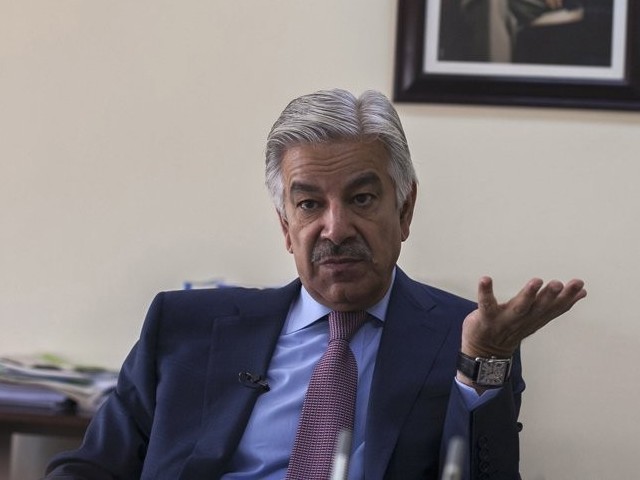
SIALKOT: Defence Minister Khawaja Asif accused India on Saturday of preparing a “false-flag operation” designed to blame Islamabad for terrorism, warning that any such attempt would draw a strong Pakistani reaction as the two nuclear-armed rivals approach the anniversary of last year’s deadly attack in occupied Kashmir.
Speaking to reporters in the eastern city of Sialkot, Asif said Indian planners intended to stage the incident by using their own operatives or Pakistani nationals held in Indian custody, planting bodies and attributing the act to terrorists. “They [plan] some kind of false-flag operation through their own men or through the Pakistanis in their detention by laying down some bodies somewhere and saying they were terrorists and had done so and so,” he said.
Asif framed the alleged plot against the backdrop India’s lingering humiliation from the 2025 conflict. “The kind of insult they faced around a year ago […] the entire world, in fact, their own public, taunts them that they are five times larger than Pakistan in every aspect — population, resources, military, airforce.” He predicted that New Delhi would continue to face such criticism “till the end of the world,” citing the performance of Pakistan’s air force during last year’s fighting. “If they try to enact such a drama this time, then God-willingly, we will take them to Kolkata,” Asif said, invoking the eastern Indian city close to the Bangladesh border as a symbolic reference to the depth of any Pakistani counteraction.
The remarks, delivered hours after Pakistani security officials publicly flagged a similar Indian plan involving captured Pakistanis who had crossed the border inadvertently, come as relations remain raw nearly a year after the April 22, 2025, attack in Pahalgam that killed 26 tourists in occupied Kashmir. India blamed Pakistan for the assault without presenting public evidence; Islamabad denied any role and called for an independent investigation. The incident triggered a brief but intense military escalation that Pakistan’s army later formalised as “Marka-i-Haq,” or Battle of Truth, encompassing the period from the Pahalgam attack through its May 10, 2025, counteroperation codenamed Bunyanum Marsoos.
In a post on X on Thursday, Asif directly addressed his Indian counterpart, Rajnath Singh, after Singh warned Pakistan against any “misadventure” while the Middle East remains volatile. Asif described the Indian rhetoric as evidence of “visible strategic anxiety” rather than strength, noting that it surfaced as the Pahalgam anniversary nears. “Repeated rhetoric reflects not strength, but visible strategic anxiety as the anniversary of the staged false-flag operation in Pahalgam approaches — an episode that failed to withstand international scrutiny and exposed New Delhi’s reliance on manufactured crises,” he wrote, tagging Singh.
Such language, Asif added, follows a “predictable pattern” of India projecting internal weaknesses outward. “History stood as a stark reminder that miscalculation had consequences,” he said. “Marka-i-Haq remains fresh in our minds. The next time our response will be even more forceful and decisive.”
He struck a note of restraint alongside the warning. “Let there be no ambiguity: Pakistan remains committed to peace and regional stability, but its resolve to defend sovereignty is absolute, its preparedness complete, and its response will be swift, calibrated, and decisive.” In the same Thursday message, Asif reminded Singh that “the illusion of space for war between two nuclear states is inconceivable and has drastic consequences,” adding that India would be “better served by confronting the growing unease within its own strategic and diplomatic space.”
During Saturday’s appearance, Asif also turned to diplomacy, expressing optimism about Pakistan’s emerging role as a mediator between the United States and Iran amid escalating tensions in the Middle East. Pakistan has offered to host direct talks between Washington and Tehran and is actively facilitating the process. “Pakistan is playing an important role in the ongoing US-Iran negotiations,” Asif said. He described the effort as aimed at “regional stability” and voiced hope that the talks would produce a lasting resolution to the disputes.
Copyright © 2021 Independent Pakistan | All rights reserved