By Staff Reporter
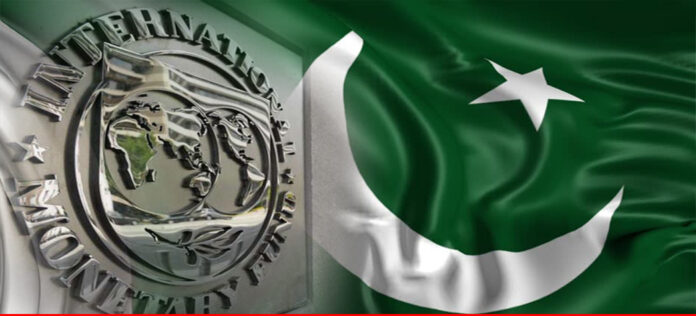
ISLAMABAD: The International Monetary Fund has told Pakistan to eliminate distortions in petroleum pricing at the earliest opportunity, even though it has accepted the federal government’s decision to cap subsidies at 152 billion rupees amid a global price surge triggered by U.S.-Israeli strikes on Iran and the subsequent closure of the Strait of Hormuz.
The staff-level agreement announced by the IMF on March 29 remains in place, and the subsidy cap was introduced with the fund’s prior knowledge, according to senior Pakistani officials. Finance Minister Muhammad Aurangzeb and his team are expected to brief IMF management on how provinces are contributing to the subsidy burden during the IMF and World Bank spring meetings scheduled for next week in Washington.
The IMF continues to oppose across-the-board subsidies on major petroleum products, the officials said. Islamabad initially sought to manage the fiscal impact by adjusting the petroleum development levy between petrol and diesel. It has since shifted toward more targeted support, with provinces now financing a portion through budget rationalisation.
A senior government official confirmed that the fund remains particularly concerned about pricing distortions in diesel and is pushing for their early removal. The levy on diesel is currently zero, against a budgeted Rs80 a liter, with the shortfall being offset by higher collections on petrol. That cushion narrowed after Prime Minister Shehbaz Sharif ordered an Rs80-a-liter cut in petrol prices on Friday, officials said. The situation will be reassessed in the coming days.
Higher petrol consumption has helped blunt the erosion in levy revenue. Monthly petrol offtake now averages about 660,000 tonnes, compared with roughly 600,000 tonnes for diesel. Diesel demand is expected to pick up during the ongoing harvest season, however, which could further strain the levy balance.
Economic indicators for the current fiscal year are tracking broadly in line with program targets, the officials added. Significant adjustments will nevertheless be required to next year’s macroeconomic framework, which will be finalized in consultation with the IMF ahead of the federal budget for fiscal 2026-27.
Petroleum differential claims owed to the oil industry had climbed above Rs129 billion before recent price increases fully passed through import costs, halting further accumulation. Payments to oil companies and refineries are now being processed with a 10% retention, pending audit verification.
Pakistan’s fuel stocks stand at about 590,000 tonnes of petrol and 480,000 tonnes of diesel — equivalent to roughly 26 days of petrol coverage and 20 days for diesel. A petrol cargo of approximately 70,000 tonnes and two diesel cargoes totaling 140,000 tonnes are already in transit, though the balance-of-payments position remains a growing concern, officials said.
Discussions on reviving diesel imports from Kuwait advanced last week, but actual shipments have yet to begin. Iran has allowed 20 Pakistan-flagged vessels to pass through the Strait of Hormuz, the officials noted.
In a related development, the Oil and Gas Regulatory Authority has put in place a mechanism for settling price differential claims. Under the system, 10% of each claim is held back until it can be cross-verified with the Federal Board of Revenue and subjected to monthly third-party audits of stock positions conducted by PricewaterhouseCoopers.
Copyright © 2021 Independent Pakistan | All rights reserved