By Staff Reporter
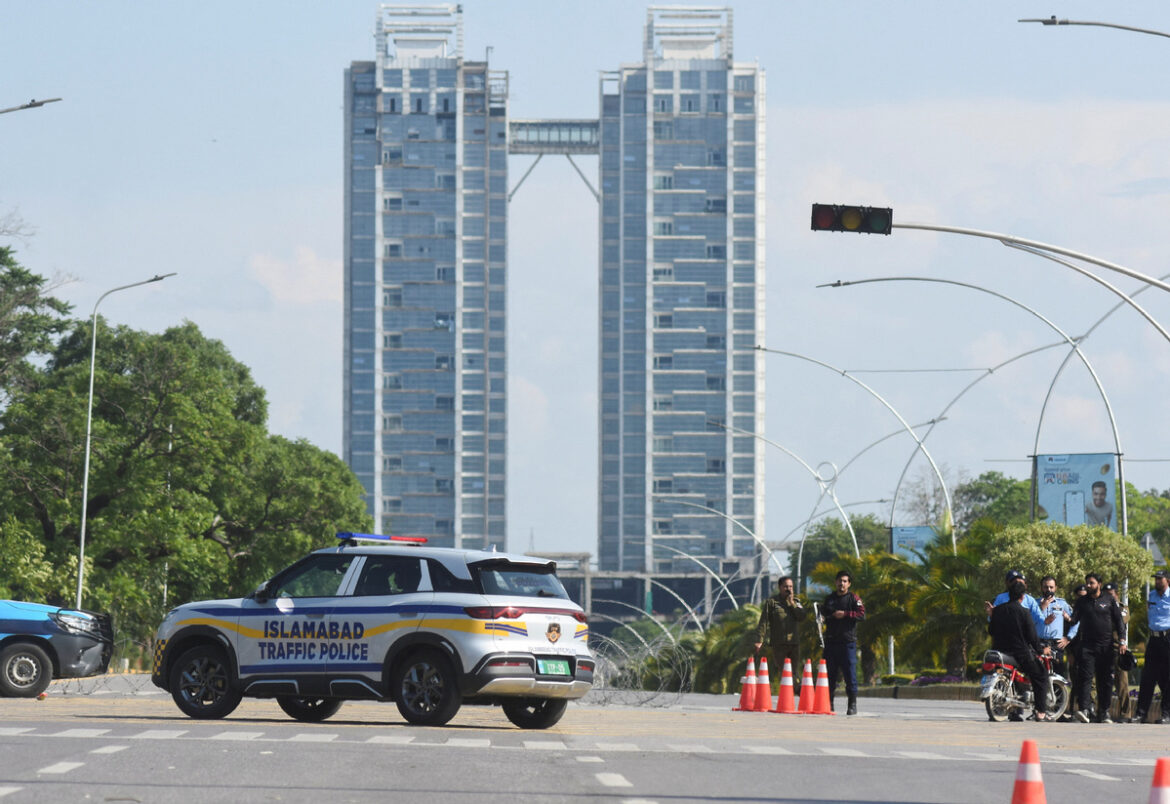
ISLAMABAD: The streets of Pakistan’s capital lay eerily quiet Friday under a sweeping security lockdown, as authorities prepared to welcome senior American and Iranian delegations for the first direct negotiations aimed at ending a war that has killed thousands, crippled global energy markets and redrawn the map of Middle East alliances.
The talks, scheduled to open Saturday in this heavily fortified city, represent the most ambitious diplomatic undertaking Pakistan has ever attempted — and a potential lifeline for a two-week ceasefire that already shows signs of unravelling. Iranian and American officials are set to meet even as Israel presses its campaign against Hezbollah in Lebanon, a parallel conflict that Tehran insists must be part of any truce, and as oil tankers remain largely blocked from the Strait of Hormuz.
Pakistani Interior Minister Mohsin Naqvi described the hosting of the negotiations as “an honour for Pakistan” after chairing a high-level security review. “The Red Zone will be completely sealed, and only relevant persons will be allowed to enter,” he said. “A control room has been set up at the interior ministry in this regard.”
The US delegation will be led by Vice President JD Vance and include senior envoys Steve Witkoff and Jared Kushner, according to the White House and Pakistan’s state broadcaster. Iran’s team is expected to be headed by Parliament Speaker Mohammad Baqer Qalibaf and Foreign Minister Abbas Araghchi, both of whom played roles in the initial ceasefire talks. Senior figures from Iran’s Revolutionary Guard Corps are also expected to attend, Iranian officials said.
Delegations from Gulf states, including Qatar and Saudi Arabia — which absorbed Iranian strikes during the fighting — are expected to arrive as well and may hold parallel discussions on the sidelines. The negotiations follow weeks of shuttle diplomacy by Pakistani Prime Minister Shehbaz Sharif, Foreign Minister Ishaq Dar and army chief Field Marshal Asim Munir. On Tuesday night, Pakistan’s intervention helped secure the truce just hours before President Donald Trump had warned of devastating strikes on Iranian power plants and infrastructure if Tehran did not comply with his demands. Trump had threatened that “a whole civilisation will die” without concessions.
The ceasefire took effect on Wednesday. Iran immediately put forward a 10-point proposal for a permanent settlement that includes Tehran retaining control of the Strait of Hormuz, international acceptance of its right to nuclear enrichment, the lifting of U.S. sanctions and an end to the war — including Israel’s operations against Hezbollah in Lebanon. Washington and Jerusalem have insisted that Lebanon was never part of the deal. Israel invaded the country last month in tandem with its strikes on Iran, aiming to dismantle Hezbollah’s military infrastructure. On Friday, the Israeli military said it struck 10 rocket launchers in Lebanon after Hezbollah fired toward northern Israel, including a missile aimed at Haifa. Hezbollah described the attack as targeting Israeli military sites.
Iranian President Masoud Pezeshkian has warned that negotiations would be “meaningless” if Israeli bombs continued to fall on Lebanon. Iran’s deputy foreign minister, Saeed Khatibzadeh, said Pakistani officials had worked behind the scenes to restrain Iranian retaliation against the latest strikes. Supreme Leader Ayatollah Mojtaba Khamenei, in a statement Thursday, vowed that Iran would “exact retribution” and “demand compensation for every single damage inflicted.”
On the economic front, the truce has yet to restore normal shipping through the Strait of Hormuz, the narrow chokepoint that carries about one-fifth of the world’s oil and liquefied natural gas. In the first 24 hours after the ceasefire, only a single oil-products tanker and five dry-bulk carriers passed through, compared with the pre-war average of 140 ships a day. Trump posted on social media late Thursday that Iran was doing “a very poor job” of honouring the agreement. “That is not the agreement we have!” he wrote, adding without elaboration that “oil would start flowing again.”
The war erupted Feb. 28 with US and Israeli strikes on Iranian targets. Iran responded with a near-total blockade of the strait, triggering the worst global energy crisis in decades and sending oil prices soaring. Thousands have died across the region. The conflict also drew in Hezbollah and exposed Pakistan’s western border to new risks of instability, prompting Islamabad to act.
Dar announced Friday that Pakistan would grant visa-on-arrival privileges to all delegates and journalists arriving for the “Islamabad Talks 2026.” “Pakistan welcomes all delegates, including journalists from participating nations, travelling in relation to Islamabad Talks 2026,” he wrote on X. “To this end, all airlines are requested to permit boarding to all such individuals without a visa. Immigration authorities in Pakistan will issue them a visa on arrival.”
Security preparations have transformed central Islamabad. A public holiday was declared for Thursday and Friday. The Red Zone — home to government offices and embassies — has been cordoned off. Army personnel and paramilitary rangers have fanned out across the city. The Serena Hotel, a five-star property in the heart of the secured district, was cleared of guests earlier this week and placed under government control; roads within a three-kilometre radius were closed to civilian traffic. Officials said the hotel is the most likely venue for the talks, though the prime minister’s secretariat, the Islamabad Convention Centre or a secure military facility remain under consideration. Guests evicted from the Serena on Wednesday were told the hotel would remain unavailable at least through Sunday night.
Pakistani officials have been deliberately circumspect about logistics, citing security and diplomatic sensitivities. One senior figure involved in the arrangements said the government’s role was strictly that of “facilitator and mediator.” “Our priority is that the talks go smoothly,” the official said. “We don’t want to be seen as a spoiler. We will leave it to both parties, Iran and the US, to share any developments with the media if they want.”
The delegations began arriving on Thursday night and Friday morning. Local authorities have designated separate routes for the motorcades under the “Blue Book” VVIP security protocol. Hospitals and rescue services remain on high alert.
Pakistan’s emergence as a mediator marks a striking reversal for a country long viewed as diplomatically sidelined. Sharif, Dar and Munir spent weeks in back-channel conversations with both sides, leveraging Islamabad’s longstanding ties to Washington, Tehran and the Gulf. Analysts credit the effort with preventing an even wider escalation that could have spilt across Pakistan’s porous border with Iran and Afghanistan.
Copyright © 2021 Independent Pakistan | All rights reserved