By Staff Reporter
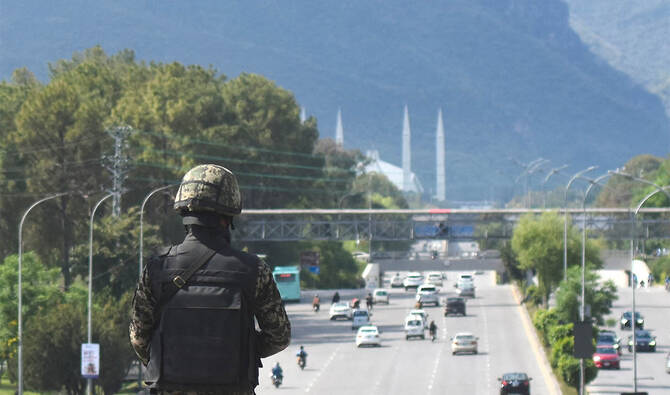
On Saturday morning, in the tree-lined diplomatic quarter of a capital better known for coups and crises than for brokering great-power peace, Vice President JD Vance will sit down with senior Iranian officials for the first direct negotiations between Washington and Tehran since the war began on Feb. 28. The meeting, hosted by Pakistan and involving Jared Kushner and Steve Witkoff on the American side, carries the weight of a region already scarred by nearly six weeks of fighting, at least 3,800 dead and an economic shock that has sent oil prices soaring and left hundreds of ships idling in the Persian Gulf.
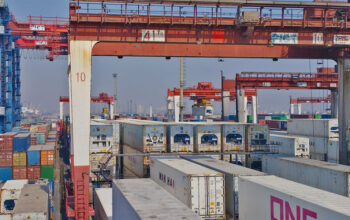
President Trump has called the moment “very optimistic.” In a phone interview with NBC News on Thursday, he described Iranian leaders as far more reasonable in private than in public, noting that “they’re agreeing to all the things that they have to agree to. Remember, they’ve been conquered. They have no military.” Even as Trump spoke, the two-week ceasefire he announced on Tuesday was showing every sign of strain. Israeli strikes continued across southern Lebanon, killing at least 250 civilians on Wednesday alone, according to Lebanon’s Health Ministry. Ship traffic through the Strait of Hormuz — the chokepoint that Iran had effectively closed — remained a trickle: only five vessels crossed on the first full day of the truce, none of them oil tankers. By Thursday midday, the number had barely increased.
The contradictions are not subtle. Trump has pressed Prime Minister Benjamin Netanyahu to “low-key it” in Lebanon, and Vance has spoken of Israelis needing to “check themselves a little bit.” Israeli officials insist the ceasefire never covered Hezbollah. “I insisted that the temporary ceasefire with Iran not include Hezbollah, and we continue to strike them forcefully,” Netanyahu said Wednesday. His foreign-policy adviser, Ophir Falk, told “Meet the Press NOW” that the two leaders are in “complete agreement.” Iran’s parliamentary speaker, Mohammad Bagher Ghalibaf, countered that Lebanon and Tehran’s proxies are an “inseparable part” of any truce. An adviser to Iran’s parliament warned on social media that without restraint in Lebanon, “the missiles are ready to launch.”
This is not the choreography of a clean diplomatic breakthrough. It is the messy, contested reality of war termination when four actors — the United States, Iran, Israel and its Pakistani hosts — each hold a partial veto, and none fully agree on what “ending” the conflict actually means. The structural obstacles were visible from the start. Scholars of conflict resolution have long identified three mechanisms that make wars hard to end: the information problem, the commitment problem and the indivisibility of core issues. Six weeks of American and Israeli strikes have clarified some information — both sides now have a sharper sense of American resolve and Iranian resilience. But the deeper barriers remain untouched. Iran has accepted verification regimes before, most notably in the 2015 nuclear deal. Yet the war began while Omani-mediated talks were reportedly “within reach.” That breach of diplomatic faith has poisoned the well. Neither side can now credibly promise that any new agreement will outlast the next Israeli election or the next shift in American politics. The United States has tabled a 15-point proposal that goes far beyond nuclear restraints to include ballistic-missile limits and conditions that Tehran has already dismissed as “extremely greedy and unreasonable.” Iran’s own 10-point plan, circulated through state media, demands retention of control over the Strait of Hormuz, full sanctions relief and the withdrawal of American forces from the region. The gap is not tactical; it is existential. At the heart of the impasse sits Israel. The United States and Israel entered the war together, but their exit conditions diverge sharply. Washington wants an off-ramp that protects its interests in energy markets and regional stability. Jerusalem’s bar is higher: a nuclear program not merely degraded but rendered strategically irrelevant, and a regime weakened to the point that it can no longer project power through proxies. Netanyahu cannot sell a lesser outcome to his coalition. In the language of political science, he is trapped in a two-level game — forced to satisfy both his domestic base and his American patron while possessing the leverage to block any deal that falls short of his terms but lacking the power to impose those terms unilaterally. The result is a paradox. The United States possesses the material leverage — bombing pauses, sanctions relief, the threat of renewed strikes — but lacks an independent definition of victory distinct from Israel’s. Trump has oscillated between vows to send Iran “back to the Stone Ages” and descriptions of “very good and productive conversations.” That rhetorical whiplash is not personal inconsistency; it is the logical product of a strategy that adopted Israel’s objectives without adopting Israel’s constraints. Domestic polling reflects the strain: only 34 percent of Americans approve of the war, with even Republican support softening as gas prices climb.
Iran, by contrast, plays a longer game. Its leadership calculates that regime survival and the preservation of enrichment knowledge are non-negotiable. A settlement that looks like capitulation risks domestic backlash more dangerous than continued pressure. Tehran has already signalled its willingness to wait out American midterm politics and global economic discomfort. The longer oil prices remain volatile, and the world economy contracts, the stronger its hand becomes. “Negotiation between Iran and the United States is like a trade — both sides have to give something,” a former Islamic Revolutionary Guard Corps commander, Hussein Kanani Moghadam, told NBC News. Iran’s public posture remains defiant: it has declared the war ongoing even while accepting the ceasefire. Pakistan’s emergence as mediator adds another layer of complexity — and, potentially, opportunity. The country of 250 million has deep ties to both Washington and Tehran. It was the first nation to recognise the Islamic Republic in 1947, shares a 560-mile border and maintains close economic and cultural links. At the same time, Islamabad has received billions in American aid and cooperated on counterterrorism and Afghanistan. Its economy is fragile; soaring energy prices and the risk of spillover violence in Balochistan threaten stability at home. Over 20 million Shia Pakistanis live within its borders, making open conflict with Iran politically toxic. Prime Minister Shehbaz Sharif’s government has obvious incentives to deliver a deal. Sanctions relief could revive long-stalled energy projects, including a pipeline to Iranian gas fields. Remittances from five million Pakistani workers in the Gulf depend on calm. Success on the global stage might also blunt India’s efforts to isolate Pakistan diplomatically. But Islamabad’s leverage has limits. It has no diplomatic relations with Israel, which excludes a key belligerent from the table. And Pakistan’s own recent history — from the Abbottabad raid that exposed Osama bin Laden’s presence to its covert support for the Taliban — reminds observers that its mediation carries baggage as well as bridges.
The immediate test is whether the ceasefire can be converted into something durable. On the ground, the evidence is discouraging. Lebanese civilians bore the brunt of Israeli strikes on Wednesday in what Beirut described as the largest offensive yet. David Miliband of the International Rescue Committee, after meetings in Lebanon last week, reported widespread anger: at Hezbollah for dragging the country into war, at Israel for the bombardment, at the United States for starting the conflict and at Lebanon’s own government for its impotence. European leaders and Gulf states have urged that Lebanon be folded into any agreement. The United Arab Emirates’ industry minister, Sultan Ahmed Al-Jaber, spoke for many when he wrote on social media that the Strait of Hormuz “is not open. Access is being restricted, conditioned and controlled.” White House officials insist privately that Iran has promised to reopen the waterway fully and safely. Publicly, however, the traffic data tell a different story. MarineTraffic recorded only bulk carriers, no tankers. The discrepancy — whether miscommunication, deliberate foot-dragging or simple fog of war — underscores how little trust exists between the parties.
No one should underestimate the stakes. A return to full-scale fighting would not only claim more lives across the Middle East but threaten the global economy in ways not seen since the 1970s oil shocks. The lives of millions — Lebanese, Iranian, Gulf citizens and ordinary Americans filling up at gas stations — hang on whether negotiators in Islamabad can find a middle ground that the structural realities of the conflict have so far denied. That middle ground will not come easily. The commitment problems that torpedoed earlier talks have not vanished. The indivisibility of Iran’s nuclear knowledge cannot be negotiated away. And Israel retains the practical power to keep the conflict alive in Lebanon regardless of what Washington and Tehran agree. The alternative — another cycle of escalation, another round of ultimatums, another pause that solves nothing — is ruinous. Realism demands that the United States use its considerable leverage over Israel to bring the theatre under the ceasefire umbrella. It demands that Iran demonstrate good faith by allowing verifiable tanker traffic through the Strait of Hormuz. And it demands that both sides approach the table willing to accept less than their maximalist demands. The Islamabad talks are not guaranteed to succeed. They may produce only another contested pause. But they represent the first serious test of whether the war’s participants can convert battlefield clarity into diplomatic compromise. The world and the economy cannot afford for that test to fail.
Copyright © 2021 Independent Pakistan | All rights reserved