By Staff Reporter
ISLAMABAD: A high-level Iranian delegation led by Parliament Speaker Mohammad Baqer Ghalibaf and Foreign Minister Abbas Araghchi arrived in Islamabad early Saturday for the first direct negotiations between Washington and Tehran since the 1979 Islamic Revolution, as Pakistan attempts to broker an end to the Middle East conflict that has roiled the region since late February.
The talks, set to begin later Saturday, follow a two-week ceasefire announced on April 8 by Prime Minister Shehbaz Sharif after six weeks of open warfare that began when the United States and Israel launched coordinated strikes on Feb. 28. Those strikes killed Supreme Leader Ali Khamenei and targeted Iran’s military and nuclear infrastructure, leaving more than 2,000 dead. Iran responded by disrupting shipping through the Strait of Hormuz, firing missiles at Israeli territory and striking U.S. military bases across the Gulf.
The arrival of the Iranian team — received on the tarmac by Deputy Prime Minister and Foreign Minister Ishaq Dar, National Assembly Speaker Sardar Ayaz Sadiq, Chief of Army Staff Field Marshal Asim Munir and Interior Minister Mohsin Naqvi — came after last-minute diplomatic manoeuvring that nearly derailed the meeting. Iran had conditioned its participation on an immediate halt to Israeli strikes in Lebanon and the unblocking of roughly $7 billion in Iranian assets frozen abroad. Through intense back-channel contacts involving Islamabad, Tehran and Washington, Israel paused operations in Beirut and the southern suburb of Dahieh, satisfying Tehran’s core demand, though fighting continued in southern Lebanon, where at least 23 people were killed on Friday.
Ghalibaf made clear before departure that the talks would not proceed without those assurances. “These steps must be fulfilled before negotiations begin,” he said, according to Iranian officials.
The American side, led by Vice President JD Vance, was scheduled to land later Saturday morning, accompanied by senior officials from the National Security Council, State Department and Pentagon. Advance teams had already secured logistics and communications in the Pakistani capital. In remarks before leaving Washington, Vance struck a note of cautious optimism while drawing a firm line. “We’re going to try to have a positive negotiation,” he said. “If the Iranians are willing to negotiate in good faith, we’re certainly willing to extend the open hand. If they’re going to try to play us, then they’re going to find that the negotiating team is not that receptive.”
President Donald Trump, who announced the initial truce, took a tougher public stance, warning that Iran had “not many cards left” and that military options remained on the table if diplomacy collapsed. He also criticised Tehran for continuing to restrict shipping through the Strait of Hormuz.
Sharif, who has cast Pakistan’s mediation effort as a point of national pride, described the moment in a televised address as a “make-or-break” opportunity. “This stage is equivalent to a make-or-break,” he said Friday, urging Pakistanis to pray for the talks’ success. He thanked both sides for accepting Islamabad’s invitation and framed the negotiations as a chance to resolve “contentious issues through dialogue.”
The agenda is ambitious and deeply contentious. Washington has put forward a 15-point framework that seeks limits on Iran’s uranium enrichment, curbs on its ballistic-missile program, sanctions relief tied to verifiable concessions, and the full reopening of the Strait of Hormuz. Tehran has countered with a 10-point proposal that demands greater Iranian control over the waterway — including the right to impose transit tolls — a comprehensive lifting of U.S. sanctions, formal recognition of its nuclear rights and an end to Israeli military operations across the region, including in Lebanon.
Differences over the ceasefire’s scope have already strained the fragile truce. While the initial understanding appeared to include a halt to fighting involving Iran-backed Hezbollah in Lebanon, the United States and Israel have treated operations there as separate. Iran insists any durable agreement must extend to all fronts. The divergence nearly scuttled Saturday’s opening round.
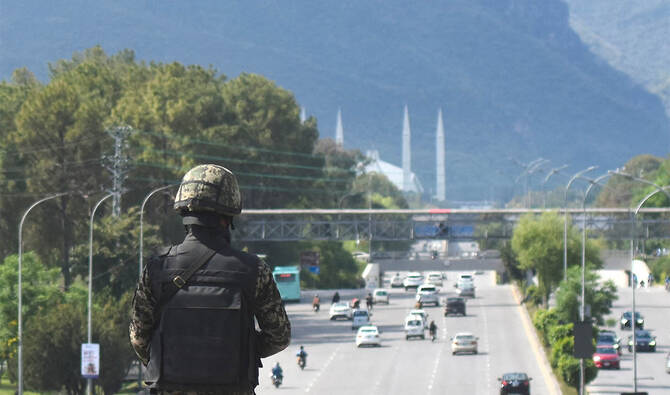
Security in Islamabad was extraordinary. Authorities sealed the Red Zone — the heavily guarded district housing government offices and diplomatic missions — beginning Thursday night. The luxury Serena Hotel, chosen as the venue, was cleared of guests, placed under government control and surrounded by checkpoints, barricades and extra patrols. Interior Minister Mohsin Naqvi, who personally reviewed the arrangements, said the measures reflected both the honour and the risk of hosting such talks. “The conduct of the US-Iran talks in Islamabad after the ceasefire is an honour for Pakistan,” he said.
Pakistan’s ambassador to the United States, Rizwan Saeed Sheikh, told NBC’s “Meet the Press” on Friday that the country had drawn on support from Saudi Arabia, Egypt, Turkey and other regional partners. Islamabad’s role, he said, was strictly that of facilitator; the hard choices belonged to Washington and Tehran. “Dialogue and mutual understanding would help in resolving the issues at hand,” he added.
The international community has broadly welcomed Pakistan’s intervention. Yet expectations for Saturday’s opening session remain modest. Officials and analysts on both sides say the sheer breadth of issues — nuclear constraints, missile ranges, proxy networks, sequencing of sanctions relief and navigation rights in the Gulf — makes a comprehensive breakthrough in two days improbable. At best, diplomats hope to establish a framework for future rounds and secure immediate de-escalation steps, particularly in Lebanon and the Strait of Hormuz.
Copyright © 2021 Independent Pakistan | All rights reserved