By Staff Reporter
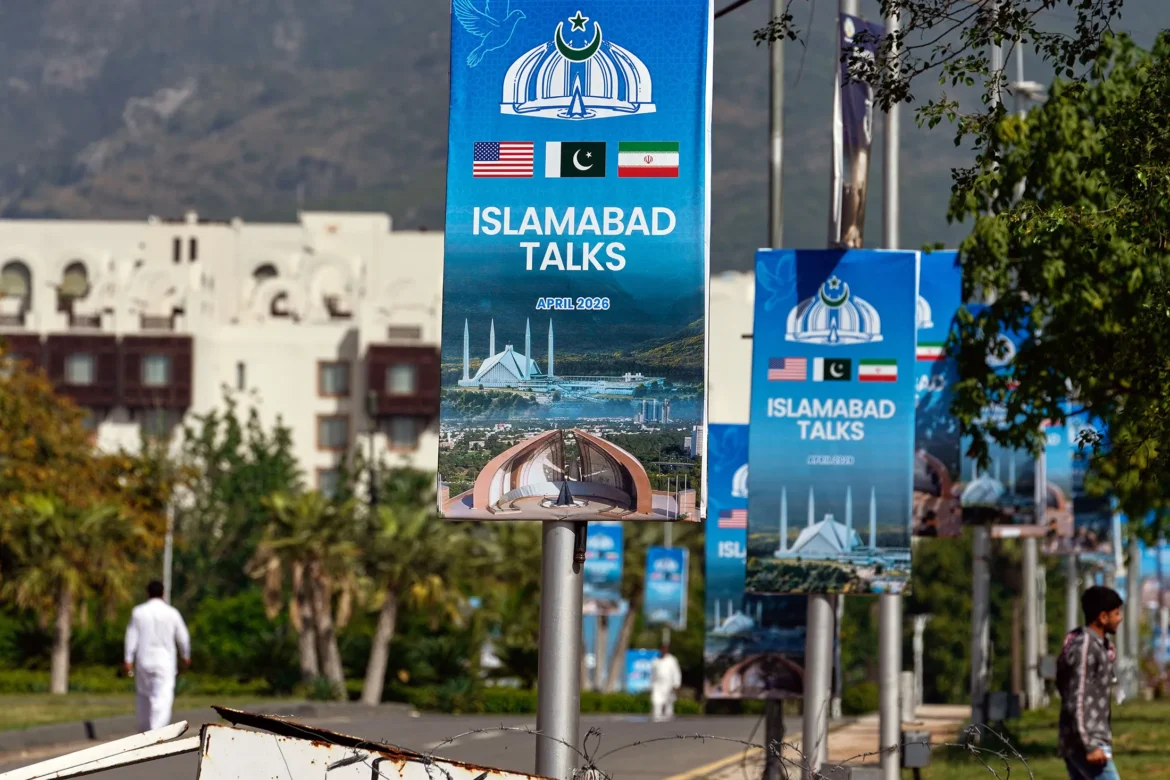
ISLAMABAD: Pakistan pressed the United States and Iran on Tuesday to extend their two-week ceasefire and return to the negotiating table, even as a formal response from Tehran about attending a second round of US-Iran talks in Islamabad remained elusive and President Donald Trump signaled he was prepared to resume military strikes.
Information Minister Attaullah Tarar said Pakistan was still awaiting word from Iran on whether it would participate in the next round of the Islamabad-brokered peace process. Speaking on the social media platform X late on Tuesday, Tarar said Islamabad remained in close contact with Iranian officials but had received no formal confirmation as of 7:30 p.m. local time. The current truce, he noted, is scheduled to expire at 4:50 am Pakistan Standard Time on Wednesday.
“A decision from Iran to attend the talks before the end of the two-week ceasefire is critical,” Tarar said. “Pakistan has made sincere efforts to convince the Iranian leadership to participate in the second round of talks, and these efforts continue.”
The appeal came hours after Deputy Prime Minister and Foreign Minister Ishaq Dar met with US Chargé d’Affaires Natalie A. Baker to discuss the rapidly narrowing window for diplomacy. According to a statement from Pakistan’s Foreign Office, Dar reiterated Islamabad’s long-standing position that dialogue remains the only path to lasting regional stability and explicitly urged both Washington and Tehran to consider extending the truce.
The diplomatic maneuvering unfolded against a backdrop of hardening rhetoric from both capitals and mounting uncertainty over whether a second round of negotiations would even begin before the ceasefire collapses. The first round of historic direct US-Iran talks, hosted by Pakistan in Islamabad on April 11 and 12, ended without an agreement but preserved the fragile truce.
The current standoff traces back to Feb. 28, when US and Israeli strikes on Iran ignited a month-long conflict that disrupted global energy markets. Iran responded by blockading the Strait of Hormuz — through which roughly one-fifth of the world’s oil and gas passes — and targeting energy infrastructure across the Gulf. A ceasefire was announced by Trump on April 8 at the request of Pakistani Prime Minister Shehbaz Sharif. Pakistan has since been recognised by both Washington and Tehran as the sole mediator in the process.
Trump, however, made clear in a CNBC interview Tuesday that he was not inclined to grant more time. “I don’t want to do that. We don’t have that much time,” he said when asked about extending the ceasefire. He described the US negotiating position as exceptionally strong and predicted Washington would ultimately secure “a great deal.” “I expect to be bombing because I think that’s a better attitude to go in with,” Trump added. “We’re ready to go. The military is raring to go.”
On Truth Social, the president accused Iran of violating the ceasefire “numerous times,” an allegation that appeared to prepare the ground for renewed action. Earlier in the day, he had adjusted the truce’s expiration from its original 8 pm Eastern time Tuesday deadline, saying it would now end Wednesday evening US time. Iranian officials, for their part, signaled deep skepticism about Washington’s intentions. State television reported Tuesday that no Iranian delegation had yet left for Islamabad, quoting unnamed officials who said participation “depends on the change in the behaviour and positions of the Americans.”
President Masoud Pezeshkian criticised what he called “unconstructive and contradictory” signals from the United States, while Foreign Ministry spokesman Esmaeil Baqaei accused Washington of lacking seriousness and good faith. Baqaei cited several alleged violations of the truce, including a US attack on an Iranian cargo ship, the ongoing naval blockade of Iranian ports, and delays in implementing a related ceasefire in Lebanon.
Tensions escalated further on Sunday when U.S. forces seized an Iranian-flagged vessel in the Gulf of Oman. Trump described the action as enforcement of restrictions on Iranian ports; Tehran labeled it “piracy” and responded with heightened drone activity near US naval assets in the Strait of Hormuz area. The blockade of Iranian ports and disputes over unrestricted navigation through the Strait of Hormuz have become central sticking points, alongside Washington’s demands for long-term constraints on Iran’s nuclear program, including limits on uranium enrichment and safeguards against weaponisation.
Despite the impasse, diplomatic activity around Pakistan continued on Tuesday. Chinese Ambassador Jiang Zaidong met with Dar and conveyed Beijing’s strong support for Islamabad’s mediation efforts, describing them as vital for regional and global stability. Dar reaffirmed the “all-weather strategic cooperative partnership” between Pakistan and China. Separately, Dar spoke by phone with Egyptian Foreign Minister Badr Abdelatty; both emphasised the need for sustained dialogue. As of Tuesday evening, no official announcement had been made confirming the arrival of a US delegation led by Vice President JD Vance or an Iranian team for the anticipated second round.
Iranian parliamentary speaker Mohammad Bagher Ghalibaf has hinted at “new cards on the battlefield” that Tehran has yet to play, while Pentagon officials have described US forces as “locked and loaded” to target Iran’s energy infrastructure if talks collapse. With the clock ticking, Pakistan’s leadership is racing to keep the fragile diplomatic opening alive — a high-stakes effort that could determine whether the region slides back into open conflict or finds a path, however narrow, toward de-escalation.
Copyright © 2021 Independent Pakistan | All rights reserved