By Staff Reporter
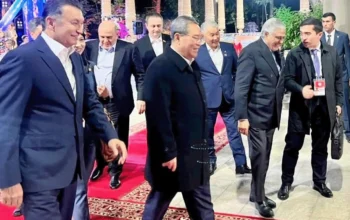
ISLAMABAD: The White House announced on Friday that two senior American envoys will fly to Pakistan on Saturday for what officials described as a second round of direct peace talks with Iran, even as Iranian Foreign Minister Abbas Araghchi prepares to arrive in Islamabad late Friday night with a small negotiating team.
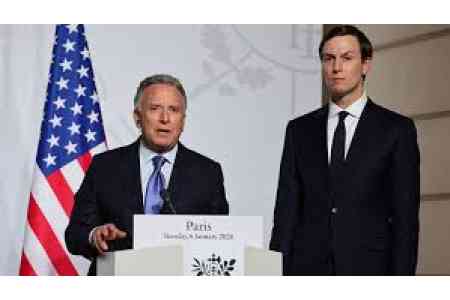
White House Press Secretary Karoline Leavitt confirmed the travel plans in an interview with Fox News, saying that US Special Envoy for the Middle East Steve Witkoff and senior adviser Jared Kushner would depart Saturday morning. “I confirm special envoy Witkoff and Jared Kushner will be off to Pakistan again tomorrow morning to engage in talks — direct talks — intermediated by the Pakistanis who have been incredible friends and mediators throughout this entire process, with representatives from the Iranian delegation,” she said.
Leavitt added that the rest of the administration would remain on standby. “Everyone will be on standby to fly to Pakistan if necessary, but first, Steve and Jared will be going over there to report back to the president, the vice president and the rest of the team,” she said. President Donald Trump, Vice President JD Vance and Secretary of State Marco Rubio will remain in Washington to receive updates, she added, while Vance is prepared to travel if the situation warrants.
“The Iranians reached out, as the president called on them to do, and asked for this in-person conversation,” Leavitt said. “The president always wants to give diplomacy a chance. It’s always his first option, and he’s willing to do that here again.”
The announcement marks the most concrete sign yet that the fragile diplomatic process brokered by Pakistan is moving forward after a week of delays and public friction. It comes hours after Araghchi held a telephone conversation with Pakistan’s deputy prime minister and foreign minister, Ishaq Dar, in which the two discussed the US-Iran ceasefire and Islamabad’s mediation efforts.
Pakistan’s Foreign Office said both sides agreed to remain in close contact. Dar stressed the importance of “sustained dialogue and engagement to address outstanding issues, in order to advance regional peace and stability at the earliest,” while Araghchi praised Pakistan’s “consistent and constructive facilitation role.”
Iranian state media confirmed Araghchi’s travel but described it in more limited terms. The official Islamic Republic News Agency reported that the foreign minister would begin a regional tour Friday evening, with stops in Islamabad, Muscat and Moscow. The purpose, IRNA said, was to hold “bilateral consultations,” discuss “ongoing developments in the region” and review “the latest situation regarding the war imposed by the United States and the Israeli regime against Iran.”
Araghchi himself posted on the social media platform X that he was embarking on a “timely tour” of the three capitals. “The purpose of my visits is to closely coordinate with our partners on bilateral matters and consult on regional developments,” he wrote. “Our neighbours are our priority.” Two senior Pakistani government sources said a second round of US-Iran talks was now expected in Islamabad, and that a US logistics and security team was already in place in the capital.
Leavitt said the administration had seen “some progress” from the Iranian side in recent days and hoped for more during the weekend discussions. The first round of direct negotiations between the two adversaries took place in Islamabad on April 11 and 12, following a ceasefire brokered by Pakistan on April 8. Those talks, which ended without agreement but also without a complete breakdown, were led on the Iranian side by Parliament Speaker Mohammad Baqer Qalibaf and on the American side by Vice President JD Vance, Witkoff and Kushner.
A second round tentatively planned for Tuesday never took place. Iran cited the ongoing US naval blockade of its ports as the reason it was not prepared to return to the table. Trump responded by unilaterally extending the two-week ceasefire at the 11th hour on Tuesday to allow more time for diplomacy. On Wednesday, he told the New York Post by text message that a new round of talks was possible “within the next 36 to 72 hours,” adding, “It’s possible!”
The central point of contention remains the Strait of Hormuz, the narrow waterway through which roughly one-fifth of the world’s oil trade normally flows. Iran has blocked nearly all traffic except its own vessels since the war began eight weeks ago and demonstrated its control this week by seizing two large cargo ships. The Trump administration imposed its own blockade on Iranian shipping last week, with US forces boarding several Iranian-linked vessels in international waters. Iran has said it will not reopen the strait until Washington lifts its measures.
Shipping data released on Friday showed only five vessels transiting the strait in the previous 24 hours, compared with an average of about 130 daily before the conflict. Those included a single Iranian oil-products tanker and one container ship operated by Germany’s Hapag-Lloyd; none of the giant crude-carrying supertankers that usually supply Asian markets made the journey.
Pakistani officials have worked intensively in recent days to revive the process. On Thursday, interior minister Mohsin Naqvi met with US Chargé d’Affaires Natalie Baker in Islamabad to discuss prospects for the second round. Security across the capital has been tightened for days, with large sections of the city under lockdown and major roads closed as authorities maintain a security perimeter originally established for the talks that were to have resumed earlier this week.
Araghchi’s visit does not guarantee that full-scale negotiations will begin immediately. One Pakistani source familiar with the planning said the Iranian minister would first hold bilateral meetings with Pakistani officials and that any US-Iran session might not occur this weekend. The key sticking points — Iran’s nuclear program, the future of US sanctions and control of the Strait of Hormuz — remain unresolved.
Still, the simultaneous movement of senior American and Iranian officials toward Islamabad, coupled with the presence of advance US support personnel already on the ground, represents the clearest indication in days that the diplomatic track remains open. A separate ceasefire between Israel and Lebanon was extended for three weeks on Thursday in a White House-brokered agreement; Iranian officials have described the durability of that truce as a precondition for progress in the wider US-Iran negotiations.
Copyright © 2021 Independent Pakistan | All rights reserved