By Staff Reporter
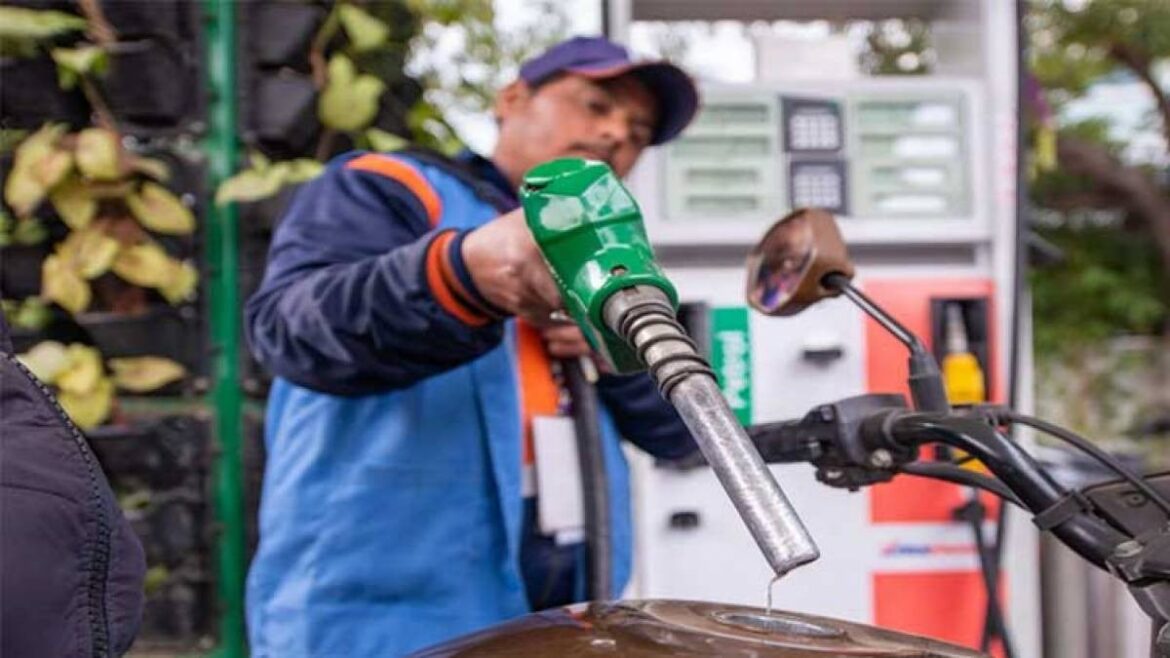
ISLAMABAD: The petroleum minister on Saturday defended the government’s decision to raise petrol and diesel prices by nearly Rs15 a liter, saying the increase was required to honor commitments made to the International Monetary Fund even though global oil markets had shown no major swings.
The adjustment, announced the previous day and effective for the current week, lifted the retail price of petrol to Rs414.78 a liter from Rs399.86 and high-speed diesel to Rs414.58 from Rs399.58. Almost the entire rise came from an increase in the petroleum development levy, which climbed Rs13.91 a liter on both fuels. The levy on petrol rose to Rs117.41 from Rs103.50, while the diesel levy jumped to Rs42.60 from Rs28.69, according to officials in the Petroleum Division.
Speaking alongside Finance Minister Muhammad Aurangzeb, Petroleum Minister Ali Pervaiz Malik said the government had acted strictly in line with the IMF agreement. “While there was no major fluctuation in the global markets, we had to increase [diesel and petrol] rates by Rs14 due to our commitment,” he told a televised address. The move was needed to maintain the petroleum development levy at the levels agreed with the fund ahead of its board approval, he added.
Malik stressed that the government would move more quickly to cut prices once international oil costs decline. “The government would pass on the benefit of declining global fuel prices to consumers,” he said. Earlier increases had tracked international market trends, he noted, and any reduction would be passed through in the same way. The administration is “fully aware of public concerns over inflation and remained committed to providing relief to consumers.”
The minister’s remarks came a day after the IMF Executive Board completed the third review of Pakistan’s Extended Fund Facility and the second review of its Resilience and Sustainability Facility, unlocking $1.32 billion in fresh funding. The package includes an immediate disbursement of about $1.1 billion under the EFF and $220 million under the RSF. The funds will help Pakistan rebuild foreign-exchange reserves and maintain disinflation momentum while it continues to raise revenue and advance privatization of state-owned companies, the IMF said in its statement.
Malik used the Saturday appearance to outline the steps taken to ensure uninterrupted fuel supplies despite the price adjustment. An inter-ministerial committee under the finance minister has monitored the situation since the onset of the crisis, he said, as part of a broader economic and energy team led by Prime Minister Shehbaz Sharif, Field Marshal Syed Asim Munir and deputy prime minister Ishaq Dar. The team provided steady leadership through “difficult and unprecedented challenges,” he added.
Targeted subsidies are being extended to vulnerable segments — motorcyclists, farmers and transporters — via digital wallet systems, the minister said. Imports of fuel and crude oil have been secured through long-standing partners including Kuwait, Saudi Arabia, the United Arab Emirates, Qatar and Iran. Shipments are being tracked in real time to keep domestic refineries operating at full capacity, with additional crude sourced from alternative ports such as Yanbu in Saudi Arabia’s Red Sea region.
Looking toward the summer peak in electricity demand, Malik said the government is preparing for significantly higher fuel requirements in the power sector, including imports of regasified liquefied natural gas. Prime Minister Sharif has instructed officials to make proactive arrangements for energy security, and negotiations are under way to secure RLNG cargoes at lower rates to reduce generation costs and ease pressure on consumer electricity bills.
The petroleum minister thanked provincial governments and chief ministers for their cooperation and acknowledged guidance from President Asif Ali Zardari. He expressed confidence that improving global market conditions and any easing of geopolitical tensions would eventually bring more sustainable stability to energy prices and help relieve Pakistan’s broader economic pressures.
Copyright © 2021 Independent Pakistan | All rights reserved