By Staff Reporter
ISLAMABAD: The government is preparing corrective steps in the upcoming fiscal budget to breathe life into a petroleum refining policy that has languished for nearly three years, after negotiations with the International Monetary Fund effectively blocked its implementation, Dawn newspaper reported on Tuesday.
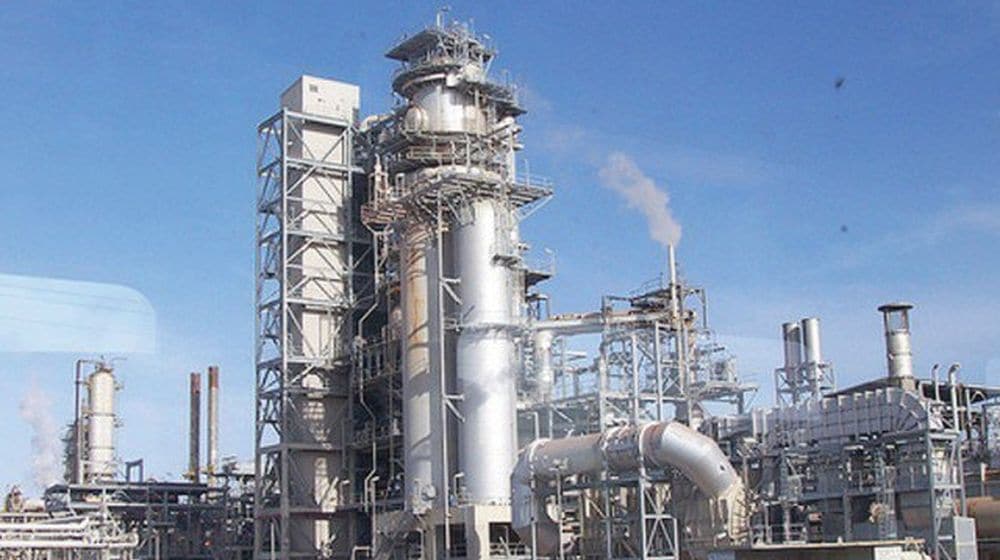
The initiative aims to revive roughly $6 billion in planned investments for both new greenfield facilities and upgrades to existing brownfield refineries. Officials say the measures are urgently needed as the country forfeits as much as $2 billion a year in foreign exchange by importing expensive refined petroleum products rather than crude oil. The US-Iran war has intensified the pressure, generating losses of about $1 billion a month on oil imports.
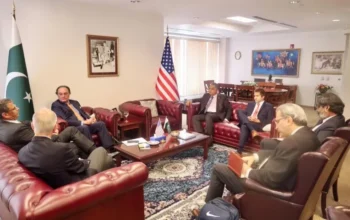
Finance Minister Muhammad Aurangzeb delivered the assurance directly to refinery management at a recent meeting, telling executives the government is serious about dismantling obstacles to both categories of projects. He said the matter would be taken up during the next IMF mission as part of final preparations for the 2026-27 budget.
A follow-up meeting was convened at the Petroleum Division on Monday, where officials pressed refinery representatives to submit updated positions without delay. Petroleum Minister Ali Pervaiz Malik conceded that progress had stalled despite the formal issuance of the two policies in 2023.“Despite the issuance of both refining policies in 2023, progress on implementation has remained stalled,” he said.
Malik described the country’s existing refineries as “critical national assets” vital for uninterrupted fuel supply and energy security. “The ongoing regional situation arising from the US-Iran conflict has further highlighted the urgency of reducing reliance on external supply chains and ensuring maximum domestic refining flexibility/capability,” he added.
Refinery executives have tied any revival of investment commitments to four specific guarantees. They are seeking a stability clause to cover the three-to-five-year implementation window, a mechanism to channel foreign-exchange proceeds from furnace-oil exports into the upgrade projects, clearly defined force majeure provisions to prevent further delays, and resolution of sales-tax losses through adjustments in the inland freight equalisation margin, or IFEM.
The Rawalpindi-based Attock Refinery has signaled it is ready to sign an agreement on upgrades the moment the sales-tax issue is resolved—even if the fix is achieved through IFEM adjustments, according to people familiar with the discussions. The exemption of sales tax on petroleum products has emerged as the central obstacle to the economic viability of the upgrade projects. Aurangzeb has asked the industry to prepare a comprehensive proposal for submission to the Economic Coordination Committee and the federal cabinet before the budget is finalised, so the policies can be executed without further delay.
The original refining policy was completed in August 2023 and formally approved in April 2024 after six years of consultations. Its implementation collapsed when the 2024-25 budget effectively nullified key incentives to comply with IMF commitments. The finance ministry and the Federal Board of Revenue agreed with the fund to remove the existing 10% customs duty on imports of high-speed diesel.
That decision directly contradicted the two 2023 policies, which had promised a 7.5% customs duty on high-speed diesel for greenfield projects over 25 years and a 10% duty for brownfield upgrades for six years. The same budget also introduced exemptions on sales tax for motor spirit (petrol), high-speed diesel, kerosene and light diesel oil. Previously zero-rated, the products had allowed refiners to claim input tax credits on services—credits that began to accumulate once the zero-rating structure was altered.
Petroleum Division officials have repeatedly raised the delayed implementation of the brownfield policy with the IMF, arguing that the $6 billion in fresh investment would help modernise refineries and align output with European emissions standards. They contend the upgrades would also support the fund’s Resilience and Sustainability Facility objectives by cutting carbon and sulfur emissions from both refining and end-use consumption.
Under the broader IMF program, however, authorities committed not to introduce new tax exemptions. As a result, while finished petroleum products remain exempt from sales tax, the equipment, materials and supplies required for upgrades are still subject to tax and duties with no input-output adjustment mechanism—creating persistent cash-flow strains for the refiners.
Officials in the Petroleum Division maintain that the current fleet of refineries continues to generate environmentally harmful by-products in both production and consumption, exacerbating public-health risks and climate pressures. They argue the government has effectively forfeited access to domestic Resilience and Sustainability Facility funding because of what one described as a “technical misunderstanding” between the IMF, the Ministry of Finance and the Federal Board of Revenue. “This is a simple distortion that can be addressed through reasonable dialogue,” the official said. With the US-Iran conflict now underscoring the risks of heavy dependence on imported refined products, the government appears determined to resolve the impasse before the new fiscal year begins. Whether the forthcoming budget delivers the necessary adjustments—and whether the IMF accepts them—will determine if the long-delayed $6 billion upgrade program finally moves forward.
Copyright © 2021 Independent Pakistan | All rights reserved