By Staff Reporter
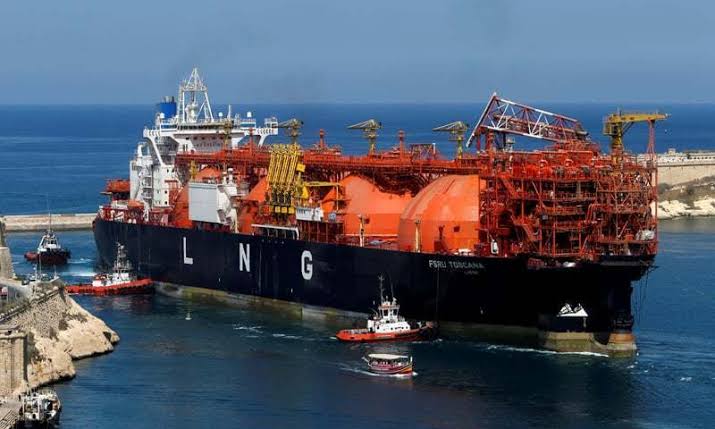
KARACHI: Pakistan agreed to pay $21.88 per million British thermal units for a cargo of liquefied natural gas, its highest price of the year, as a prolonged outage at QatarEnergy’s flagship export terminal continues to force the South Asian nation into the costly spot market.
State-run Pakistan LNG Ltd. accepted the offer from TotalEnergies Gas & Power after the French trading unit submitted the only bid in a tender the company opened on July 17, according to people familiar with the matter. The cargo, comprising 140,000 cubic meters of the super-chilled fuel, is scheduled to arrive between July 27 and 28.
The price marks a fresh high-water mark for Pakistan’s spot purchases this year and surpasses the $20.6999 per MMBtu the country paid PetroChina International five days earlier for a cargo due July 21-22 — itself a record at the time. Bids for that tender had ranged as high as $21.3737 from BP Singapore.
The escalating costs trace back to March 4, when QatarEnergy declared force majeure on long-term supply contracts after Iranian missiles struck the company’s Ras Laffan Industrial City complex, the world’s largest LNG export hub. The attack, part of the broader conflict that erupted after Israeli and American strikes on Iran in late February, knocked out roughly 17% of Qatar’s export capacity and damaged two production trains that officials have said could take years to fully repair.
QatarEnergy has since extended the force majeure declaration multiple times, with Pakistani officials now anticipating scheduled deliveries won’t resume until September. Ali Pervaiz Malik, the country’s federal minister for petroleum and natural resources, has said Pakistan received five term cargoes from Qatar that had been loaded before the attack — vessels that were then stranded for weeks after fighting disrupted shipping through the Strait of Hormuz.
With those pre-loaded cargoes now delivered and no further shipments available under the existing government-to-government arrangement, Islamabad has turned repeatedly to competitive tenders to keep gas flowing to power plants and industrial users. Pakistan LNG has awarded spot cargoes roughly every few days since March, a pace that marks a sharp departure from the country’s historical reliance on Qatar for the bulk of its LNG needs.
The price trajectory illustrates just how much that shift has cost. A cargo for delivery between June 30 and July 4 went for $16.73 per MMBtu, the lowest of the recent run and roughly triple the rate Pakistan pays under its long-term Qatari contract, which is priced off a percentage of Brent crude. A cargo for July 10-11 fetched $17.37, and one for July 15-16 sold for $18.23. The latest award represents roughly a 30% jump from where the market stood at the start of the month.
Traders and analysts have pointed to continued disruption of shipping through the Strait of Hormuz — a corridor that carries about a fifth of the world’s LNG trade — as the primary driver behind the sustained price premium, even after a ceasefire between the U.S. and Iran raised hopes that traffic through the waterway would normalize. Flows through the strait have picked up since the truce but haven’t returned to pre-war levels, leaving buyers like Pakistan exposed to tight global supply and elevated freight and insurance costs.
TotalEnergies has emerged as one of the more active suppliers to Pakistan’s spot tenders in recent months, alongside BP Singapore and PetroChina International, as the three trading houses compete for a steady stream of business from a buyer with little alternative but to accept elevated prices to avoid supply gaps.
Energy officials in Islamabad have acknowledged the financial strain the spot purchases are placing on the country’s import bill but say the alternative — supply shortfalls at power stations already straining under seasonal demand — carries a steeper economic cost. Pakistan has faced intermittent power shortages and gas curtailments to industrial consumers this year as it has worked to plug the gap left by the Qatari disruption.
Copyright © 2021 Independent Pakistan | All rights reserved