By Staff Reporter
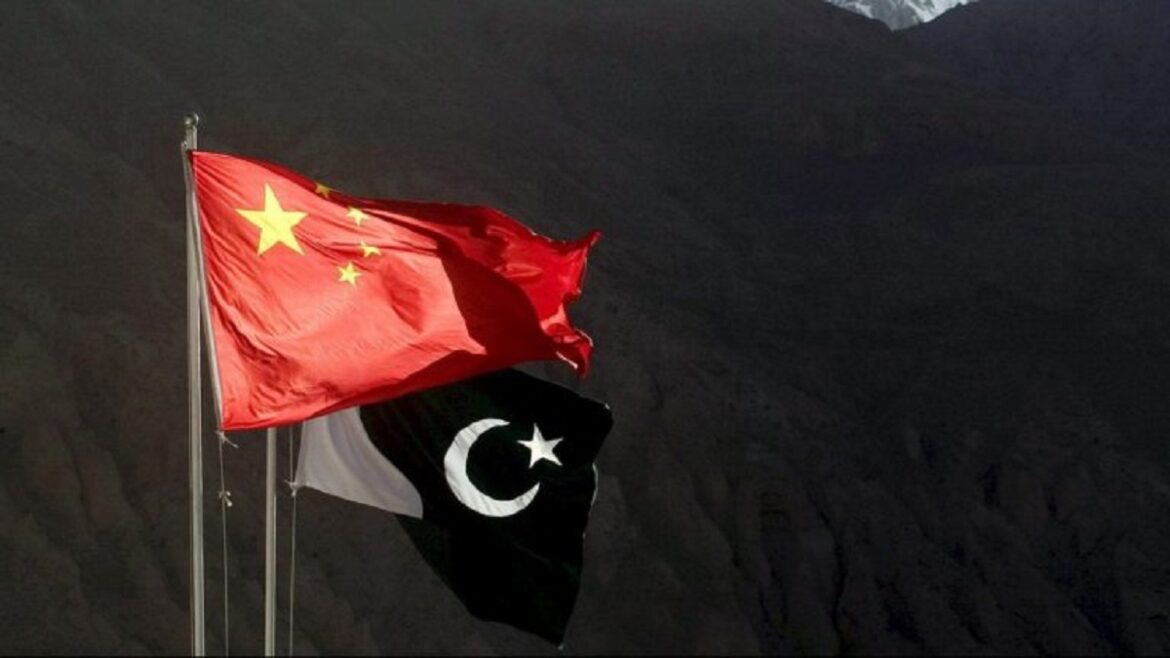
ISLAMABAD: Prime Minister Shehbaz Sharif will make a three-day official visit to China beginning May 23, Deputy Prime Minister and Foreign Minister Ishaq Dar said on Tuesday, the latest high-level engagement between the two countries as they mark the 75th anniversary of diplomatic relations and push forward a new phase of economic partnership centered on digital technology.
Dar disclosed the trip while speaking at the launch of the IBI Pakistan Digital Economy Centre in Islamabad, an initiative by the Chinese industrial e-commerce firm IBI Guolian Gufan aimed at expanding digital trade, industrial connectivity and supply-chain integration between Pakistan and China. Sharif is scheduled to attend a business-to-business forum on May 24 during the visit, Dar said.
The announcement comes days after President Asif Ali Zardari returned from a five-day visit to China earlier this month, during which multiple memorandums of understanding were signed to bolster cooperation in key economic sectors. It also follows a telephone conversation Monday between Dar and his Chinese counterpart, Wang Yi, in which the two discussed Pakistan’s ongoing efforts to facilitate engagement between Iran and the United States.
Pakistan and China have long described their relationship as an “all-weather” strategic partnership spanning trade, energy, defence and infrastructure. The two sides are preparing to celebrate 75 years of formal diplomatic ties on May 21. Sharif’s last trip to China came in September 2025, when he attended the Shanghai Cooperation Organization summit.
The timing of the prime minister’s visit coincides with a period of intense regional diplomacy. In the past month, Pakistan has played a central role in mediating between Washington and Tehran as the two sides work toward a peace agreement following their recent conflict. China has been closely involved in those efforts. On Tuesday, according to Chinese state media, Wang urged Pakistan to intensify its mediation work and to help “properly address issues related to opening the Strait of Hormuz.” Wang told Dar that Beijing would “continue to support Pakistan’s mediation efforts and make its own contribution toward this end,” Xinhua reported.
At the Islamabad ceremony Tuesday, Dar framed the new digital center as a concrete step in what he called the emerging “Pak-China digital corridor,” an extension of the multi-billion-dollar China-Pakistan Economic Corridor. Beijing has branded such digital initiatives the “Digital Silk Road,” a technology-focused pillar of its broader Belt and Road Initiative.
“Pakistan and China are taking another significant step towards innovation, digital connectivity and the economy of the future as our partnership enters a new phase in the digital age,” Dar said. He described the relationship as “not ordinary diplomacy” but “a relationship tested by time and strengthened by trust,” citing landmark projects from the Karakoram Highway — carved through some of the world’s most forbidding terrain — to CPEC, which he said has transformed Pakistan’s energy and connectivity landscape.
The center, Dar added, will advance cooperation in digital transformation, agriculture, disaster management, climate resilience, healthcare and smart cities. “The emerging Pak-China digital corridor will not only deepen bilateral ties but also create opportunities for the wider global south,” he said. Dar noted that more than $10 billion in memorandums of understanding signed with China across various sectors have begun to yield results, with roughly 30 percent already translated into “real, potential projects which are being virtually finalized.”
He welcomed IBI Guolian Gufan’s entry into Pakistan, pointing out that the company serves millions of enterprises across more than 100 industrial sectors in China. “And that reflects strong confidence in our economy and future potential,” he said. Officials from both countries have identified digital cooperation as the next frontier of CPEC. Pakistan hopes alignment with the Digital Silk Road will help modernize its industries and position the country as a regional hub for digital transit and services. Cooperation in artificial intelligence and emerging technologies is also expanding rapidly, Dar said, with both sides strengthening collaboration in the information-technology sector.
Pakistan passed the Digital Nation Pakistan Act last year to transform the country into a digital society, economy and governance model. Digitizing industry alone could unlock 5 to 7 percent of gross domestic product, generating an additional $20 billion to $30 billion for the economy by 2030, the government estimates.
Copyright © 2021 Independent Pakistan | All rights reserved