By Staff Reporter
ISLAMABAD: Electricity consumers face a Rs1.74-per-unit increase in their June bills after the country’s power sector regulator received a request for more than Rs16 billion in additional fuel-cost recoveries, driven by a US-Iran military confrontation that disrupted liquefied natural gas supplies and was aggravated by reduced output from a nuclear plant outside Karachi.
The National Electric Power Regulatory Authority held a public hearing on Tuesday on a petition filed by the Central Power Purchasing Agency, which sought approval to recover Rs1.73 per unit in additional fuel costs from consumers for the April generation month — charges that flow through to the June billing cycle under the country’s fuel cost adjustment mechanism. A minor negative adjustment already in place will simultaneously expire, pushing the net effective increase to Rs1.74 per unit, officials said.
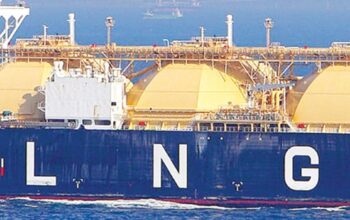
Rehan Akhtar, chief executive of the CPPA, told the hearing that the reference fuel cost for April had been fixed at Rs8.25 per unit, but actual procurement costs came in at Rs9.975 per unit — a gap of nearly 21% — primarily because of supply disruptions linked to the US-Iran conflict. The shortfall in LNG availability forced the system to draw on more expensive and less efficient generation sources, creating the bulk of the additional charge.
Technical constraints compounded the problem. Cheaper power generation capacity in Sindh province could not be dispatched efficiently to load centres in northern Pakistan that were facing shortfalls, contributing further to the cost overrun, Akhtar said. The government moved to contain the damage by implementing demand-side load management and restricting the use of furnace oil and diesel — a step that officials credited with limiting the additional fuel charge to its current level.
Authorities also made special arrangements for LNG imports under the emergency conditions, charging the fuel at Rs2,000 per million British thermal units rather than the Rs3,500 typically applied, further cushioning the tariff impact.
Nuclear Plant Shortfall
Lower availability of the Karachi Nuclear Power Plant’s Unit-2, known as K-2, added to the cost pressures. Akhtar confirmed the plant had suffered forced outages stemming from problems within the reactor, leaving it operating well below capacity during the reference month. The plant also presented Rs3.4 billion in historical claims that were factored into the adjustment. Another CPPA official told the hearing that K-2’s operational difficulties were the direct result of mechanical failures in the nuclear reactor, without elaborating on the technical specifics.
The CPPA underscored how heavily Karachi’s electricity supply now depends on the national grid. Had the grid not continued feeding power to K-Electric — the private utility serving Pakistan’s largest city — consumers across the system would have faced an additional Rs1.46 per unit in fuel cost charges and Rs2.80 per unit in capacity purchase price increases, for a combined hit of Rs4.26 per unit in April alone, Akhtar said.
Consumption Falls Across Most Sectors
Total electricity consumption in April was 8.5% lower than the same month a year earlier, with demand declining across nearly all consumer categories. Domestic consumption dropped the most sharply, falling almost 15%, while commercial use declined 9.5%, general services fell 7.2%, agricultural consumption plunged 53%, and bulk consumers used roughly 13% less power.
The only exception was the industrial sector, which recorded 13.5% growth in consumption — a trend officials attributed to the disconnection of gas supply to captive power plants and the availability of an incremental tariff package designed to encourage industrial off-take from the grid.
That package, however, drew criticism from Karachi-based industrialists who appeared at the hearing. Rehan Javed, Tanveer Barry, and Arif Bilwani, representing industrial consumers from the city, argued that the scheme had benefited only a narrow segment of eligible businesses because of what they described as a flawed structure. They called on regulators and policymakers to conduct a comprehensive review.
Karachi Loadshedding Under Scrutiny
In a separate matter taken up during the same hearing, Nepra pressed K-Electric for an urgent explanation of what it called “excessive loadshedding” in Karachi, where summer temperatures have been running well above seasonal norms.
A senior Nepra official said the regulator had received a mounting volume of complaints and noted that the problem was not confined to high-loss distribution areas — a sign, in the regulator’s view, that loadshedding schedules were not being observed. The official also said power interruptions caused by technical faults were being absorbed into load-management tallies rather than reported separately, a practice the regulator said violated its performance standards.
K-Electric’s management, participating in the hearing remotely, was directed to submit a detailed report on an urgent basis. The utility did not respond to the allegations during the session.
In a statement issued after the hearing concluded, a KE spokesperson said the company’s load management practices were consistent with the principles set out in the National Electricity Policy 2021. The utility attributed localised outages to civil infrastructure work being carried out by municipal authorities across the city.
Nepra said it would examine the report once received and did not indicate whether it intended to initiate formal proceedings against the utility.
—
Copyright © 2021 Independent Pakistan | All rights reserved