By Staff Reporter
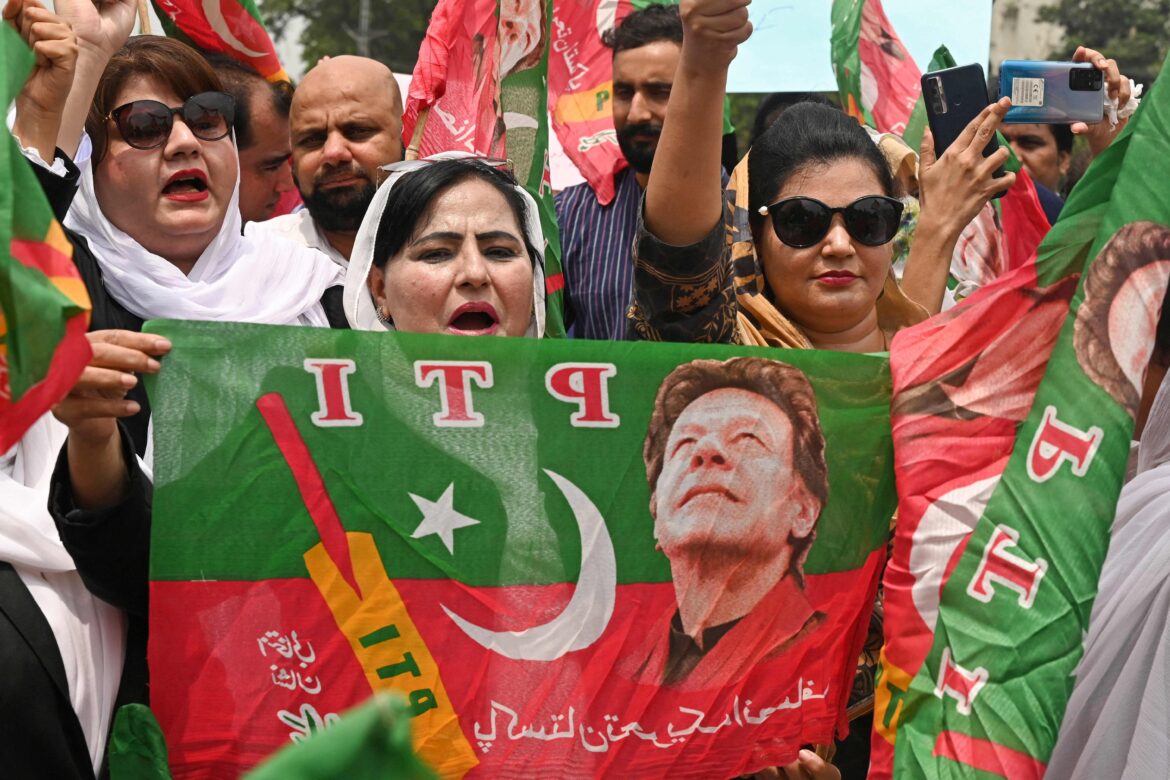
RAWALPINDI: They arrived early, submitted their names, and waited in the heat outside Adiala jail for two hours. By the time 4 o’clock came and the window for visitation closed, not one of the six Pakistan Tehreek-e-Insaf leaders had been allowed past the gates to see their imprisoned party founder, Imran Khan.
The scene on Thursday was not new. It has become, in fact, a kind of ritual — delegation arrives, prison officials stall, the clock runs out. What made it notable was what it defied: a standing order from the Islamabad High Court granting Khan twice-weekly meetings with family members, lawyers, and party associates on Tuesdays and Thursdays.
That order has been effectively ignored for months.
Malik Yasir Patwali, one of the six leaders who made the trip, said the group had done everything by the book. The previous day, the party had formally submitted their names to prison authorities; the list also included Seemabia Tahir, Usman Jora, Asad Abbas, Malik Azeem, and Rohail Anjum.
“We informed the prison administration that we had been nominated for the meeting, as per the directions of the IHC,” Patwali told Dawn newspaper. “But we were told that a message was being sent for approval.”
Officials recorded video footage of the group and told them to wait. They waited. At 4 p.m., they were turned away.
Patwali said he intends to work with lawyers to file a contempt petition — a step complicated, he noted, by the fact that his own name was on the visitor list, potentially limiting his legal standing. He offered a pointed warning to the sitting government: “The PTI will form the government in the future. So the government should be ready to face the brunt.”
Tahir described conditions outside the jail as deliberately obstructive. Police, she said, prevented the group from even approaching the prison entrance, directing them instead to park along the roadside. “We recorded our protest and then returned,” she told reporters. She also called for Khan to be transferred to Shifa International Hospital, citing concerns about his medical condition.
The turn-away Thursday followed a nearly identical episode earlier in the week, when Khan’s sister, Aleema Khan, and Khyber Pakhtunkhwa Chief Minister Sohail Afridi were also refused entry. Speaking to reporters outside the prison after that visit, Aleema said meeting her brother was a constitutional right and vowed to keep returning. “It is the only way,” she said, “to exert pressure on the powers that be.”
Khan, 72, has been held at Adiala since August 5, 2023, initially on charges of concealing official gifts received during his tenure as prime minister — the so-called Toshakhana case, which yielded a 14-year sentence. He is also serving time in connection with the Al-Qadir Trust corruption case, a £190 million matter that his party has characterized as politically motivated.
His imprisonment has made him, paradoxically, one of Pakistan’s most potent political forces. PTI remains the country’s most popular party by most independent measures, and the government’s repeated defiance of court-ordered access has drawn sustained criticism from legal experts and rights advocates.
The standoff comes as the party accuses authorities of broader electoral interference ahead of upcoming votes in Gilgit-Baltistan and Azad Jammu and Kashmir. PTI Information Secretary Sheikh Waqas Akram alleged Thursday that the campaign against the party has taken on the character of systematic suppression — name-based profiling of senior leaders, restrictions on movement, and denials of no-objection certificates required for political activity.
“The Election Commission, administration, and police are colluding to pressure candidates into abandoning the party,” Akram said, extending similar allegations to Azad Jammu and Kashmir and warning that heavy-handed tactics in sensitive border regions risked stoking deeper and more lasting divisions.
Akram also trained his fire on the federal government’s delayed budget presentation, calling it an admission of economic failure and what he described as the subordination of Pakistani fiscal policy to the International Monetary Fund. He dismissed apparent tensions between the ruling Pakistan Peoples Party and the Pakistan Muslim League-Nawaz over provincial revenue sharing as theater — “a staged drama,” he said, “to fool the people while both parties collude in economic destruction.”
Copyright © 2021 Independent Pakistan | All rights reserved