Staff Reporter
KARACHI: Pakistan’s most powerful business lobby warned on Thursday that export earnings could fall by as much as 30% in the coming fiscal year unless the government abandons what it called an IMF-driven, revenue-first budget framework in favor of policies that actively support industrial competitiveness.
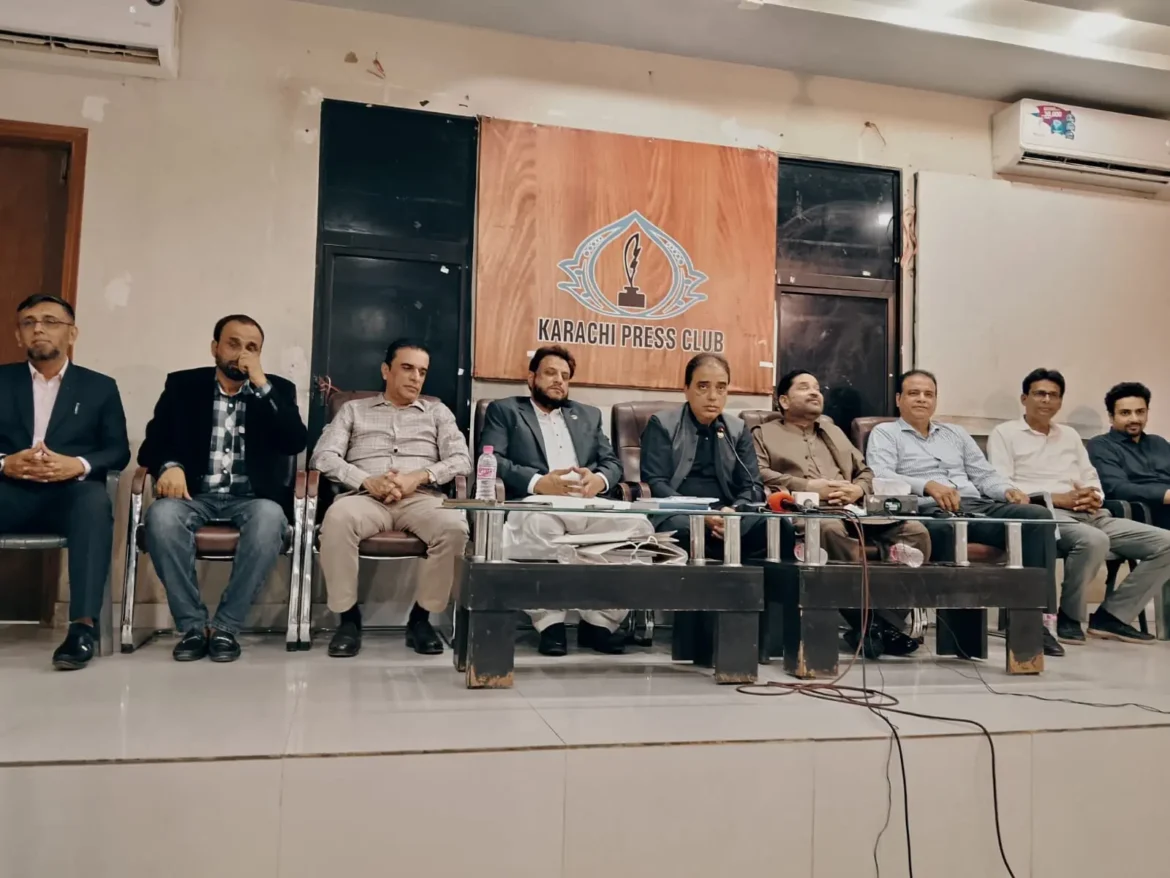
The Federation of Pakistan Chambers of Commerce and Industry, presenting its pre-budget proposals at the Karachi Press Club, said exports had already slid 5.6% to $27.9 billion in the first eleven months of fiscal year 2025-26, against $29.56 billion in the same period a year earlier. Without a structural shift in approach, that deterioration will deepen, FPCCI Senior Vice President Saquib Fayyaz Magoon said.
“The exports may further drop by 20-30% in FY27,” he said, warning that setting and chasing overambitious tax collection targets — rather than building export capacity — was the root cause of the decline.
The remarks come days before Finance Minister Muhammad Aurangzeb is scheduled to present the federal budget for the fiscal year beginning July before the National Assembly on June 10. The government’s annual Pakistan Economic Survey will be released on June 9 as a prelude to the budget, finance ministry adviser Khurram Schehzad confirmed on Thursday.
Competitive Energy, Cheaper Credit
Magoon, who also chairs the Businessmen Panel Progressive, said export receipts could be lifted to $50-60 billion in FY27 under the right conditions — namely, energy supplied to industry at regionally competitive rates, borrowing costs reduced to single digits and a meaningful reduction in the tax burden on producers.
His specific demands included cutting the general sales tax to 15% from 18%, a proposal that runs directly counter to an IMF recommendation that the rate be increased by a further percentage point to 19% in FY27. He also called for the complete removal of the super tax on industry, arguing it had become an obstacle to growth at a time when Pakistan needs to accelerate its industrial base.
Pakistan remains under a $7 billion IMF program that has stabilized the economy following a balance-of-payments crisis but has simultaneously tightened the government’s fiscal room and kept revenue targets at the center of budget-making.
Process Grievances
Beyond the specific numbers, the FPCCI’s frustration extended to how budgets are made. The government invites business proposals each year, Magoon said, but provides no feedback on whether they are accepted or rejected — a process he described as performative consultation.
“The budget is prepared in consultation with the IMF,” he said pointedly. “The government should take the business community on board to set export, economic growth, and tax collection targets.”
The group also flagged a six-to-seven percentage point gap between import duties paid by manufacturers and those paid by commercial importers, urging immediate rationalization for industries including plastics, steel, artificial leather and polyester yarn. New exporters, it said, face a particular handicap: they must file tax returns manually, causing refunds to be delayed or lost entirely, which the FPCCI said was deterring market entry.
Other business figures reinforced the concern over structural inconsistency. Shabbir Mansha cited a string of policy reversals — the government promoted solar adoption for industry and is now reportedly considering higher taxes on the sector; it offered pandemic-era financing at 2-3% under the Temporary Economic Refinance Facility and has since allowed commercial rates to reach 11%. “There is mistrust between taxpayers and tax collectors,” he said.
Businessman Aman Paracha called for the monthly income tax exemption threshold for salaried workers to be raised to 100,000 rupees, with the top marginal rate cut to 25% from 35%.
The FPCCI also proposed a 10-15% increase in industrial workers’ monthly wages and urged rationalization of tax incentives granted to the Federally and Provincially Administered Tribal Areas, which it said were being misused rather than directed toward productive activity.
Whether any of these proposals survive contact with fiscal constraints shaped by the IMF program will become apparent when Aurangzeb faces parliament on Wednesday.
Copyright © 2021 Independent Pakistan | All rights reserved