By Staff Reporter
ISLAMABAD: Pakistan’s ruling coalition partner, the Pakistan Peoples Party, won the most seats in an election in the northern territory of Gilgit-Baltistan on Monday but fell short of a majority, leaving independent candidates with the power to determine who governs a region that sits at the heart of Beijing’s signature infrastructure push into South Asia.
Unofficial results from the vote for 24 directly elected seats in the Gilgit-Baltistan Assembly gave the PPP 10 seats, according to the state-run Associated Press of Pakistan. The Pakistan Muslim League-Nawaz, the senior partner in the federal ruling coalition, won six seats, while candidates backed by former prime minister Imran Khan’s Pakistan Tehreek-e-Insaf secured two. The Majlis Wahdat-e-Muslimeen took one seat. Five seats went to independent candidates, whom APP described as likely to play a “decisive role” in government formation.
The assembly comprises 33 seats in total, with the remaining nine reserved for women, technocrats and professionals and filled through proportional allocation rather than direct election. A majority requires 17 seats.
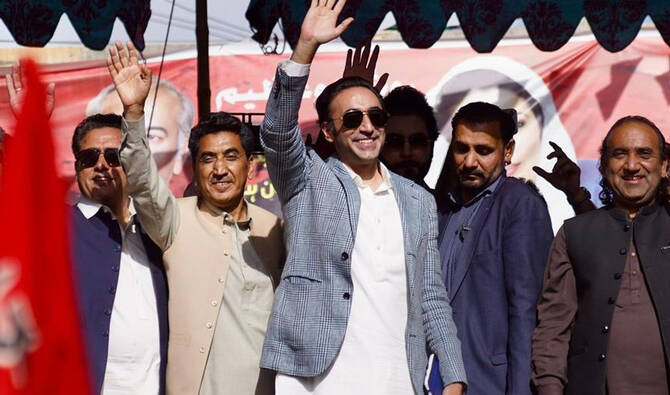
Prime Minister Shehbaz Sharif, whose PML-N governs in coalition with the PPP at the federal level, congratulated PPP chairman Bilawal Bhutto Zardari and his father, President Asif Ali Zardari, on the party’s showing. “PPP deserved congratulations for securing the highest number of seats,” Sharif said in a statement, while also praising PML-N candidates and campaign workers for what he called their hard work and dedication. He described the conduct of the election as a reflection of democratic strength and commended the Election Commission, police and security forces for maintaining order at polling stations.
Strategic territory
Gilgit-Baltistan occupies an outsized strategic importance relative to its sparse population. Wedged between Afghanistan, China and Indian-occupied Kashmir, the territory is the gateway through which the China-Pakistan Economic Corridor — a sprawling, multibillion-dollar network of roads, pipelines and power plants — crosses into Pakistan. Both India and Pakistan claim the broader Kashmir region in full, though each administers separate portions, and Gilgit-Baltistan’s political alignment is watched closely in regional capitals.
Control of the territory has historically tracked shifts in federal power. The PPP formed the regional government after a 2009 election, the PML-N won in 2015, and Khan’s PTI swept the most recent Gilgit-Baltistan vote in 2020. Monday’s result, with the PPP leading under a federal government in which it is a coalition partner, continued that pattern.
A field of 396 candidates contested the 24 seats, among them 266 independents. Former Gilgit-Baltistan chief minister Hafiz Hafeez-ur-Rehman of the PML-N was among the notable winners, securing his seat by a wide margin.
Fraud allegations cloud count
Results trickled in slowly, and several parties raised alarm before the count was complete. PPP central secretary general Nayar Bukhari alleged a “systematic conspiracy” to steal his party’s mandate, claiming results were being withheld in multiple constituencies, including GBA-16 and GBA-17, despite what he described as PPP victories. He warned of protests if the Election Commission did not promptly announce outstanding results.
PPP leader Qamar Zaman Kaira said he had contacted the election commissioner directly over delays in issuing Form-45, the official result document given to candidates’ polling agents. He urged party workers to remain at polling stations and not to leave without obtaining the forms, saying the results as declared by voters should be accurately reflected.
PTI chairman Barrister Gohar Ali Khan alleged his party had been barred from holding campaign rallies and that senior leaders including Asad Qaiser and Salman Akram Raja were prevented from participating in the campaign. Speaking on private news channel, he noted that even PPP leaders were voicing complaints about the conduct of the poll. “We are political people and want citizens to get their rights and democracy to be strengthened,” he said, adding that PTI was pursuing legal remedies through the courts.
Jamiat Ulema-e-Islam-Fazl leader Abdul Ghafoor Haideri said the slow release of results had damaged the credibility of the process and alleged that a JUI-F candidate’s victory in Darel had been reversed. “Any attempt to alter the public mandate would be unacceptable,” he said.
The numbers
PPP won constituencies GBA-1, GBA-4, GBA-5, GBA-7, GBA-9, GBA-10, GBA-11, GBA-12 and GBA-19, according to unofficial results available. PML-N took GBA-18, GBA-20 and GBA-22, while MWM won GBA-8. Independent candidates prevailed in GBA-3, GBA-6, GBA-16, GBA-21, GBA-23 and GBA-24. Several constituencies had yet to report final unofficial tallies.
The PPP fielded the largest party slate, with 23 candidates, followed closely by the PML-N with 22. PTI ran 19 candidates under independent banners. Smaller parties including the Istehkam-e-Pakistan Party, Jamiat Ulema-e-Islam-Fazl, Jamaat-e-Islami and the Majlis Wahdat-e-Muslimeen also fielded candidates across the territory.
Coalition negotiations were expected to begin in earnest once final results were certified.
Copyright © 2021 Independent Pakistan | All rights reserved