By Staff Reporter
Gilgit: Four independent candidates who won seats in Gilgit-Baltistan’s general elections have joined the Istehkam-e-Pakistan Party, handing the fledgling political outfit its first-ever foothold in the regional assembly and potentially complicating what had appeared to be a straightforward path to government for the Pakistan Peoples Party.
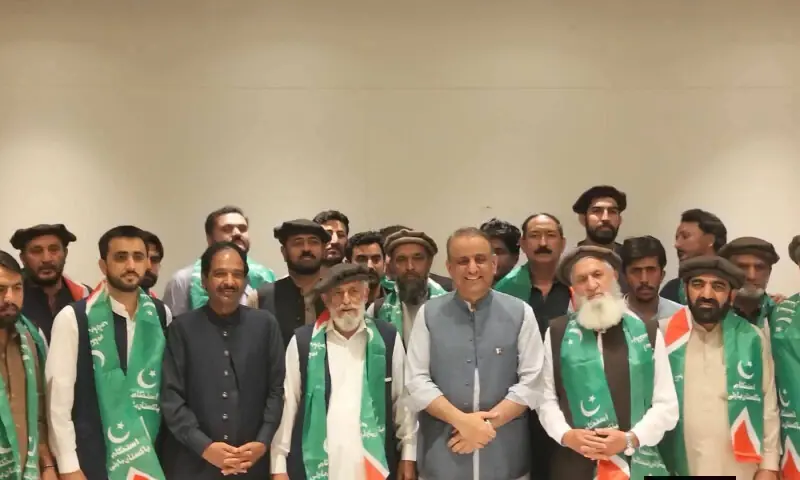
The four — Anwar Ali, elected from GBA-23 Ghanche-II; Dr Asad Shafiq from GBA-24 Ghanche-III; Muhammad Dilpazeer from GBA-15 Diamer-I; and Aman Ali Amir from GBA-21 Ghizer — announced their decision to join the IPP following a meeting with the party’s president, Abdul Aleem Khan, who also serves as federal minister for communications.
Khan, who took to social media to announce the development, framed it in characteristically optimistic terms. “Representation of Istehkam-i-Pakistan Party in the Gilgit-Baltistan Assembly for the first time will be a welcoming development,” he said. “With hard work and honesty, the party will fully participate in the development of Gilgit-Baltistan.”
The timing is significant. The June 7 elections across GB’s 24 constituencies produced a fragmented result that has set off an intense round of political horse-trading. The PPP emerged as the single largest party, winning 10 to 11 seats depending on whether preliminary or later tallies are used, while the PML-N secured six. Two candidates backed by the PTI and one from the Majlis Wahdat-e-Muslimeen also won seats. Results from three constituencies remained pending as of June 17.
With 13 seats needed to form a government, the arithmetic has been delicate — and the four new IPP members sit squarely at the centre of it.
Speaking after the joining was announced, Dilpazeer said the four winners had formed a coordinated bloc before approaching the IPP, and suggested their ambitions did not stop there. The group was already in contact with other independent winners as well as MWM-backed members, he said, and would be extending invitations to join the party. He went further, claiming IPP could yet emerge as the second-largest party in the GB Assembly — a striking claim for an outfit that, despite fielding 16 candidates across as many constituencies in the June 7 poll, had failed to win a single seat outright.
The IPP’s sudden relevance in GB reflects a broader realignment already underway at the top of Pakistani politics. Prime Minister Shehbaz Sharif moved swiftly after the results to consolidate the PPP’s position, publicly inviting Bilawal Bhutto Zardari’s party to lead the GB government and pledging that PML-N’s elected members would vote in its favour despite sitting on the opposition benches — an unusual arrangement that he characterised as consistent with democratic traditions.
PPP chairman Bilawal welcomed the gesture warmly, describing the prime minister’s recognition of his party’s majority as “a continuation of a democratic tradition” and calling the invitation to form the government “a positive step.” The two parties already govern together at the federal level, and their coordination in GB appeared, until this week, to offer a relatively smooth route to a stable regional administration.
The entry of the four IPP members into organised politics adds a new variable. Whether the group ultimately supports the PPP’s government formation bid, extracts concessions in exchange for its votes, or attempts to construct an alternative coalition remains to be seen. What is clear is that Abdul Aleem Khan, an establishment-backed politician, has moved quickly to turn an electoral blank in GB into a parliamentary presence.
Copyright © 2021 Independent Pakistan | All rights reserved