By Staff Reporter
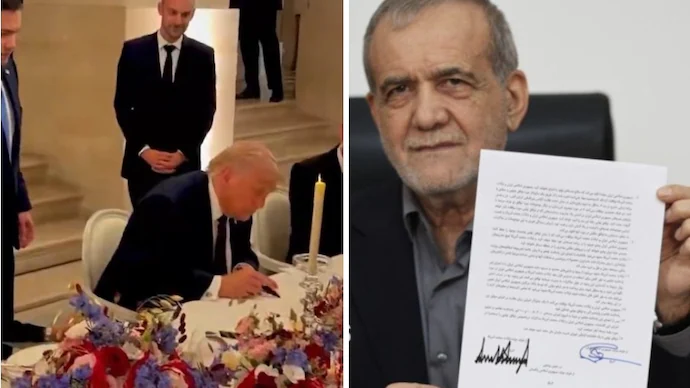
ISLAMABAD: Donald Trump put his signature to a ceasefire agreement with Iran at a candlelit dinner in the Palace of Versailles on Wednesday night, bringing to a formal close a four-month conflict that has convulsed energy markets, stoked inflation and pushed the Middle East to the edge of a broader catastrophe — while warning, in the same breath, that he was ready to resume bombing if Tehran failed to comply.
“Just signed it,” the US president told reporters as he emerged from the gilded corridors of the French palace following a G7 summit hosted by Emmanuel Macron, whose guests applauded as Trump affixed his name to the document. Iranian President Masoud Pezeshkian signed electronically, and Iran’s foreign ministry confirmed the accord was already in force.
The agreement, formally titled the Islamabad Memorandum of Understanding between the United States of America and the Islamic Republic of Iran, was brokered largely through the quiet and persistent efforts of Pakistan, whose prime minister Shehbaz Sharif described it in an early-hours post on X as a moment that had “helped end a conflict that could have led to devastating consequences for the region and beyond.”
“The memorandum has been signed by honourable presidents of both countries and also endorsed by me as mediator,” Sharif wrote. “The signing of this agreement at the highest level demonstrates the commitment of both sides to a diplomatic resolution of the conflict.”
The bones of the deal
The 14-point memorandum, read to reporters in Washington by a senior US official and already circulating in draft form before its contents were formally released, stops well short of the comprehensive settlement that negotiators will spend the next 60 days attempting to construct. What it does achieve is considerable nonetheless.
Iran has committed to immediately arranging safe passage for commercial vessels through the Strait of Hormuz — the narrow, indispensable waterway between Iran and Oman through which roughly a fifth of the world’s oil supply passes — with full resumption of maritime traffic to be completed within 30 days. The United States, in turn, will begin dismantling its naval blockade of Iranian ports with immediate effect, with complete withdrawal to follow within the same timeframe.
Washington has also agreed to issue immediate waivers on oil sanctions, allowing Iranian crude, petroleum products and associated banking and insurance services to flow again while the two sides negotiate a permanent settlement. Frozen Iranian assets will be unfrozen, and the US has committed to working with regional partners on a $300bn reconstruction and economic development fund for Iran, the precise mechanism for which will be determined during the 60-day window.
Iran, for its part, has reaffirmed that it will not develop nuclear weapons — a commitment it has maintained for decades — and agreed that its stockpile of enriched uranium will be dealt with through a mutually agreed mechanism, with the minimum approach being dilution on Iranian soil under International Atomic Energy Agency supervision. Both governments have pledged to maintain the current status quo on Iran’s nuclear programme until a final deal is reached.
The accord also declares an immediate and permanent end to military operations “on all fronts, including in Lebanon,” where Iran-backed Hezbollah and Israeli forces have continued fighting throughout the wider conflict, displacing more than a million people. Israel, which played a significant role in the February strikes that triggered the war and which was not a party to these negotiations, has said it retains the right to use force. Lebanese state media reported fresh Israeli air strikes and artillery fire in southern towns on Wednesday, and Hezbollah launched two drone attacks on Israeli positions; five Israeli soldiers were wounded.
Trump offered a notably gentle public rebuke of Israeli prime minister Benjamin Netanyahu over Lebanon, with whom he has clashed repeatedly on the issue. “Netanyahu happens to be a good man, gets a little excited sometimes,” the president told reporters. “I say you can do a little softer touch, Bibi. You don’t have to knock down a building every time somebody walks into it that’s from Hezbollah.”
Trump’s threats and retreats
The warmth of the signing ceremony did not prevent Trump from issuing what amounted to an explicit threat against the Iranian state within hours of affixing his name to the document. “We’re going to bomb the hell out of them if they violate the agreement,” he told a press conference at the G7 in Evian-les-Bains, on the French shore of Lake Geneva. “If I don’t like it, if they don’t behave, we’ll go right back to dropping bombs right smack in the middle of their head, OK?”
He also walked back, with little fanfare, one of the stated purposes for which the war was launched in the first place. Having vowed in February to obliterate Iran’s ballistic missile industry and “raze it to the ground,” Trump told reporters in Paris that it would actually be “unfair” for Iran not to possess some missiles, given that other nations in the region did. Iran’s missile capabilities have not been dismantled. Its theocratic government remains in place. Its stockpile of highly enriched uranium has not been surrendered. Its support for Hezbollah and other anti-Israel militias has not been formally ended.
A senior US official, speaking anonymously, acknowledged that the parties could still walk away until a binding final agreement was concluded. “The final deal will be endorsed by a binding UN Security Council resolution,” the text states — a clause that itself contains multitudes, given the divergent interests of council members.
Oil markets reflected the complicated picture. Brent crude futures fell below $80 a barrel — their lowest since the opening salvos of the conflict — on expectations that the Strait of Hormuz would reopen, before recovering more than one percent of their losses after Trump’s remarks about potential military resumption.
Pakistan’s unlikely pivot to the centre of history
The role played by Islamabad in bringing the agreement about is likely to be one of the more surprising diplomatic footnotes of the conflict. Pakistan, a nuclear-armed state of 240 million people which has long operated in the shadows of great-power competition, found itself this year acting as the primary intermediary between Washington and Tehran.
It was a role that fell to the country partly by geography and partly by design. When the United States and Israel launched joint strikes on Iran on 28 February — killing the 86-year-old Supreme Leader Ayatollah Ali Khamenei and senior military commanders on the opening day — Iran responded with salvos of missiles and drones across the region and moved, in effect, to shut down the Strait of Hormuz. The US retaliated with a naval blockade of Iranian ports. Energy prices spiked, inflationary pressures intensified globally, and fears mounted of a food supply crisis in developing nations.
Pakistan was among those acutely exposed. The closure of the strait forced the government in Islamabad to introduce fuel conservation measures and raise petroleum prices on multiple occasions as the crisis deepened.
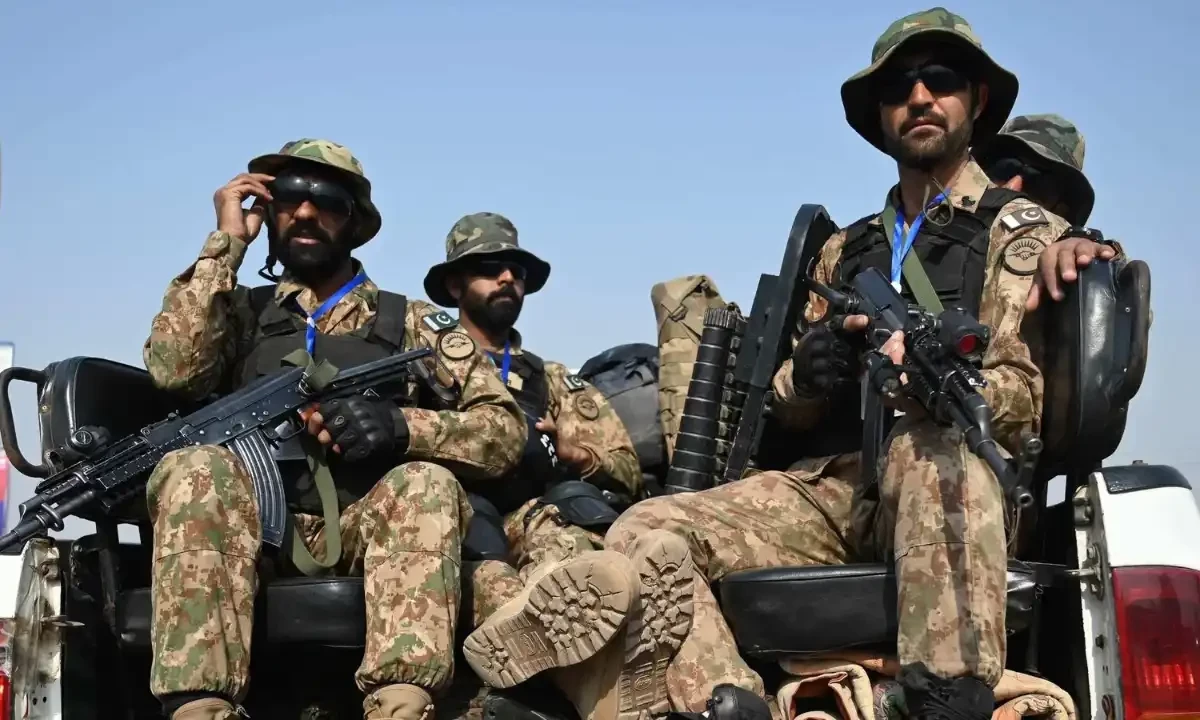
Sharif and the Chief of Defence Forces, Field Marshal Syed Asim Munir, led Pakistan’s diplomatic push. Interior Minister Mohsin Naqvi and Munir travelled to Tehran for direct talks with senior Iranian figures, while Sharif and Deputy Prime Minister Ishaq Dar worked the phones across Washington, Tehran and the Gulf capitals. Pakistan hosted direct peace talks between American and Iranian representatives in April; they collapsed without agreement. But Islamabad continued to serve as a conduit, relaying proposals and exchanging messages between the two sides until a framework began to take shape.
Qatar, Turkey, Saudi Arabia, Egypt and China were all, at various stages, involved in the broader diplomatic architecture. But Pakistan’s claim to have been the principal facilitator is not seriously disputed.
Sharif, writing on X in the small hours of Thursday, offered particular tribute to Munir, describing his “tireless efforts, selfless dedication and instrumental role” as having been “critical in facilitating this breakthrough.” He thanked both Trump’s team — Vice President JD Vance, special envoys Steve Witkoff and Jared Kushner — and the Iranian negotiating team, including parliamentary speaker Mohammad Bagher Ghalibaf, Foreign Minister Abbas Araghchi and Interior Minister Eskandar Momeni. Iran’s Supreme Leader Ayatollah Mojtaba Khamenei — who assumed leadership following the death of his father Ali Khamenei on the first day of the war — and President Pezeshkian were credited with “wisdom, foresight and statesmanship in embracing the cause of peace.”
A Pakistani delegation, including Sharif, Munir, Dar and Information Minister Attaullah Tarar had been preparing to travel to Switzerland for a signing ceremony at Bürgenstock on Friday — the same lakeside resort where a Ukraine peace summit was held two years ago. However, Iran’s foreign ministry spokesman Esmaeil Baqaei cast doubt on whether a formal ceremony would now take place, telling state broadcaster IRIB that because both presidents had already signed electronically, “No signing ceremony will be held in Switzerland.”
G7 endorsement and European discomfort
G7 leaders meeting in Evian-les-Bains welcomed the agreement, though the communiqué they issued carried an edge of unease beneath its diplomatic language. France, Germany, Britain, Japan, Italy, Canada and the United States declared that negotiations over the coming 60 days must “address the threats posed by Iran in the region and beyond and ensure that they never obtain a nuclear weapon.” They also demanded an immediate ceasefire in Lebanon.
European governments have long shared concerns about Iran’s nuclear ambitions and its regional posture. But they never endorsed the decision to go to war without United Nations authorisation, and several capitals are privately anxious that Iran has emerged from the conflict in a stronger negotiating position than when it entered, having withstood a superpower military campaign, retained control of the Strait of Hormuz and secured the prospect of sanctions relief worth hundreds of billions of dollars.
Iran’s foreign ministry confirmed the agreement was in immediate effect as of Wednesday.
What comes next
The 60-day window now opening is, by any measure, the harder part. The memorandum defers the most difficult questions — the final disposition of Iran’s nuclear programme, the fate of its enriched uranium stockpile, the precise terms of sanctions removal, the unfreezing of assets and the unwinding of its regional military posture — to a negotiating process that a senior Pakistani official described privately as “a highly complex, multi-party process.”
The IAEA will need to play a central role in monitoring any nuclear arrangements. The European Union will be central to sanctions discussions. The United Nations, along with the various governments holding Iranian assets, will be indispensable to any programme of asset release. The $300bn reconstruction fund will require a multilateral financial architecture that does not yet exist.
“This marks the beginning, rather than the end, of the peace process,” the Pakistani official said. “Success will depend on close coordination with the institutions responsible for implementing different parts of the agreement.”
Copyright © 2021 Independent Pakistan | All rights reserved