By Staff Reporter
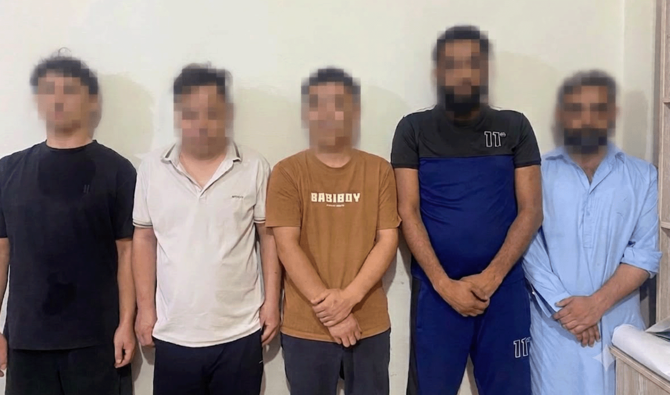
ISLAMABAD: The Federal Investigation Agency said on Friday it had dismantled an alleged network smuggling processed human placenta out of the country, arresting five suspects, including three Chinese nationals, following raids on two properties in the capital.
The FIA said agents raided a house late Thursday in Islamabad’s upscale F-7 residential sector and found what it described as “a complete plant for illegal processing of human organs, especially human placenta.” A second raid, carried out on information provided by the arrested suspects, uncovered a similar processing centre operating from a private residence in the city’s E-11 sector.
“It was revealed that the accused used to illegally process and dry human placenta in the said plant,” the agency said in a statement. “The finished products were exported to Vietnam under the name ‘She Placenta.'”
Processing equipment and finished goods were recovered from both sites, the FIA said. Cases have been registered against all five suspects — three Chinese and two Pakistani nationals — under relevant provisions of the Human Organs Transplantation Act, 2010.
A trade in afterbirth
Human placenta, the organ that develops during pregnancy to supply oxygen and nutrients to the fetus, is normally discarded after childbirth, though it can be donated for research or used for approved medical purposes with informed consent.
Beyond clinical applications — including wound care, reconstructive eye surgery, and burn treatment — placental extracts have found commercial demand in the cosmetics industry, where manufacturers incorporate human or animal-derived compounds into anti-aging creams and serums marketed for their purported effects on skin elasticity, firmness and hydration. Scientists also use healthy placentas to study pregnancy pathologies, genetics, immunology and stem cell therapies.
The FIA did not specify whether the processed material seized in Islamabad was destined for medical or cosmetic use, nor did it clarify the precise provisions under which the suspects were charged.
Part of a broader pattern
The arrests are the latest in a series of organ trafficking cases to surface in Pakistan in recent years, with authorities identifying a recurring pattern of illegal operations concealed inside private residences.
Earlier this year, police in Rawalpindi — Islamabad’s twin city — recovered a labourer who had been abducted by a gang that surgically extracted kidneys from healthy low-income workers before transplanting them into wealthy patients, including those from abroad, local media reported.
In a separate case, the FIA raided an illegal kidney transplant centre operating from the basement of a private home in Islamabad’s G-16 sector, dismantling another network of unlicensed surgeons and facilitators.
Pakistan’s Human Organs Transplantation Act, enacted in 2010, prohibits the commercial trade of human organs and tissue and criminalises unauthorised transplantation and trafficking. Conviction under the law can carry imprisonment and substantial fines, though enforcement has historically been uneven.
The FIA did not say whether the suspects remained in custody or had applied for bail. It was not immediately possible to reach the Chinese embassy in Islamabad for comment.
Copyright © 2021 Independent Pakistan | All rights reserved