By Staff Reporter
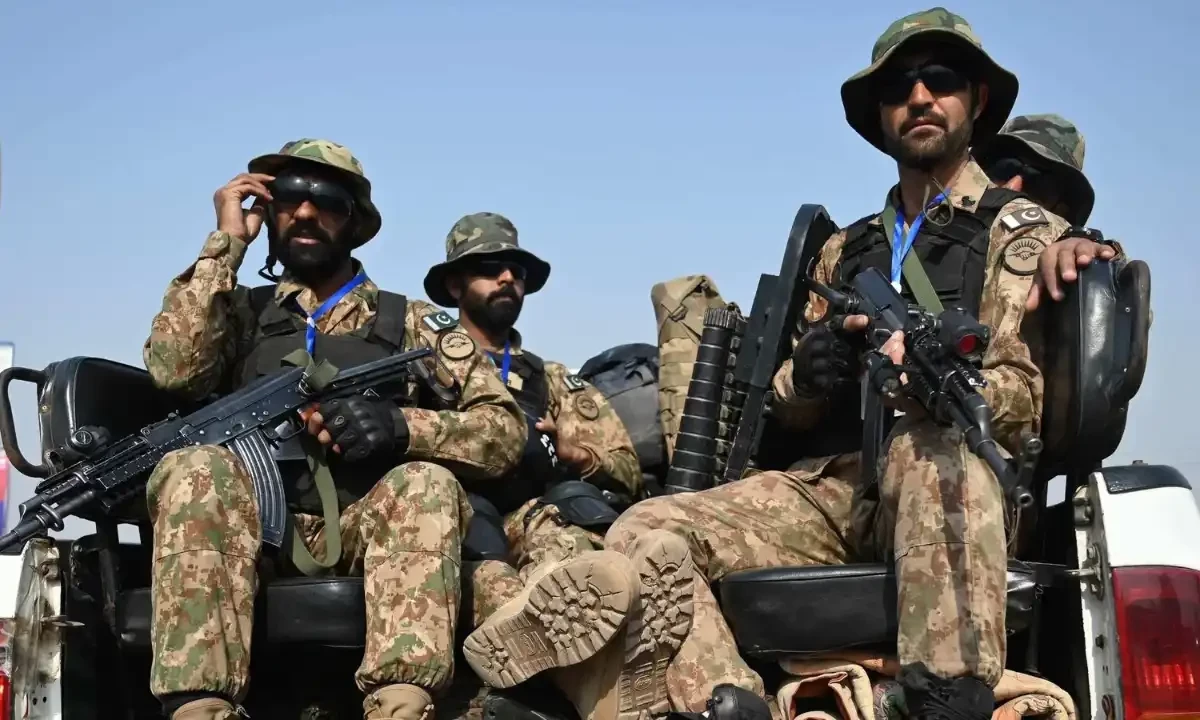
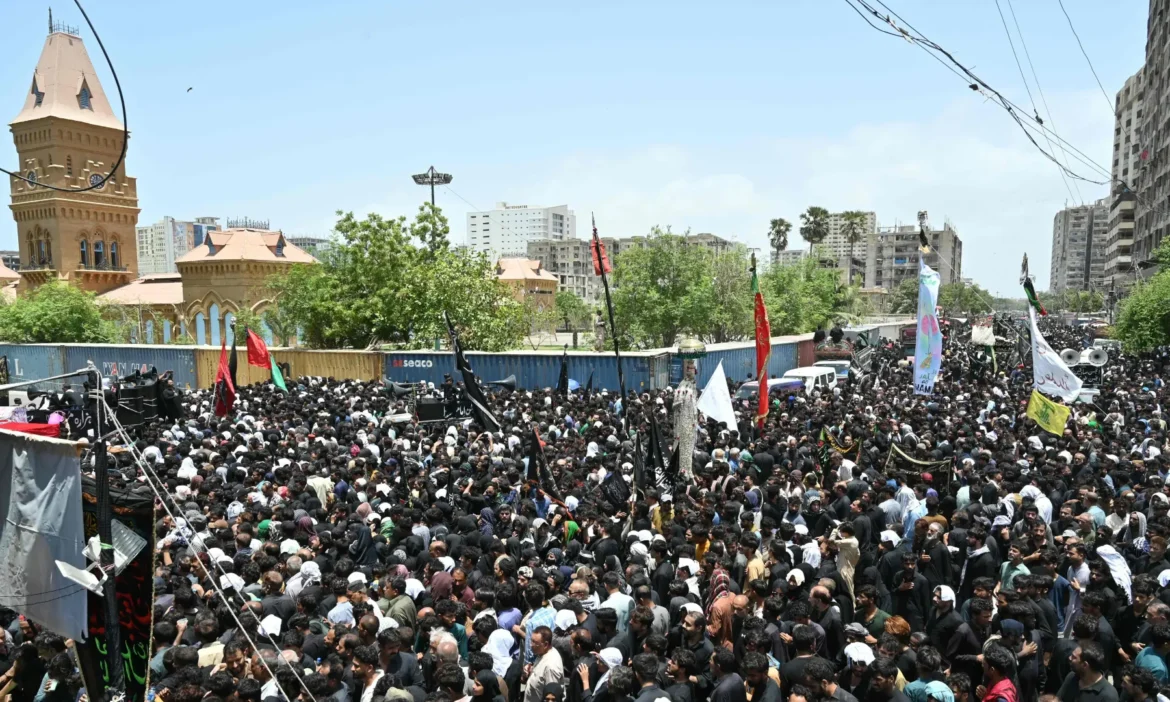
KARACHI/ISLAMABAD: Millions of Shia Muslims marked Ashura across Pakistan on Friday under one of the country’s most extensive security operations in recent memory, with authorities deploying more than 200,000 military, paramilitary and police personnel as processions in major cities concluded without incident.
The annual observance of Youm-e-Ashura, the tenth day of Muharram, commemorates the martyrdom of Imam Hussain, the grandson of the Prophet Mohammad, and his companions at the Battle of Karbala in 680 AD. The day draws vast crowds across Pakistan and has historically been a target for sectarian violence, prompting authorities to mount sweeping security operations each year.
In Karachi, the country’s largest city, the central procession departed Nishtar Park at around 9:30 a.m. and wound through its traditional routes before concluding at Imambargah Hussainia Iranian. Sindh Chief Minister Murad Ali Shah joined mourners on the streets, telling reporters that roughly 60,000 police and Rangers personnel had been deployed across the province, where more than 1,600 processions are held during Muharram.
Karachi’s police chief, Azad Khan, said approximately 6,500 officers secured the main procession alone, with overall city-wide deployment reaching 20,000 personnel. Mobile phone and internet services were suspended along the procession route, a measure that Home Minister Ziaul Hasan Lanjar said was also applied in other sensitive areas of Sindh. He said the army had been placed on standby.
Traffic police closed M.A. Jinnah Road between Gurumandir and Tower, directing commuters to alternative routes. In Hyderabad, the central procession moved from Qadam Gah Maula Ali off Station Road to Karbala Dadan Shah without disruption.
Rawalpindi on high alert
In Rawalpindi, authorities deployed five army companies, seven Rangers companies and more than 8,000 police personnel, of whom 5,500 were assigned to the main procession. The procession set out from Imambargah Ashiq Hussain in Taili Mohallah and ended at Imambargah Qadeemi.
The Punjab government suspended the Rawalpindi-Islamabad Metro Bus Service on the recommendation of intelligence agencies, citing security concerns as the procession was to pass along Murree Road beneath the metro track. No processions were held in Islamabad.
Section 144, which prohibits public gatherings, was imposed across Rawalpindi district. Snipers were stationed on rooftops, roads along procession routes were sealed, and participants were subjected to body searches at entry points. More than 2,000 Safe City and CCTV cameras monitored the city, complemented by a new mobile application developed by police to scan identity cards at pickets and bus terminals. A total of 475 processions and 2,201 religious gatherings were scheduled across the district during Muharram.
Punjab’s three-tier security plan
Punjab deployed more than 125,000 police officers province-wide, supported by 61 army companies and 76 Rangers companies, under a three-tier security framework that officials said was backed by artificial intelligence-based surveillance. Over 30,000 trained civilian volunteers also assisted law-enforcement agencies.
More than 5,600 CCTV cameras and over 1,000 high-definition event cameras were operational, with the Provincial Intelligence Centre running a round-the-clock digital surveillance operation.
In Lahore, police chief Bilal Siddique Kamyana said more than 15,000 officers were on special duty, with snipers placed on high-rise buildings along all procession routes. The central procession departed Nisar Haveli and reached Karbala Gama Shah by evening. All processions in Multan and across south Punjab concluded peacefully.
Mobile phone services were partially suspended until 10 p.m. in 24 Punjab districts, including Rawalpindi, Faisalabad, Lahore, Multan and Bahawalpur, at locations of religious gatherings, according to the provincial home department.
Peshawar and Khyber Pakhtunkhwa
Twelve processions were held in Peshawar, all concluding along their traditional routes through the old city. Police deployed 12,000 personnel in the city, including bomb disposal units, sniffer dogs and officers in plain clothes at sensitive sites. Three-layered security was provided for all processions, with marksmen positioned on high-rise buildings.
Across Khyber Pakhtunkhwa, 43,317 police officers were deployed and Section 144 was enforced in multiple districts. Of 614 imambargahs in the province, authorities had classified 127 as highly sensitive, 262 as sensitive and 225 as normal. A total of 907 processions were scheduled province-wide. KP Chief Minister Ali Amin Gandapur visited the central Muharram control room to review security arrangements, while Inspector General Zulfiqar Hameed had earlier directed officials to strengthen coordination with district administrations and peace committees.
Balochistan
Balochistan mobilised more than 32,000 security personnel, with over 17,000 deployed in Quetta alone. Forces drawn from the district police, Balochistan Constabulary, Rapid Response Force, Anti-Terrorist Force, Frontier Corps and Anti-Riot Force guarded procession routes, public spaces and entry and exit points of the city. Aerial surveillance and CCTV cameras monitored the main routes while all shops and commercial centres along procession paths were sealed. Mobile phone and internet services were suspended in Quetta and other sensitive areas of the province.
Presidential and government messages
President Asif Ali Zardari and Prime Minister Shehbaz Sharif both issued statements urging national unity and inter-sect harmony.
Zardari described the tragedy of Karbala as a timeless reminder of the values of sacrifice, perseverance and human dignity, calling on citizens to shun rumour and provocative behaviour. Sharif said the sacrifice of Imam Hussain offered enduring lessons in faith, patience and social reform, and pledged to uphold truth and protect the rights of the vulnerable.
The peaceful conclusion of Ashura processions across the country marked a significant logistical achievement for Pakistani security forces, who have worked to prevent a recurrence of the deadly bombings and sectarian clashes that have marred the observance in previous years.
Copyright © 2021 Independent Pakistan | All rights reserved