By Staff Reporter
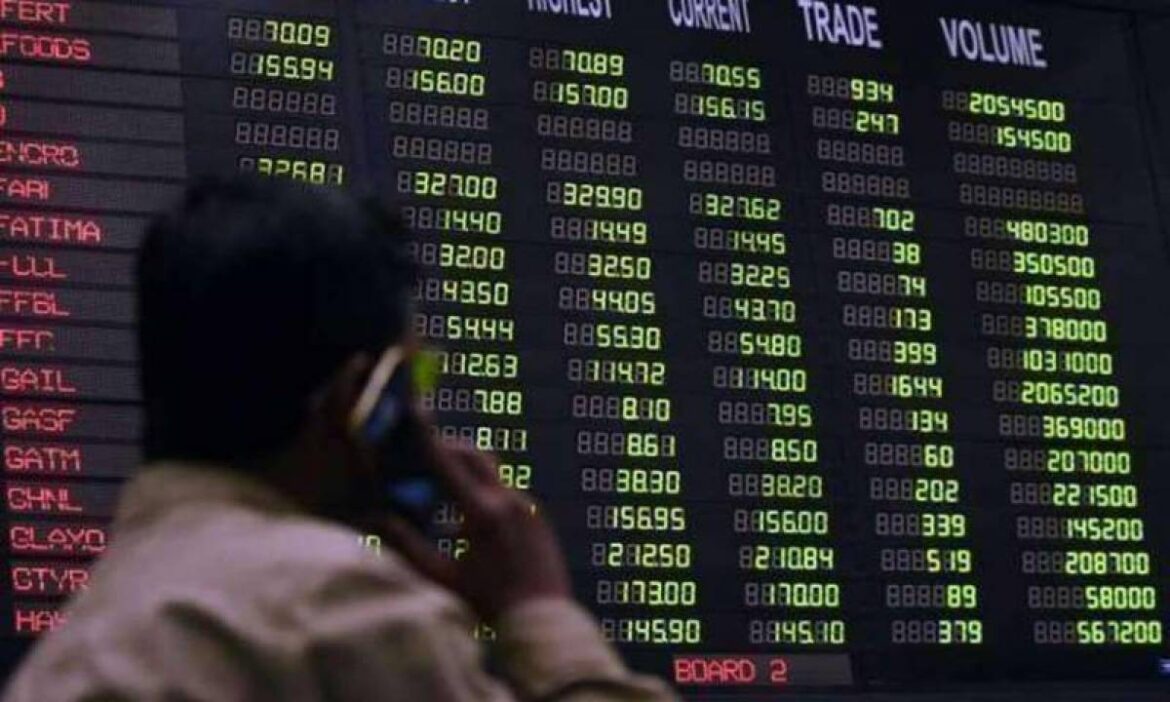
KARACHI: Pakistani stocks extended a record-breaking rally on Wednesday, with the benchmark KSE-100 index jumping more than 3,700 points to open the new fiscal year, as investors bet that easing inflation will pave the way for interest rate cuts and cheaper oil bolsters the outlook for the import-dependent economy.
The KSE-100 climbed 3,748.40 points, or 2.08%, to close at 184,050.10, building on a recovery staged in the final session of the outgoing fiscal year. Trading opened on a shaky note, with the index briefly slipping below Tuesday’s close of 180,301.70 before rebounding to a low of 180,565.83 shortly after the market opened. Gains accelerated through the afternoon, with buying intensifying in the final hour of trade to push the index to a fresh peak near the close.
The rally came as data from the Pakistan Bureau of Statistics showed consumer prices rose 11.1% in June from a year earlier, down from 11.7% in May and within the central bank’s forecast range of 11% to 12%. On a monthly basis, prices fell 0.3% in June, reversing a 0.5% increase in May.
“The inflation figures were below market expectations and reinforced the view that inflationary pressures were continuing to subside,” said Awais Ashraf, director of research at AKD Securities. Expectations of monetary easing had strengthened investor sentiment, he said, adding that oil prices were also expected to stay within the State Bank of Pakistan’s target range for the next fiscal year following a temporary de-escalation between the United States and Iran.
Brokerage Topline Securities pointed to a similar mix of factors, saying the retreat in inflation had reinforced expectations of a more accommodative monetary policy stance in the months ahead. It said the decline in international crude prices, with U.S. benchmark WTI trading near $68 a barrel, had eased concerns over Pakistan’s import bill and inflation outlook. The brokerage described the rally as underpinned by aggressive institutional accumulation and broad-based buying that extended the index’s record-setting momentum.
Banking stocks led the advance. United Bank, Meezan Bank, Habib Bank, MCB Bank and Bank Al Habib together contributed 2,429 points to the benchmark, according to Topline.
Trading volume on the all-share index rose to 941.48 million shares from 703.69 million in the previous session, while the value of shares traded increased to 57.09 billion rupees from 38.81 billion rupees. K-Electric was the most actively traded stock with 82.67 million shares changing hands, followed by the Bank of Punjab with 77.11 million shares and Pakistan Telecommunication Company with 28.75 million shares. Of 490 companies traded, 297 advanced, 171 declined and 22 were unchanged.
Wednesday’s advance capped a turbulent stretch for the exchange, which came under renewed selling pressure on Monday after the United States and Iran exchanged military strikes over the weekend, sending the index down 1,156.47 points.
The gains extended a banner year for the exchange. The KSE-100 delivered a return of 44% in rupee terms and 46% in dollar terms in the fiscal year ended June 30, rising to 180,302 points from 125,627 a year earlier, as improved macroeconomic stability under Pakistan’s International Monetary Fund-supported programme bolstered investor confidence.
Analysts said the index could advance toward its record high of 189,000 points, supported by lower oil prices and expectations of further policy rate cuts, though they cautioned that inflation data, monetary policy signals and geopolitical developments would remain key factors to watch.
The rally in Karachi came against a more cautious backdrop in global markets. Asian shares opened the new quarter on uneven footing on Wednesday after talks between the United States and Iran hit fresh obstacles, with Tehran saying on Tuesday it would not meet with U.S. envoys who had flown to the region, leaving the two sides still far apart on a framework to reopen the Strait of Hormuz fully. Investors were also watching for possible Japanese intervention after the yen fell to fresh 40-year lows.
U.S. Treasury yields spiked overnight as futures narrowed the odds of a Federal Reserve rate hike ahead of closely watched jobs data due Thursday. Markets were looking to Fed Chair Kevin Warsh, who is due to speak at a European Central Bank conference later in the day, for signals on the central bank’s next move, though Warsh has generally avoided giving forward guidance. Futures markets implied a 33% probability of a rate increase at the Fed’s meeting this month, with the odds of a move in September priced at around 70%.
In Japan, the Nikkei added another 1% after surging 37% in the previous quarter, with a closely watched survey showing sentiment among large manufacturers at its strongest since 2018. A separate survey pointed to the best quarter for manufacturing since 2014 on a surge in new orders. South Korea’s benchmark index fell 1.4% after climbing 68% in the second quarter on booming demand for semiconductors tied to artificial intelligence. MSCI’s broadest index of Asia-Pacific shares outside Japan was little changed.
Copyright © 2021 Independent Pakistan | All rights reserved